

Most people use eye drops for about 4 to 6 weeks after cataract surgery. In many cases, antibiotic drops stop after about 1 week, while steroid and NSAID drops continue longer and are tapered down. Your exact plan depends on how your eye heals and what your surgeon wants you to do.
Here’s the short answer:
- Antibiotic drops: often 1 week, sometimes up to 2 weeks
- Steroid drops: often 4 to 6 weeks, with a taper
- NSAID drops: often 4 to 6 weeks
- Week 1: drops are usually used most often
- Weeks 2 to 4: antibiotic drops are often done, while anti-inflammatory drops continue
- Weeks 4 to 6: steroid or NSAID drops may drop to once a day before stopping
- Do not stop or change your drops on your own
One thing catches many people off guard: even if your eye feels better early, you may still need drops for several more weeks. That’s because infection risk is highest at the start, but swelling and irritation can last longer.
| Drop type | Main job | Usual time frame |
|---|---|---|
| Antibiotic | Helps prevent infection | 1–2 weeks |
| Steroid | Lowers inflammation | 4–6 weeks |
| NSAID | Helps with swelling and discomfort | 4–6 weeks |
If you miss a dose, feel unsure about the order, or think your schedule looks different from someone else’s, call your surgeon’s office. After cataract surgery, the written plan from your own care team matters most.
Using Your Eye Drops Correctly After Cataract Surgery
sbb-itb-5ef6ec9
Typical eye drop schedule after cataract surgery
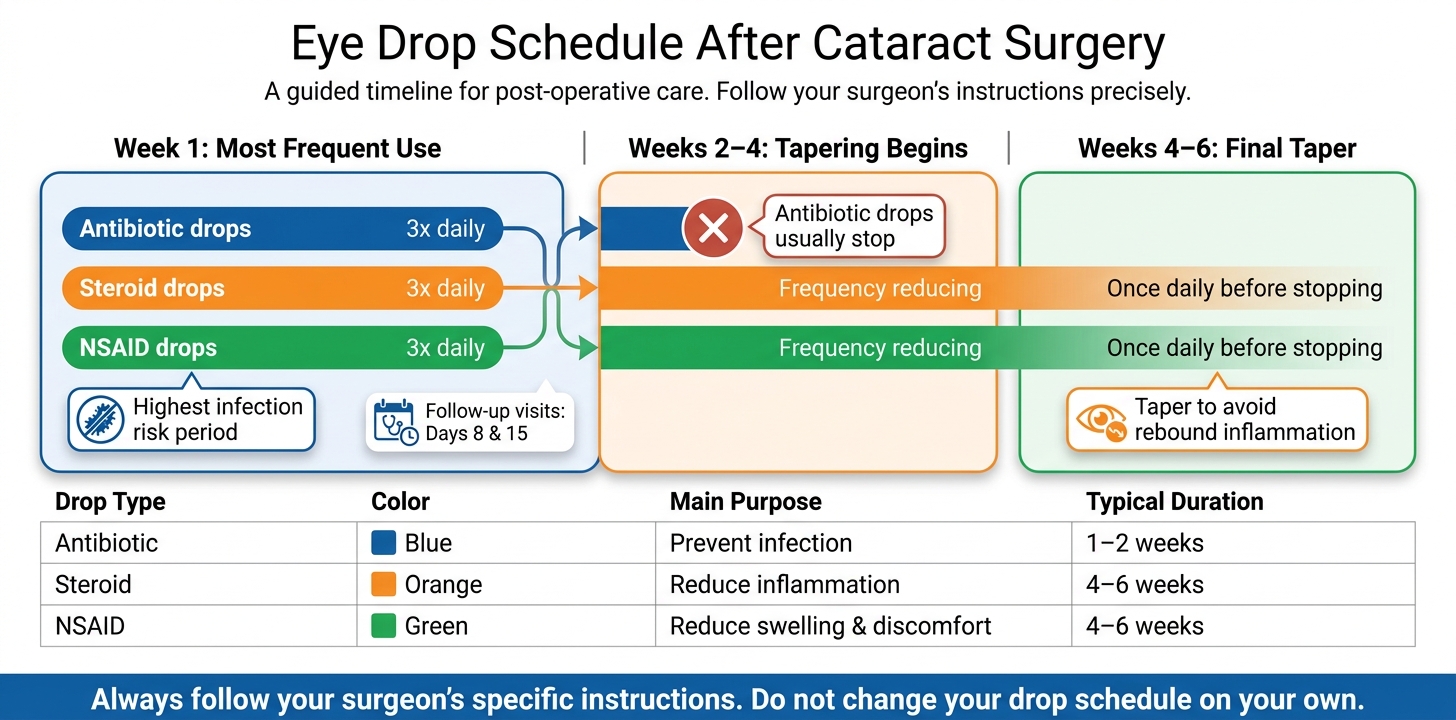
Eye Drop Schedule After Cataract Surgery: Week-by-Week Guide
Here’s the usual recovery timeline. In many cases, the plan starts with more frequent dosing and then tapers over 4 to 6 weeks. That often includes antibiotic, steroid, and NSAID drops.
Week 1: the most frequent drop use
Week 1 is usually the busiest part of the schedule. You’ll often use all three types of drops several times a day, often 3 times daily, to help prevent infection and keep inflammation under control.
Follow-up visits often happen around Days 8 and 15 so your surgeon can check how the eye is healing. After that first week, the drop schedule usually starts to ease up.
Weeks 2 to 4: reducing drop frequency as the eye heals
During this stretch, drop use usually goes down. Antibiotic drops are often finished by the end of Week 1, while steroid and NSAID drops continue.
Some surgeons keep the drops at the same pace for 2 weeks before tapering. Others start cutting back during this phase. By the last part of this window, the antibiotic is usually done, and only the anti-inflammatory drops are left.
Weeks 4 to 6: completing the prescription plan
By this stage, any remaining steroid or NSAID drops are often down to once a day before stopping.
Steroid drops are usually tapered instead of stopped all at once. That helps avoid rebound inflammation. Your surgeon will tell you when to stop the drops once healing is complete.
Why some eye drops are used longer than others
Each eye drop has a different job. And because those jobs aren’t the same, the timing isn’t the same either.
Some drops are there for the first part of recovery, when the eye is most open to infection. Others help with swelling and irritation, which can stick around longer than people expect. So even when the surface looks like it’s healing, treatment may still need to continue.
Antibiotic drops: short-term use only
Antibiotic drops are used right after surgery to help prevent infection. They’re meant for short-term use because the risk of infection is highest in the early days after the procedure.
Steroid and NSAID drops: several weeks of use
Inflammation usually takes more time to calm down. Even after the surgical opening heals, the eye can still have swelling and irritation.
Steroid drops help lower inflammation, including inflammation inside the eye. NSAID drops help with swelling and discomfort. Because of that, these drops are often used for several weeks, and the dose is often tapered over time. Steroid drops are usually tapered instead of stopped all at once.
The table below gives a quick side-by-side view of each drop type, typical duration, and dosing pattern.
Eye drop types, typical duration, and dosing pattern: quick reference table
Here’s a simple snapshot of the main eye drop types, how long people often use them, and the dosing pattern you’ll usually see. Your surgeon’s instructions come first.
| Drop Category | Primary Purpose | Typical Duration | Typical Dosing |
|---|---|---|---|
| Antibiotics | Prevent bacterial infection | 1–2 weeks | Often 3 times daily |
| Steroids (e.g., Prednisolone, Loteprednol) | Reduce inflammation and pain | 4–6 weeks | 2–3 times daily; then tapered |
| NSAIDs | Reduce inflammation and swelling | 4–6 weeks | Often 1–3 times daily; may start before surgery |
Next, we’ll look at what can shift your schedule and the right way to put in your drops.
When your schedule may differ and how to apply drops correctly
Factors that can change your drop timeline
A 4 to 6 week drop schedule is common, but it’s not set in stone. Healing can move faster or slower, and what your surgeon sees during or after surgery can shift the plan.
For example, your surgeon may keep you on drops longer if inflammation is still there. Pain and discomfort can also shape the next steps. And if there were surgical complications, you may need medication for a longer period.
Once your schedule is set, using the drops the right way matters just as much as taking them on time.
Correct drop technique and key takeaways
Follow the exact drop schedule your surgeon gives you. If anything feels confusing, say something right away. It’s much easier to fix a mix-up early than to guess and hope for the best.
A few basics matter here:
- Use lubricating drops as directed if you have dryness.
- If your instructions are unclear, contact your surgeon’s office.
- If you miss a dose, contact your surgeon’s office for guidance.
- Don’t change the schedule on your own.
Follow-up visits are also part of the process. Use those appointments to go over your schedule and check how your eye is healing.
Summary: the usual timeline and what to keep in mind
Most patients use antibiotic drops for about 1 week. Steroid and NSAID drops often continue for 3 to 6 weeks, then taper down before they stop.
That said, no two schedules are exactly the same. Your surgeon may change your plan based on how the surgery went, how your eye is healing, and any other medical conditions you have.
Follow your written post-op instructions exactly. If anything is unclear – like dose timing, the order of your drops, or what to do after a missed dose – contact your care team right away. Don’t change the schedule on your own.
FAQs
What if I stop my eye drops too soon?
Stopping your cataract surgery eye drops too early can leave inflammation behind and increase the chance of pain or other problems. That’s why doctors usually want you to keep using them for the full time listed on your prescription after surgery.
If you think you stopped ahead of schedule, don’t start the drops again on your own. Contact your Eye Center of Northern Colorado surgeon as soon as you can for guidance.
How should I space out different eye drops?
Space different eye drops at least 5 minutes apart. That short wait matters. If you put in the second drop too soon, it can wash out the first before your eye has time to absorb it.
Stick to the schedule your surgeon gives you, especially if you’re using more than one type of drop, such as anti-inflammatories or antibiotics.
When should I call my surgeon about my drops?
If anything about your recovery feels off, contact your surgeon at Eye Center of Northern Colorado.
Call (970) 221-2222 if you have questions about your eye drop schedule, notice discomfort you didn’t expect, or see changes in your vision that don’t line up with the recovery plan your ophthalmologist reviewed with you.