

What is Corneal Cross-Linking?
Corneal cross-linking is a minimally invasive procedure designed to strengthen the cornea and slow or stop the progression of keratoconus. During treatment, riboflavin (vitamin B2) eye drops are applied to the cornea and activated with ultraviolet (UV) light. This process strengthens the bonds between collagen fibers within the cornea, helping it maintain its shape and stability.
Eye Center of Northern Colorado offers corneal cross-linking for patients with mild to moderate keratoconus who may benefit from treatment. While cross-linking does not reverse changes already caused by keratoconus, its goal is to help prevent further progression and preserve your vision. There are two approaches to corneal cross-linking, and your eye care specialist can evaluate your eyes and recommend the treatment option that is most appropriate for your individual needs.
Two Approaches To Corneal Cross-Linking
Corneal collagen cross-linking can be performed using two different techniques. The appropriate approach depends on your individual condition and the health of your cornea. At Eye Center of Northern Colorado, our experienced eye care team will evaluate your eyes, explain your treatment options, and help determine which approach is most appropriate for you.
Below, we explain each type of corneal cross-linking and what you can expect from the procedure:
- Epithelium-Off Corneal Cross-Linking – The eye doctor removes your cornea’s first layer, known as the epithelium. We can ensure the treatment is the most effective way to remove the epithelium, and the process is very quick and painless. After fully removing your epithelium, our eye doctor applies liquid riboflavin drop to your eye. The drops absorb into your eye, and then we activate them with ultraviolet (UV) light. You’ll sit for an extended period with the light shining in your eye. After this period, we place a special contact lens on your eye to help with healing.
- Epithelium-On Corneal Cross-Linking – Instead of removing your epithelium, our eye doctor puts liquid riboflavin eye drops directly onto your cornea’s first layer. Then, we use the UV light on your eye. You need to sit with the UV light on your eye for a longer time to ensure the liquid riboflavin completely penetrates your cornea’s surface.
Is Cross-Linking Right For Me?
If you have been diagnosed with keratoconus and are interested in corneal collagen cross-linking, schedule an appointment with Eye Center of Northern Colorado to discuss whether this treatment may be appropriate for you. Cross-linking is generally used to slow or stop the progression of mild to moderate keratoconus and help preserve the health and structure of the cornea.
If keratoconus has progressed significantly, cross-linking may not be an appropriate treatment option. However, identifying and treating keratoconus earlier may help preserve the cornea and potentially reduce the need for more invasive treatments, such as a cornea transplant. Our eye care specialists will evaluate your eyes and discuss your treatment options based on the severity and progression of your condition.
Why Choose us for Keratoconus Treatment?
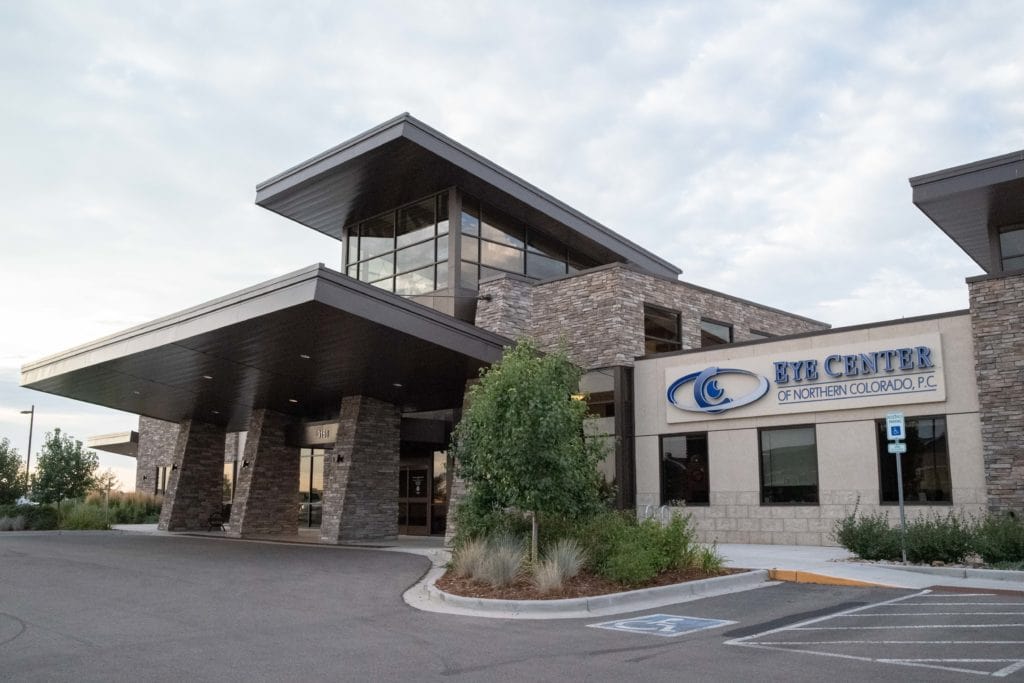
Don’t let your vision problems and eye conditions stop you from enjoying life and taking in the world around you. Eye Center of Northern Colorado covers your vision and eye health with our comprehensive solutions, including outstanding lenses and procedures. If you suffer from keratoconus and need professional treatment, we offer corneal cross-linking as a highly effective treatment option to slow or stop its progression. Contact us today to schedule an appointment and discuss your progressive eye disease and how we can help.


