
Cataract surgery is a quick and effective procedure, but recovery requires care to protect your eyes and prevent complications. Here’s a summary of eight practical steps to help you heal faster:
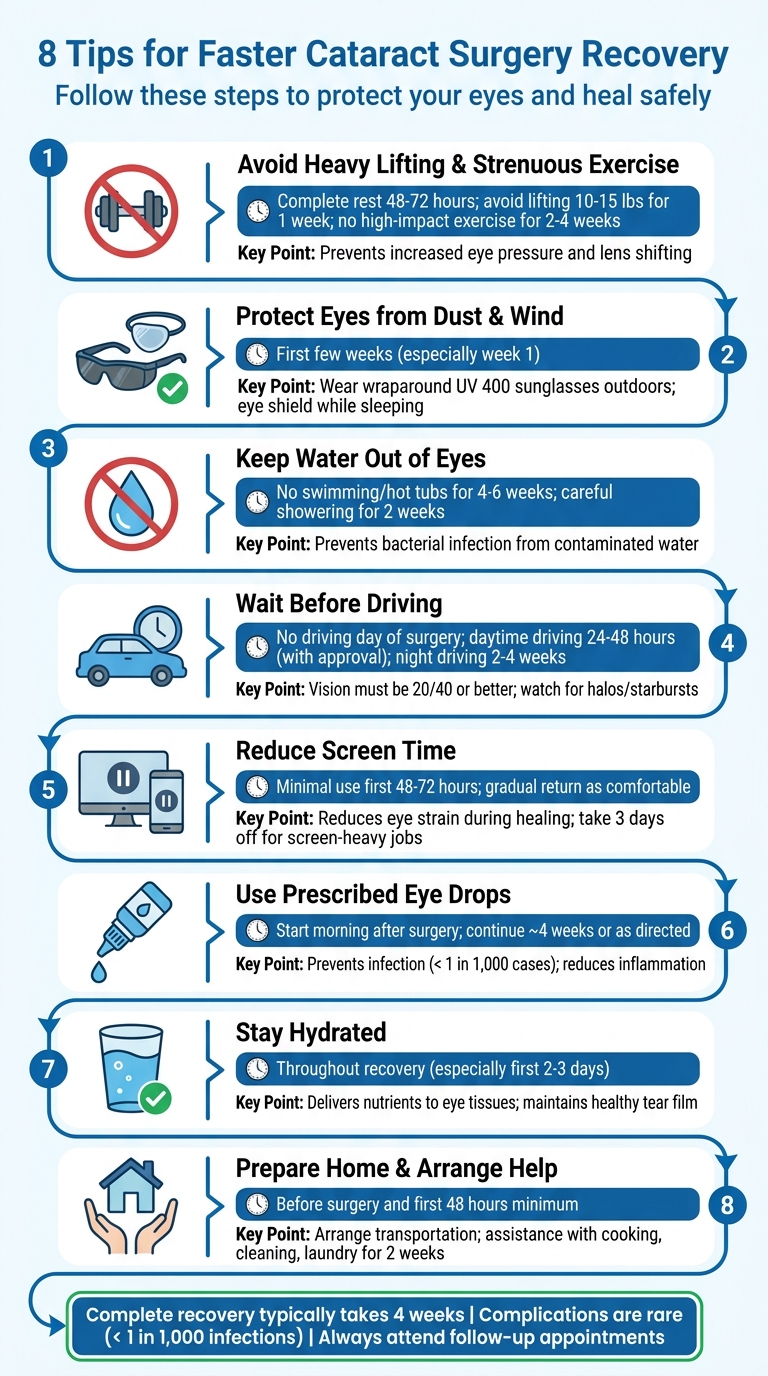
- Avoid heavy lifting and strenuous activities: Rest for the first 48–72 hours and limit physical strain for up to two weeks.
- Protect your eyes from dust and wind: Use wraparound sunglasses outdoors and wear an eye shield while sleeping.
- Keep water out of your eyes: Avoid swimming and take precautions during showers to prevent infections.
- Wait to drive: Driving can typically resume 24–48 hours post-surgery, but nighttime driving may need to wait 2–4 weeks.
- Limit screen time: Reduce eye strain by resting your eyes for the first few days.
- Use prescribed eye drops: Follow your doctor’s instructions to prevent infection and control inflammation.
- Stay hydrated: Drink plenty of water to support healing and reduce discomfort.
- Prepare your home and arrange help: Set up a recovery-friendly space and get assistance with daily tasks.
These steps can minimize risks and promote smooth healing. Always follow your surgeon’s advice and attend follow-up visits to monitor progress.
8 Essential Tips for Faster Cataract Surgery Recovery Timeline
How To Recover From Cataract Surgery
sbb-itb-5ef6ec9
1. Avoid Heavy Lifting and Strenuous Exercise
Steer clear of heavy lifting after surgery to keep eye pressure stable and avoid complications like fluid leakage or shifting of the intraocular lens. For the first 48–72 hours, complete rest is crucial.
During the first week, avoid lifting anything over 10–15 pounds, including heavy household items. Activities such as vacuuming, scrubbing floors, or gardening should be postponed for at least two weeks. If you must do light chores, make sure to wear your protective eye shield.
"Generally speaking, you should avoid bending over or heavy lifting for the first 2 weeks after surgery." – Steven Greenstein, Surgeon, CLEI
High-impact exercises should be avoided for 2–4 weeks, depending on your recovery progress. Swimming, hot tubs, and saunas should also be off-limits for at least four weeks to minimize the risk of infection. On the other hand, gentle activities like walking or light stretching are usually safe to resume within 1–2 days. These guidelines help you ease into recovery before tackling more demanding tasks.
For those with physically demanding jobs, recovery may take longer compared to someone with a desk job. Always attend your follow-up appointments and consult your surgeon to determine when it’s safe to return to high-impact activities. Following these precautions is an important part of ensuring a smooth recovery, as outlined in your personalized post-operative plan.
2. Protect Your Eyes from Dust and Wind
After cataract surgery, your eyes are especially sensitive, particularly in the first few weeks. Dust, wind, and pollen can introduce bacteria into your healing eye, increasing the chance of infection. Although serious complications are rare – occurring in fewer than 1 in 1,000 cases – taking a few simple steps can help you avoid unnecessary irritation. These precautions are a vital part of your recovery process.
"Various things can affect your eye while it’s at its most sensitive in the healing process, including soap, dust, smoke, wind, pollen and sunlight." – Moorfields Private
Use protective eyewear outdoors. Opt for wraparound sunglasses with UV 400 protection, and consider adding a wide-brimmed hat for extra shielding.
Wear an eye shield while sleeping for at least the first week. This lightweight, clear shield prevents accidental rubbing and blocks airborne particles from reaching your eye during the night.
Clean your eye carefully if debris is present. If needed, gently wipe your eye with a damp cloth, moving from the inner to the outer corner.
3. Keep Water Out of Your Eyes
Water from taps, swimming pools, and hot tubs can carry bacteria that might lead to post-operative infections. Although these complications are uncommon, it’s crucial to protect your healing eye from exposure. Water mixed with soap or shampoo can also irritate the surgical site, so taking precautions is key.
"This is because water can carry bacteria which can potentially lead to an infection in your eye." – Moorfields Private
For the first two weeks, instead of washing your face as usual, use a damp cloth to gently clean around your face. This helps keep water away from the treated area, reducing the risk of irritation or infection. When taking a shower or bath, try to keep your eyes tightly closed or turn your head to avoid water splashing onto your eye.
Activities involving water, like swimming or using hot tubs, should be avoided for four to six weeks. These environments not only pose a higher risk of bacterial contamination but can also strain your recovery since swimming is a form of physical exertion.
If you need to clean near your eye, use sterile gauze or cotton wool dipped in boiled water that has cooled down. Gently wipe from the inner corner of your eye (near your nose) outward, and avoid applying pressure or rinsing the area directly.
4. Wait for Approval Before Driving
Driving after surgery requires caution and patience as part of your recovery plan. It’s crucial to follow your surgeon’s guidance to ensure your safety and the health of your eyes.
You should not drive on the day of surgery. The effects of sedation, anesthesia, and dilating drops can impair your judgment and keep your pupils dilated, leading to light sensitivity and blurry vision for at least 24 to 48 hours.
"You cannot drive on the day of surgery as sedation, dilating drops, and protective shields render driving unsafe." – Jason D. Bullajian, Ophthalmologist, Texas Vision & Laser Center
Driving during the day can typically resume 24 to 48 hours after surgery, but only after your surgeon confirms that your vision meets the required standard of 20/40 or better. This evaluation usually happens during your first post-operative appointment, scheduled within 24 hours of the procedure. At Eye Center of Northern Colorado, ophthalmologists carefully assess your recovery to ensure your eyes are healing well and the effects of any medications have subsided. Even after receiving clearance for daytime driving, you’ll need to take additional precautions when it comes to nighttime driving.
Night driving should be avoided for 2 to 4 weeks. During the early stages of recovery, you may experience visual disturbances like halos or starbursts around headlights and streetlights, which can make driving in low-light conditions challenging. If surgery was performed on just one eye, your depth perception might also be temporarily affected, making it harder to judge distances accurately.
When you do start driving again, take it slow. Begin with short trips on familiar routes during daylight hours before attempting longer or more complex drives, especially at night. Wear sunglasses to reduce glare, and contact your doctor immediately if you experience sudden vision changes, flashes of light, or severe pain.
5. Reduce Screen Time
Give your eyes a break for the first 48–72 hours after surgery. Spending too much time in front of screens can strain your recovering eye and slow down the healing process. Right after the procedure, your vision will likely be blurry as your eye adjusts to the new intraocular lens, making it hard to focus on devices like phones, computers, or TVs.
You might also experience symptoms like grittiness, soreness, and watering during recovery, which can make staring at screens even more uncomfortable. These symptoms can worsen with extended screen use because people tend to blink less when looking at digital devices, potentially irritating the healing corneal incision.
"It’s very important that you take it easy and rest for the first two or three days following the operation." – Mr. Kamran Saha, Consultant Ophthalmic Surgeon
This early rest period is essential for proper healing and achieving the best visual outcomes. Watching TV in short bursts might be okay, but you should stop immediately if you feel any discomfort. Resting during these first few days is a key part of your overall recovery plan.
If your job involves heavy screen use, consider taking three days off to allow your eyes to recover fully. At follow-up appointments with the Eye Center of Northern Colorado, your ophthalmologist will evaluate your healing and advise you on when it’s safe to resume screen-intensive activities.
6. Use Prescribed Eye Drops as Directed
After cataract surgery, your surgeon will prescribe eye drops to help protect your eye and aid in recovery. These drops are essential for preventing infection and promoting healing during this crucial recovery period. Typically, you’ll start using them the morning after your procedure, as advised by your surgeon.
These drops serve several purposes: they help prevent infections (which occur in fewer than 1 in 1,000 patients), reduce inflammation and redness, and ease common discomforts like grittiness or excessive tearing. Even if your vision starts to improve, it’s important to complete the entire course of treatment. Your ophthalmologist will let you know when it’s safe to stop using them, which is usually around four weeks after surgery.
Here’s how to apply them correctly. Begin by washing your hands thoroughly to avoid introducing bacteria. If you’re using more than one type of drop, wait at least five minutes between applications to ensure each medication is absorbed properly. When applying a drop, gently close your eyes for 20–30 seconds, and avoid rubbing or squeezing your eye, as this can interfere with the healing process.
Skipping doses or not following the prescribed schedule can lead to complications like Cystoid Macular Edema or increased intraocular pressure. If you experience worsening pain, noticeable changes in vision, or significant redness, reach out to the Eye Center of Northern Colorado immediately. These symptoms could indicate a problem that needs prompt medical attention.
7. Stay Hydrated
Keeping yourself hydrated plays a key role in recovery by helping deliver oxygen and nutrients to your eye tissues. This is especially important during the first 2–3 days after surgery, as it aids in the repair of surgical incisions.
Drinking enough water also helps maintain a healthy tear film, which keeps your eyes lubricated. This can ease the grittiness and soreness that some people experience post-surgery. On top of that, staying hydrated supports your body in metabolizing and flushing out medications more effectively. It’s a simple yet impactful way to enhance your post-operative care routine.
Make it a habit to sip water throughout the day. If you’re feeling dryness or discomfort, try increasing your fluid intake. Keeping a water bottle within reach can make staying hydrated much easier.
8. Prepare Your Home and Arrange Help
Getting your home ready before surgery can make your recovery smoother and less stressful. Since you’ll need to avoid housework for the first 48 hours and limit strenuous activities for at least two weeks, it’s a good idea to handle all major chores ahead of time. This reduces your exposure to dust and irritants that could interfere with the healing process.
Transportation is another key consideration. Because driving is off-limits immediately after the procedure, you’ll need someone you trust to take you home. As the West County Ophthalmology Team explains, "Due to the nature of the procedure, patients will need to be driven home by a trusted friend or loved one". Be sure to follow your doctor’s advice about when it’s safe to get back behind the wheel.
At home, create a recovery-friendly environment. Set up a comfortable spot with clear pathways, good lighting, and easy access to essentials like your eye drops, hand sanitizer, and protective eyewear. Remove any tripping hazards like loose rugs or clutter, as your depth perception might be temporarily off. Stock up on ready-made or simple-to-prepare meals so you can avoid handling hot liquids while your vision stabilizes.
For the first few days, it’s helpful to have someone assist with daily tasks like cooking, cleaning, and laundry. This extra support can prevent unnecessary strain on your eye, especially from bending or lifting, and limit your exposure to irritants like smoke or cleaning chemicals. If you need help applying eye drops or sticking to your post-op care routine, having a family member or friend nearby can make a big difference.
If light cleaning becomes necessary after the initial recovery period, use tools like mops or dusters with long handles to avoid bending. These small adjustments allow you to focus on healing without worrying about household responsibilities.
Conclusion
These eight tips can help ensure a smoother and safer cataract surgery recovery. While your surgeon’s expertise is vital, your dedication to post-operative care plays an equally important role.
"Healing is a team effort, but your commitment during recovery is crucial for lasting, improved vision." – Reedsburg Area Medical Center
By following these guidelines, you protect your healing eye and lower the risk of complications. Avoiding heavy lifting helps maintain stable pressure, while shielding your eyes from dust and water reduces the chance of infection. Though rare – occurring in fewer than 1 in 1,000 cases – infections are best prevented through proper care. Adhering to your prescribed eye drop routine is another key step, as it helps control inflammation during the recovery period.
Stay vigilant for any warning signs. If you notice sudden vision loss, worsening pain, new floaters, flashes of light, or unusual discharge, contact your healthcare provider immediately. These could signal rare but treatable complications, such as retinal detachment, which affects about 2 in 1,000 patients. Acting quickly can make all the difference.
Don’t skip your follow-up appointments. These visits allow your surgeon to monitor your progress, confirm your new intraocular lens is correctly positioned, and provide clearance for activities like driving. While many patients see improvements within a few days, complete recovery typically takes around four weeks.
For tailored care and support, consult your surgeon or visit the Eye Center of Northern Colorado at eyecenternoco.com. Their fellowship-trained ophthalmologists offer comprehensive cataract surgery care and recovery support across Northern Colorado and Wyoming.
FAQs
What are the warning signs of a complication after cataract surgery?
Warning signs to watch for after cataract surgery include eye pain, pus or discharge, worsening vision, persistent redness lasting more than 3–4 days, or the appearance of new symptoms like floaters, flashes of light, or changes in your field of vision. If you experience any of these, reach out to your doctor right away to ensure you receive the care you need for a smooth recovery.
When can I safely return to work after cataract surgery?
Most people can usually get back to work safely within 1 to 2 weeks after cataract surgery, though this depends on individual healing and the nature of their job. Full recovery often takes around four weeks. It’s important to follow your doctor’s instructions and steer clear of any strenuous activities while healing.
Can I sleep on my side after cataract surgery?
It’s important to avoid sleeping on the side of your operated eye right after cataract surgery. This helps protect your healing eye from unnecessary pressure. Also, steer clear of rubbing your eye or doing any strenuous activities during the recovery period. Be sure to follow your surgeon’s specific instructions to support proper healing.