

My take: blue light glasses are an optional comfort purchase – not proven eye protection. I’d start with screen breaks, less glare, and a prescription check before paying extra. A 2023 review of 17 trials found little or no short-term relief from computer-related eye strain compared with ordinary lenses.
Here’s how I’d weigh the tradeoffs:
- Possible pros: A tint or anti-reflective coating may feel more comfortable, but that doesn’t show the blue-light filter caused the relief.
- Cons: Added cost, color changes, and uncertain results for eye strain and sleep. Retinal protection has not been established.
- First steps: Address dryness, adjust your screen, and cut back on bright screens before bed. The 20-20-20 reminder is a simple place to start: every 20 minutes, look 20 feet away for 20 seconds.
<u>I’d get an eye exam for symptoms that persist.</u> Sudden vision changes, new double vision, or severe eye pain need urgent care – not another pair of glasses.
Do Blue Light Glasses Work?| FREE & Effective Treatment for Digital Eye Strain| Eye Surgeon Explains
sbb-itb-5ef6ec9
Blue Light Glasses vs. Screen Habits
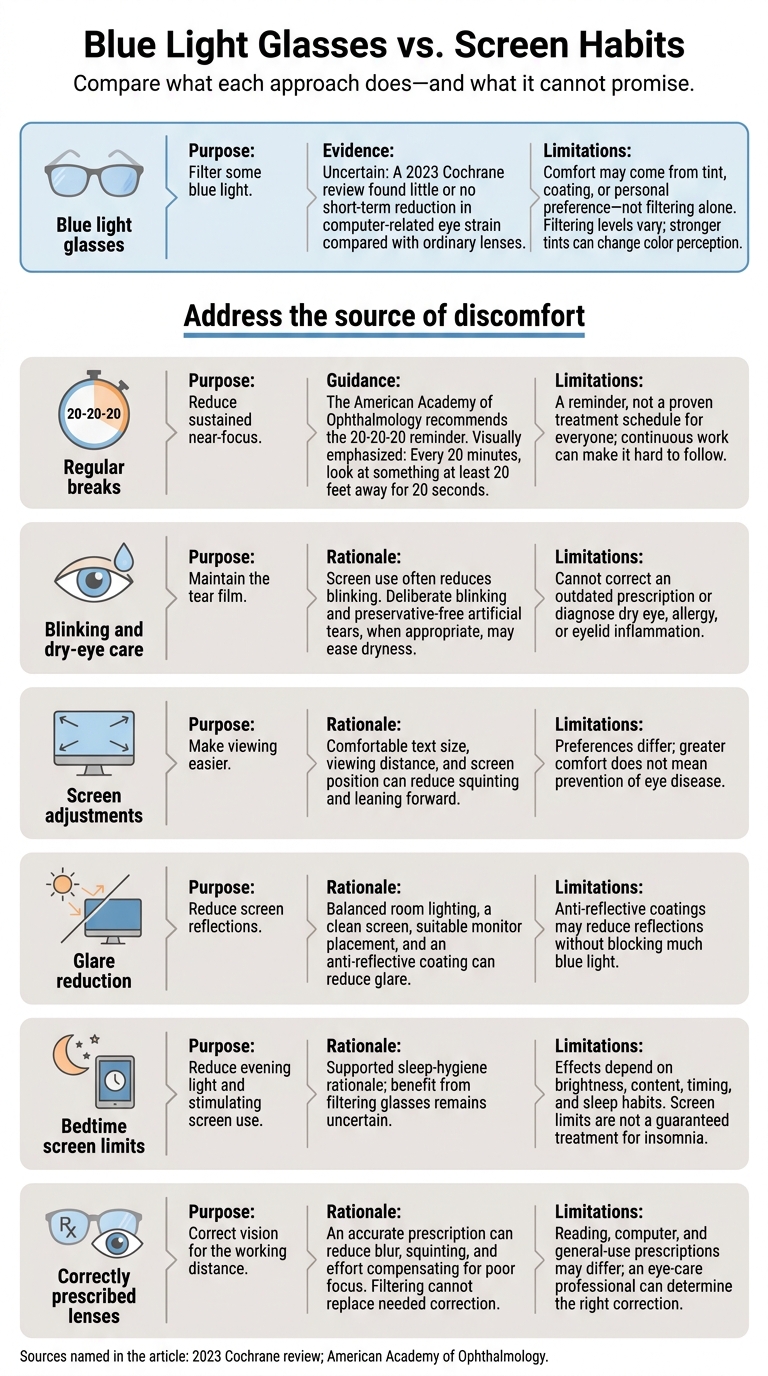
Blue Light Glasses vs. Screen Habits
Before buying blue-light glasses, consider simpler changes that address common causes of screen discomfort. Breaks, dry-eye care, and screen adjustments target these complaints more directly than blue-light filtering.
Here’s where the evidence is solid, mixed, or lacking.
| Strategy | Primary purpose | Why it may help | Drawbacks |
|---|---|---|---|
| Blue light glasses | Filter some blue light | Uncertain: A 2023 Cochrane review found little or no short-term reduction in computer-related eye strain compared with ordinary lenses. | Any comfort benefit may come from the tint, coating, or personal preference – not filtering alone. Filtering levels vary by product, and stronger tints can change color perception. |
| Regular breaks | Reduce sustained near-focus | Supported practical guidance: The American Academy of Ophthalmology recommends the 20-20-20 reminder: look at something at least 20 feet away for 20 seconds every 20 minutes. | This is a reminder, not a proven treatment schedule for everyone. Continuous work can make it hard to follow. |
| Blinking and dry-eye care | Maintain the tear film | Supported rationale: Screen use often reduces blinking. Deliberate blinking and preservative-free artificial tears, when appropriate, may ease dryness. | These steps cannot correct an outdated prescription or diagnose dry eye, allergy, or eyelid inflammation. |
| Screen adjustments | Make viewing easier | Supported practical rationale: Comfortable text size, viewing distance, and screen position can reduce squinting and leaning forward. | Preferences differ. A more comfortable setting does not mean it prevents eye disease. |
| Glare reduction | Reduce screen reflections | Supported practical rationale: Balanced room lighting, a clean screen, suitable monitor placement, and an anti-reflective coating can reduce glare. | Anti-reflective coatings may reduce reflections without blocking much blue light. |
| Bedtime screen limits | Reduce evening light and stimulating screen use | Supported sleep-hygiene rationale; uncertain benefit from filtering glasses. | Effects depend on brightness, content, timing, and sleep habits. Screen limits are not a guaranteed treatment for insomnia. |
| Correctly prescribed lenses | Correct vision for the working distance | Supported clinical rationale: An accurate prescription can reduce blur, squinting, and the effort needed to compensate for poor focus. Filtering cannot replace needed correction. | Reading, computer, and general-use prescriptions may differ. An eye-care professional can determine the right correction. |
Possible Pros: Comfort and Sleep
Some users find a mild tint or anti-reflective coating more comfortable. That preference does not prove blue-light filtering caused the benefit. Any sleep benefit from filtering glasses also remains uncertain.
Cons: Cost, Color Changes, and Uncertain Results
The 2023 Cochrane review covered 17 randomized controlled trials across six countries. It found little or no short-term reduction in computer-related eye strain compared with ordinary lenses. Protection against retinal damage or vision loss has not been established.
Prices and filtering strength vary, and stronger tints can interfere with color-sensitive work. Some users reported headaches or visual discomfort. However, reporting on adverse effects was limited and did not always establish that the glasses caused those symptoms.
For most readers, the purchase comes down to whether a possible comfort boost is worth the tint and cost.
Screen Habits That May Ease Discomfort
Start with the source of discomfort: focus, dryness, glare, or posture. Enlarge text, choose a comfortable viewing distance, and reduce reflections. Match screen brightness to the room instead of using a bright display in darkness.
Before bed, limit bright screens and keep a consistent sleep schedule. These steps may support sleep, but they do not guarantee relief.
Try these changes before paying for lens upgrades. Blue-light glasses are an optional comfort purchase, not a proven substitute for addressing screen habits.
Are Blue Light Glasses Worth the Cost?
Judge the cost by the problem you want to solve – not by a protection claim.
If changes to your screen habits or setup haven’t helped, focus on the symptom you want to address before paying extra.
| Common situation | Potential value | Main limitation | Recommended next step |
|---|---|---|---|
| Concern about screen damage | No proven protection value | Filtering has not been shown to prevent retinal damage or long-term eye disease. | Don’t pay extra for a protection claim. |
| Computer-related fatigue or headaches | Comfort may improve if the lenses also correct your prescription or reduce glare | Filtering alone has no clear short-term advantage over ordinary lenses. | Check your prescription and work setup; schedule an exam if symptoms persist. |
| Trouble falling asleep after nighttime screen use | An optional comfort trial | Glasses shouldn’t replace cutting back on evening screen use first. | Reduce screen use before bed; discuss persistent insomnia with a clinician. |
| Preference for tint or fewer reflections | The tint or anti-reflective treatment may provide the value | These features are separate from filtering. A noticeable tint may distract you or be unsuitable for work that requires accurate color. | Ask to see lens samples under your usual work lighting before choosing. |
| Persistent fatigue, headaches, blurred vision, fluctuating focus, or dry-eye symptoms | An eye exam may point to a better solution than another lens change | Filtering cannot treat the cause | Schedule an eye exam instead of continuing to buy coatings. |
Check Lens Features and Added Cost
Ask for an itemized quote that separates frames, prescription lenses, anti-reflective treatment, tint, and blue-light filtering.
These features do different jobs: prescription correction improves focus, anti-reflective treatment reduces reflections, tint changes incoming light, and blue-light filtering reduces part of the blue-light spectrum.
A lens can have one feature without the others. Ask whether filtering costs extra and whether the return or exchange policy covers discomfort or an unwanted tint. Confirm that your prescription suits your computer working distance. If your work requires accurate color, check how the lenses change color appearance.
When to Get an Eye Exam
If discomfort continues after changes to your screen habits or setup, your prescription or another eye condition may be the cause. Persistent or worsening fatigue, headaches, blurred vision, fluctuating focus, or dry-eye symptoms call for an eye exam. Eye Center of Northern Colorado provides eye exams, symptom evaluation, and prescription eyewear.
Sudden vision changes, new double vision, or severe eye pain require urgent medical assessment. Seek urgent or emergency care rather than waiting for a routine appointment or trying new glasses.
Conclusion: Optional Comfort, Not Proven Protection
Blue light glasses are an optional comfort choice, not proven eye protection. Research does not show that they prevent retinal damage or meaningfully reduce digital eye strain. Whether they help with sleep remains uncertain.
Weigh that uncertain benefit against the added cost. Buying them comes down to preference; they’re not a first-line solution. Prioritize an accurate prescription and screen habits: every 20 minutes, look 20 feet away for 20 seconds, and blink regularly.
Start with what’s causing the discomfort rather than choosing a stronger tint. If it keeps coming back, have the cause evaluated instead of buying a stronger filter.
FAQs
Can I wear blue light glasses all day?
Yes – clear blue-light lenses are typically marketed for all-day screen use, but they block less blue light than amber or darker lenses.
Most people don’t need blue light glasses for eye health. Screen discomfort is often linked more to dry eyes or screen setup than to blue light.
If better sleep is your goal, amber or darker lenses are usually better suited to evening use – not all-day wear.
Do screen night modes replace blue light glasses?
Screen night modes and blue light glasses take different approaches to reducing blue light exposure. Free, built-in night modes shift screen colors to warmer tones, cutting evening blue light exposure and potentially helping with sleep. Blue light glasses filter blue light consistently across devices.
Neither option is a guaranteed fix for digital eye strain. For overall eye health, the most effective approach remains good ergonomics, regular eye exams, and the 20-20-20 rule: every 20 minutes, look at something 20 feet away for 20 seconds.
How can I tell what causes my screen discomfort?
Blue light alone rarely causes screen discomfort. More common causes include blinking less, which can leave your eyes dry and irritated; focusing on nearby objects for long periods; poor posture; sitting at the wrong distance from your screen; glare; and uncorrected vision problems, such as nearsightedness or astigmatism.
If changing your habits doesn’t ease the discomfort, the experts at Eye Center of Northern Colorado can evaluate your eyes to help find the cause.