

Preparing for cataract surgery ensures a smoother procedure and faster recovery. Here’s what you need to know:
- Pre-Surgery Tests: Your surgeon will perform detailed eye exams and take measurements like keratometry and biometry to customize your intraocular lens (IOL). If you use contact lenses, you may need to stop wearing them weeks before testing.
- Medication Review: Inform your doctor about all medications, including blood thinners and supplements, as some may need adjustments.
- Choosing an IOL: Options include monofocal (basic distance vision), multifocal (multiple distances), EDOF (distance and intermediate vision), or toric (for astigmatism). Discuss your vision goals with your surgeon.
- Preparation Timeline:
- 4–6 weeks before: Address dry eye issues.
- 2–3 weeks before: Arrange transportation and prepare your home for recovery.
- 3 days before: Start prescribed eye drops.
- Day before: Avoid alcohol, confirm your ride, and pack essentials like ID and sunglasses.
- Surgery Day: Skip food/drinks for 6–8 hours, wear loose clothing, and bring necessary documents and medications.
Post-Surgery Care: Rest, avoid heavy lifting, and use prescribed eye drops. Contact your doctor immediately if you experience severe pain, vision loss, or unusual symptoms.
How to Prepare and Plan for Cataract Surgery
sbb-itb-5ef6ec9
Pre-Surgery Evaluations You Need to Know About
Before cataract surgery can be scheduled, your surgical team will perform several evaluations. These tests aren’t just routine – they play a crucial role in shaping your procedure and influencing your recovery. Typically, these evaluations take 1–2.5 hours and help create a surgical plan specifically tailored to your eyes.
Eye Exam and Pre-Operative Measurements
This exam goes beyond a basic vision check. Your surgeon will assess your visual acuity, examine the lens and nearby structures with a slit-lamp, and dilate your pupils to get a clear look at the retina and optic nerve. They’ll also check for conditions like macular degeneration.
Two key measurements are critical for planning your surgery:
- Keratometry: Measures the curvature of your cornea.
- Biometry: Determines the axial length of your eye.
These measurements are used to calculate the correct power for your intraocular lens (IOL). Even a small error – just 1 mm – can significantly impact lens power, potentially altering it by nearly 2.5 times.
If you wear contact lenses, you’ll need to stop using them before your evaluation. Soft lenses can temporarily change the shape of your cornea, so they should be discontinued 7–14 days beforehand. Rigid gas permeable lenses may require up to 4 weeks without use. Additionally, your surgeon will measure intraocular pressure using tonometry to rule out conditions like glaucoma.
Medical History and Medication Review
Your medical history plays a pivotal role in surgical planning. Conditions like diabetes or uveitis may require preventative anti-inflammatory drops. Your surgical team will also review any medications you’re taking, especially those for anxiety or sleep, to ensure proper sedation management.
Certain medications need special attention. For instance, if you’ve ever taken tamsulosin (Flomax), even years ago, it’s crucial to inform your surgeon. This medication can cause Intraoperative Floppy Iris Syndrome (IFIS), making the iris unstable during surgery and increasing the risk of complications. Herbal supplements like fish oil, ginkgo biloba, and vitamin E should also be disclosed, as they can affect bleeding.
"The risk of stroke or blood clots from stopping anticoagulants is greater than the small risk of minor bleeding during cataract surgery." – Specialty Vision
For this reason, you should never stop blood thinners on your own. Your surgical team will work with your primary care doctor to ensure your medication levels are safely managed before the procedure.
Choosing Your Intraocular Lens (IOL)
After completing your measurements, you’ll work with your surgeon to select the IOL that will replace your clouded natural lens. Your lifestyle and vision goals will guide this decision.
Here’s a breakdown of the main IOL options:
| IOL Type | Best For | Key Tradeoff |
|---|---|---|
| Monofocal | Clear distance vision; budget-conscious patients | Reading glasses are still needed for close tasks |
| Multifocal | Reduces dependence on glasses at multiple distances | May cause halos or glare, especially at night |
| EDOF | Distance and intermediate vision (e.g., computer use) | Glasses may still be needed for very fine print |
| Toric | Corrects astigmatism | Typically more expensive than standard monofocal lenses |
Standard monofocal lenses are typically covered by Medicare and most private insurance plans. However, premium lenses like multifocal or toric options are considered elective upgrades, meaning you’ll need to pay the difference out-of-pocket. If you’re looking for near-vision flexibility without extra costs, ask about monovision. This approach uses standard lenses to optimize one eye for distance and the other for near tasks.
Be open with your surgeon about your vision priorities. Whether it’s driving at night, reading without glasses, or working comfortably on a computer, clearly communicating your needs will help ensure you get the lens that best fits your lifestyle.
Step-by-Step Preparation Timeline
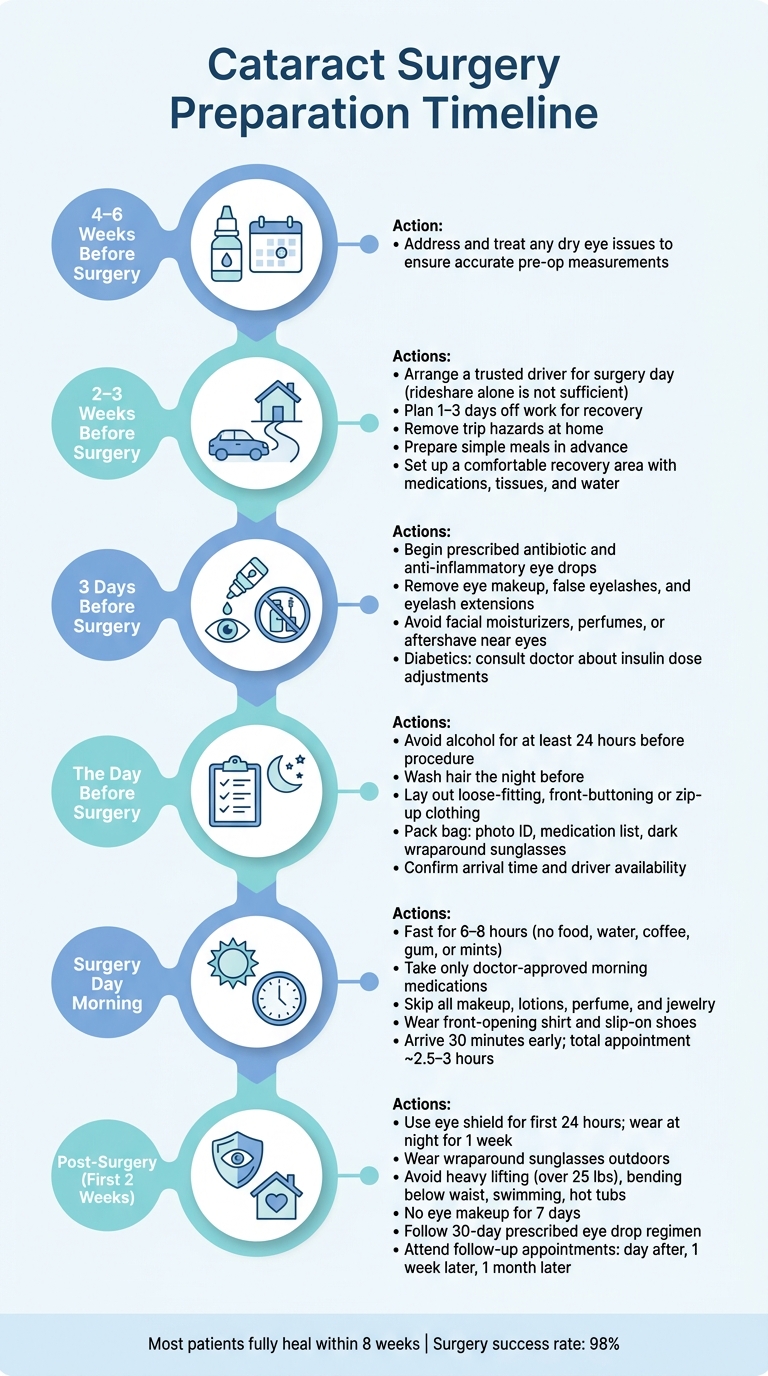
Cataract Surgery Preparation Timeline: Step-by-Step Guide
Once you’ve chosen your IOL and finalized your surgical plan, it’s time to focus on getting yourself ready – both medically and practically. Having a clear timeline helps you avoid any last-minute stress and ensures you’re fully prepared for the day of your procedure.
Weeks Before Surgery: Medical and Practical Preparations
Preparation starts earlier than you might think. About 4 to 6 weeks before surgery, it’s important to address any dry eye issues. This ensures your eye measurements are accurate for the procedure.
Around 2 to 3 weeks before surgery, focus on logistics. Arrange for a trusted person – whether a family member or friend – to drive you to and from the surgery center. Since sedation will make it unsafe to drive for at least 24 hours, rideshare services like Uber or Lyft may not be an option unless a responsible adult accompanies you and your surgeon approves it. Also, plan to take 1 to 3 days off work to allow time for recovery and follow-up appointments.
At home, take steps to make your recovery easier. Remove any trip hazards, prepare simple meals in advance, and set up a comfortable recovery area with essentials like medications, tissues, and water.
These early preparations ensure you’re well-organized and ready for the more specific steps closer to surgery.
Days Before Surgery: Pre-Operative Instructions
Three days before surgery, begin using any prescribed antibiotic or anti-inflammatory eye drops as directed.
"Starting the drops before surgery gives your eye a better chance to heal from the inflammation caused by surgery and to fight infection." – Gregory Scimeca, MD, Eye Physicians and Surgeons
Make sure to remove all eye makeup, false eyelashes, and eyelash extensions before the day of surgery. Avoid using facial moisturizers, perfumes, or aftershave near your eyes. If you have diabetes, consult your doctor about whether to adjust your morning insulin dose, and bring your insulin and syringes with you to the surgical center.
Finally, The Day Before Surgery: Final Preparations
The evening before surgery is all about simplifying your morning. Confirm your arrival time with the surgical center and double-check that your driver is still available. Avoid alcohol for at least 24 hours before the procedure, as it can thin the blood and interfere with sedation.
Wash your hair the night before. Choose a loose-fitting, front-buttoning shirt or zip-up sweater to wear the next day – this way, you won’t need to pull anything over your head after the procedure. Pack a small bag with essentials like your photo ID, a list of your current medications, and a pair of dark wraparound sunglasses for the ride home.
"A calm, prepared evening reduces day-of stress and supports safe anesthesia and smooth recovery." – Robert M. Lee, MD, St. Luke’s Cataract & Laser Institute
What to Do on the Day of Surgery
Stick to this routine on surgery day to keep things running smoothly. The prep work you did the night before – like packing your bag, confirming your ride, and choosing a comfortable outfit – should make your morning stress-free.
Morning Routine and Personal Hygiene
Kick off the day with a shower to make sure your skin is clean and dry. Skip makeup, mascara, or eyeliner, and avoid using face creams, lotions, perfume, or aftershave. Dress in a front-opening shirt and slip-on shoes, and leave jewelry at home.
Once you’re ready, it’s time to focus on fasting and any medications you need to take.
Fasting and Morning Medications
Stick to the fasting guidelines: no food or drinks (this includes water, coffee, tea, gum, or mints) for 6–8 hours before your surgery. Take only the essential medications your doctor has instructed you to take.
"Having an empty stomach is a mandatory safety protocol for any procedure involving sedation." – Clearview Eye
For instance, if you’re on blood pressure medication, you can usually take it with just a small sip of water. However, don’t stop taking blood thinners or antiplatelet medications unless both your surgeon and prescribing doctor have specifically told you to do so. If you have diabetes, make sure your blood sugar level is below 250–300 mg/dL before heading out.
What to Bring to the Surgery Center
Double-check your pre-packed bag to make sure you’ve got everything you’ll need. Here’s a quick review of the essentials:
| Category | What to Bring |
|---|---|
| Documents | Photo ID, insurance cards (primary and secondary), and a current medication list |
| Medical | Prescribed pre-op eye drops (in original packaging) and a blood glucose meter, if needed |
| Recovery | Dark wraparound sunglasses for the ride home |
| Personal | Hearing aids (if applicable) and a fully charged phone for waiting time |
Once you’ve confirmed your bag is ready to go, aim to arrive at the surgery center 30 minutes early. This gives you enough time to handle any last-minute paperwork or preparations. While the cataract procedure itself takes only 10 to 20 minutes per eye, you should plan for the entire appointment to last about 2.5 to 3 hours, including preparation and recovery time. Having a charged phone or headphones can make the waiting period more comfortable.
Post-Surgery Care and Early Recovery
When you get home after your surgery, rest should be your top priority. Typically, patients spend around 20–30 minutes in a recovery room immediately after the procedure, where their vital signs are closely monitored. Once you’re cleared to leave, heading straight home and taking a nap can set the stage for a smoother recovery.
Arranging Transportation and Support at Home
Recovering at home starts with proper planning. Since anesthesia can leave you feeling groggy, you’ll need a responsible adult to drive you home and stay with you for at least 24 hours. Fatigue is common during the first day or two, so having someone assist with meals and household tasks can make a big difference.
Protecting the Operated Eye
Taking care of your eye post-surgery is crucial. Use the provided eye shield for the first 24 hours and continue wearing it at night for one week. During the day, wraparound sunglasses can help reduce light sensitivity and shield your eye from dust and debris.
For the first two weeks, avoid activities that could strain or harm your eye, including:
- Heavy lifting (anything over 25 lbs)
- Bending that places your head below your waist
- Swimming or using hot tubs
- Wearing eye makeup like eyeliner or mascara for seven days
These precautions are essential to prevent increased eye pressure or other complications that could interfere with healing. Additionally, stick to your prescribed 30-day eye drop regimen to manage inflammation and lower the risk of infection.
Warning Signs That Require Immediate Attention
While mild discomfort – such as irritation, redness, light sensitivity, or a gritty sensation – is expected in the first few days, certain symptoms should raise concern. If you experience any of the following, contact the Eye Center of Northern Colorado immediately:
| Symptom | Why It Matters |
|---|---|
| Sudden or significant vision loss | Could indicate a serious complication |
| Severe or persistent eye pain | Pain unrelieved by over-the-counter medication is abnormal |
| Increased redness or swelling | May signal infection or inflammation |
| New flashes of light or floaters | Possible retinal issue |
| Double vision | Could point to pressure or structural problems |
"With prompt medical attention, these problems [infection, bleeding, inflammation] can usually be treated successfully." – Eye Care Center of Northern Colorado
Key Takeaways for a Successful Cataract Surgery
Proper preparation and care are the backbone of a smooth cataract surgery and recovery process. With a remarkable success rate of 98%, this procedure significantly improves vision for about 90% of patients who undergo it.
Here’s what you need to know:
- Accurate preoperative measurements: These play a big role in selecting the right intraocular lens (IOL) for your needs.
- Lens options: Standard monofocal lenses are usually covered by insurance, but premium lenses may come with additional out-of-pocket costs.
On surgery day, simplicity is key. Wear loose, front-buttoning clothing, skip makeup and lotions, and stick to your fasting instructions. These small steps can make a big difference in ensuring the day goes smoothly.
"Your body’s readiness on surgery day influences your surgical experience and how quickly you get back to normal activities." – Dr. Lee Katzman, Award-Winning San Diego Eye Surgeon
Post-surgery care is just as important. Use your prescribed eye drops as directed – typically for about 30 days – and make sure to attend your follow-up appointments, which are often scheduled for the day after surgery, one week later, and then again at one month. Most patients fully heal within 8 weeks.
If you notice cloudy vision months or even years after surgery, it could be posterior capsule opacification (PCO). This common issue is easily resolved with a quick YAG laser procedure. Addressing any complications promptly, including PCO, helps preserve the long-term success of your vision.
FAQs
How do I know which IOL is right for me?
Choosing the right intraocular lens (IOL) is a highly personalized decision made during your cataract consultation. Your surgeon will carefully evaluate your eye health and take precise measurements to determine the most suitable options. It’s important to share details about your daily habits, vision goals, and how you feel about wearing glasses. Together, you’ll weigh factors such as your lifestyle, budget, and any pre-existing eye conditions to pick the IOL that aligns with your long-term vision needs.
Can I keep taking blood thinners before surgery?
In most cases, you can keep taking blood thinners for routine cataract surgery since the procedure usually results in very little bleeding. However, never stop or change your medication without proper medical advice. Make sure to tell your surgeon about all the blood thinners you’re on and carefully follow the instructions from your surgical team, who will coordinate with your prescribing doctor to keep you safe.
When can I drive and return to work after surgery?
You’ll need a ride home after surgery because anesthesia can impair your ability to drive safely. Most people take about 1 to 3 days off work for the initial recovery period. Depending on your job and your doctor’s recommendations, you might be able to return to work after your one-day post-operative check-up, as long as you stick to restrictions on heavy lifting and intense physical activity. Always check with your surgeon to ensure it’s safe to drive or get back to work.