
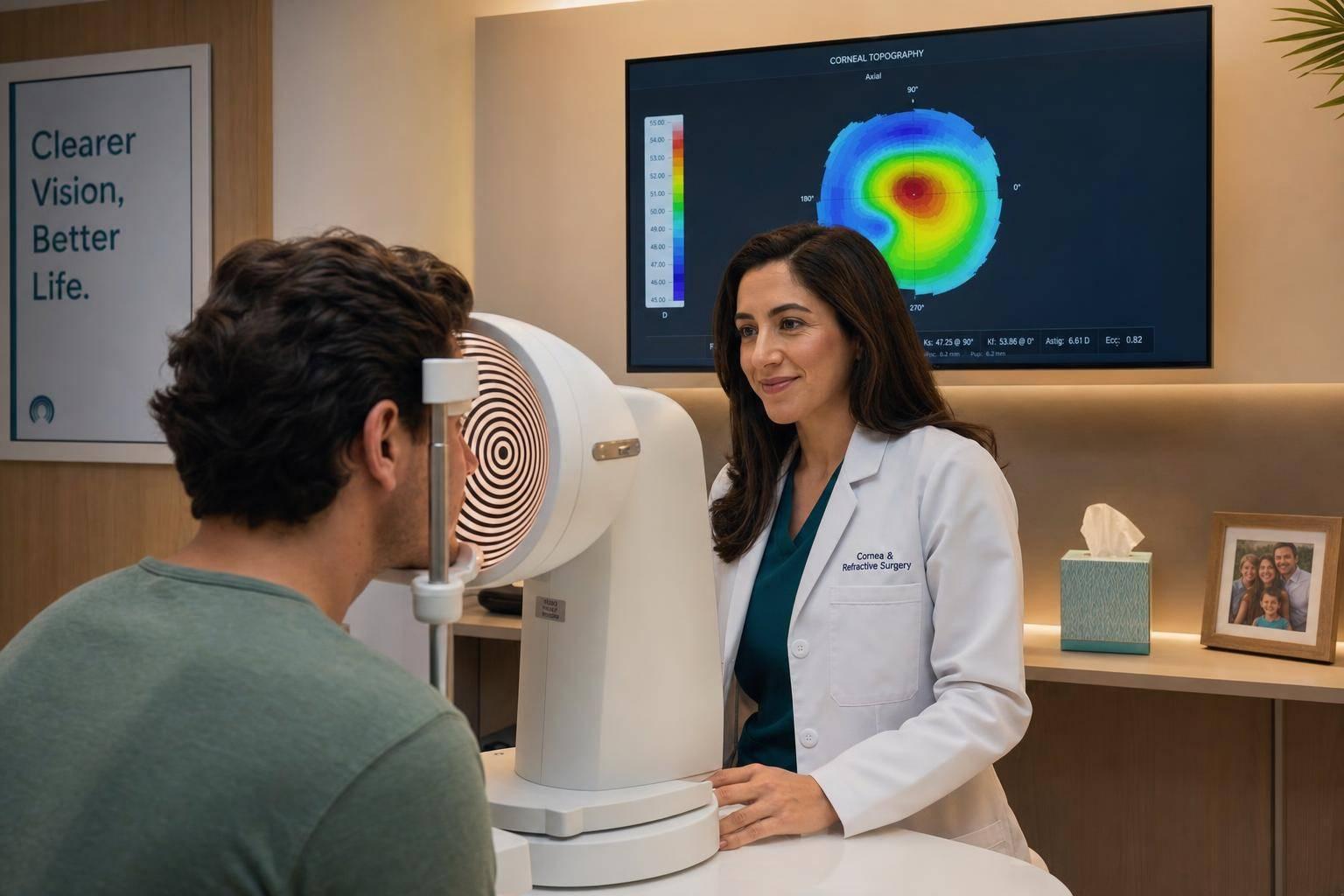
Keratoconus does not have one proven cause. From what I can see, it usually comes from a mix of family history, eye rubbing, allergies, and some health conditions that make a person more likely to get it or have it get worse.
Here’s the short version:
- The exact cause is still unknown
- Genetics matter, but they do not explain every case
- Eye rubbing is one of the main things you can stop
- Allergies often matter because they lead to itching and rubbing
- Younger people often worsen faster once keratoconus starts
- Doctors check corneal shape and thickness to find it early
- It can show up from age 9 to 56, though it often starts in the teen years or early adulthood
- Diabetes has been linked to lower odds of advanced keratoconus, but it does not rule the disease out
What this means for you is simple: if you have blurry vision, more glare, eye rubbing, or a parent or sibling with keratoconus, it makes sense to get your eyes checked and ask about corneal testing.
I’d sum it up this way: keratoconus is less about one single cause and more about a pattern of risk, stress on the cornea, and close follow-up over time.
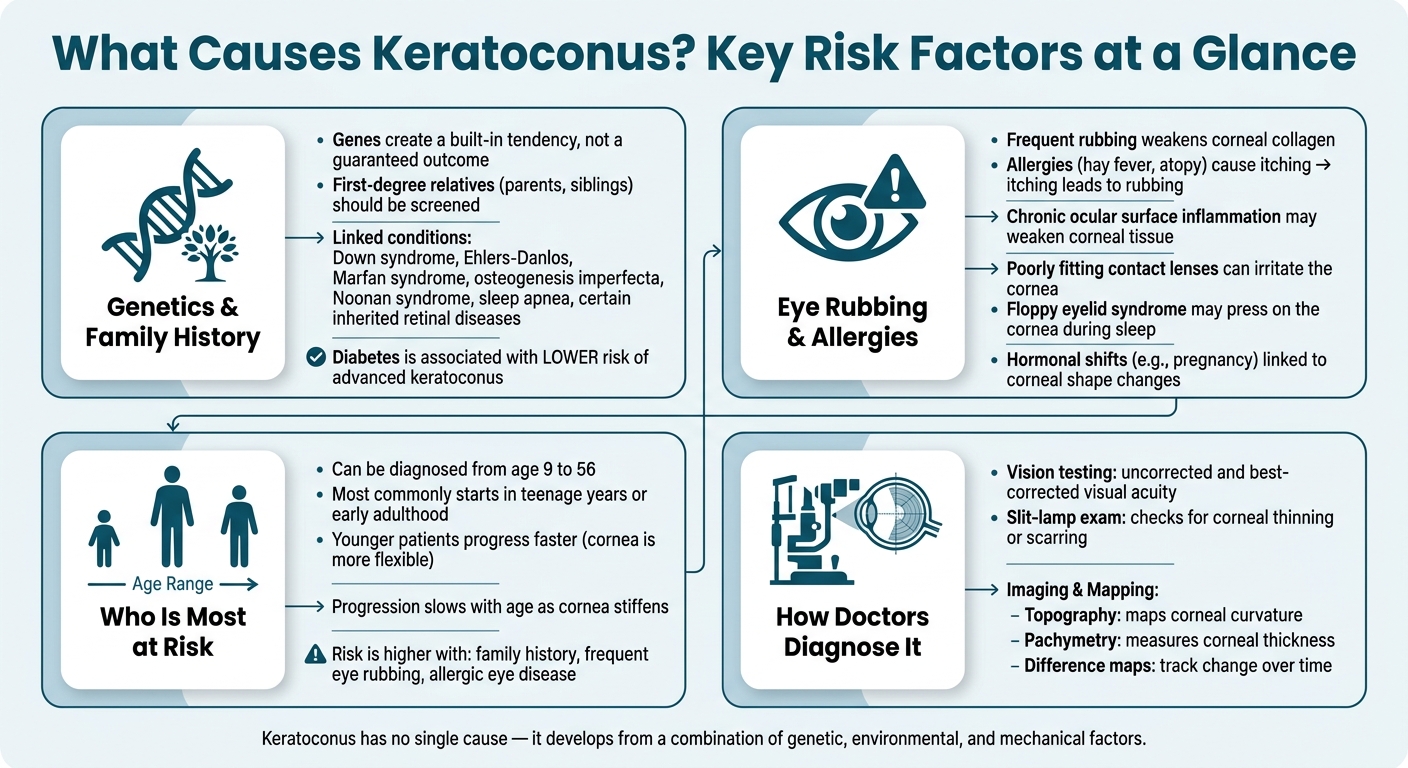
Keratoconus Risk Factors: Causes, Triggers & Who Is at Risk
Risk Factors for Keratoconus
sbb-itb-5ef6ec9
Genetics, Family History, and Related Medical Conditions
Genes play a part in keratoconus, and that link tends to show up most clearly through family history and a few related health conditions.
Research points to a genetic tie, but heredity on its own doesn’t cause keratoconus. Plenty of people with keratoconus don’t know of any relatives who had it. So genetics looks more like a built-in tendency than a sure thing.
Why Family History Matters
Keratoconus can run in families. If a parent or sibling has been diagnosed, tell your eye care professional. That detail can matter more than people think.
First-degree relatives should also ask about screening for early corneal changes. Catching those changes early can make a big difference.
Medical Conditions Linked to Higher Risk
Some medical conditions are linked with a higher risk of keratoconus. These include:
- Down syndrome
- Connective tissue disorders such as Ehlers-Danlos, Marfan syndrome, and osteogenesis imperfecta
- Certain inherited retinal diseases
- Noonan syndrome
- Sleep apnea
Diabetes is associated with a lower risk of advanced keratoconus.
Even so, none of these factors decides the outcome by itself. Other triggers, including eye rubbing and allergies, can also affect how the condition progresses.
Eye Rubbing, Allergies, and Other Possible Triggers
Frequent eye rubbing is one of the clearest risk factors people can change when it comes to keratoconus. It may seem harmless, but repeated rubbing can weaken corneal collagen and may speed up progression in an eye that’s already prone to the condition. Allergies matter mostly because they make the eyes itch – and itchy eyes often lead to more rubbing.
How Allergies and Itching Can Play a Role
Allergic conditions such as hay fever and atopy are linked to keratoconus for a pretty simple reason: they make the eyes itch, and itching often leads to rubbing. That chain reaction can put extra stress on the cornea over time. When allergy symptoms are treated, the urge to rub often drops too.
Other Possible Contributing Factors
Rubbing gets most of the attention, but it’s not the only thing that may put stress on the cornea.
- Chronic ocular surface inflammation may weaken corneal tissue over time.
- Poorly fitting contact lenses can irritate the cornea.
- Floppy eyelid syndrome, often seen alongside sleep apnea, may put pressure on the cornea during sleep.
- Hormonal shifts – such as those during pregnancy – have been associated with changes in corneal shape, which suggests hormones may play a part in corneal stability.
These patterns help doctors spot who may need closer screening.
Who Is More Likely to Develop Keratoconus and How Doctors Evaluate It
Keratoconus most often shows up during the teenage years or early adulthood, but it can be diagnosed in children as young as 9 and in adults as old as 56. Some people develop it even when there isn’t an obvious reason.
Risk Patterns Doctors Look For
After doctors know the main risk factors, they look more closely at who may be more likely to get keratoconus and who may need closer follow-up. Family history, frequent eye rubbing, and allergic eye disease matter because they increase the odds of keratoconus or faster progression.
Age doesn’t cause keratoconus. But it does affect how fast the cornea can change once the condition starts. In younger patients, keratoconus often moves faster. As people get older, it usually slows down because the cornea becomes stiffer.
How an Eye Exam Helps Confirm the Diagnosis
Risk factors can point doctors in the right direction, but the eye exam is what helps confirm whether keratoconus is already there. Since the condition can appear without a clear cause, doctors depend on both risk patterns and corneal testing to catch it early.
Doctors diagnose keratoconus by checking the cornea’s shape, thickness, and how it changes over time. A full eye exam usually includes vision testing, both uncorrected and best-corrected visual acuity, along with a slit-lamp exam to look for corneal thinning or scarring.
They also use a few key tests:
- Topography maps the cornea’s curvature
- Pachymetry measures corneal thickness
- Difference maps show change over time
Taken together, these measurements help doctors see whether the cornea is stable or whether it’s still changing.
Conclusion: Keratoconus Usually Develops From Multiple Factors
Keratoconus usually develops from a mix of genetic, environmental, and mechanical factors. In plain terms, it doesn’t come from one single cause. Family history, eye rubbing, allergies, and certain medical conditions all point to a multifactorial disease that can increase risk and speed up progression.
Diabetes has been linked to a lower risk of advanced keratoconus, but it does not rule out the disease.
Because progression can happen faster in younger patients, regular eye exams matter when vision starts to change. Keratoconus often moves faster in children, teenagers, and young adults, which makes early monitoring especially important.
If your vision is changing, schedule a comprehensive eye exam with Eye Center of Northern Colorado. They can check your corneal health and recommend next steps.
FAQs
Can keratoconus happen without a family history?
Yes. Keratoconus can happen even if no one else in your family has it. Genes may play a part, but some people are diagnosed without any known family history.
If you’re worried about changes in your vision or corneal health, Eye Center of Northern Colorado can provide a full evaluation and talk through treatment options based on your needs.
Does stopping eye rubbing help slow keratoconus?
Yes. Avoiding eye rubbing matters when you’re managing keratoconus. Chronic rubbing can make the condition worse and may add to corneal thinning.
If you’re worried about progression, the specialists at Eye Center of Northern Colorado can evaluate your condition and talk through management options, including corneal cross-linking.
When should I get tested for keratoconus?
Schedule a full eye exam if you notice changes in your vision. Finding problems early can help protect your eye health.
Don’t brush off symptoms or shifts in how you see. They can point to an underlying issue. If you’re concerned about keratoconus or other vision problems, contact Eye Center of Northern Colorado to schedule an appointment.