
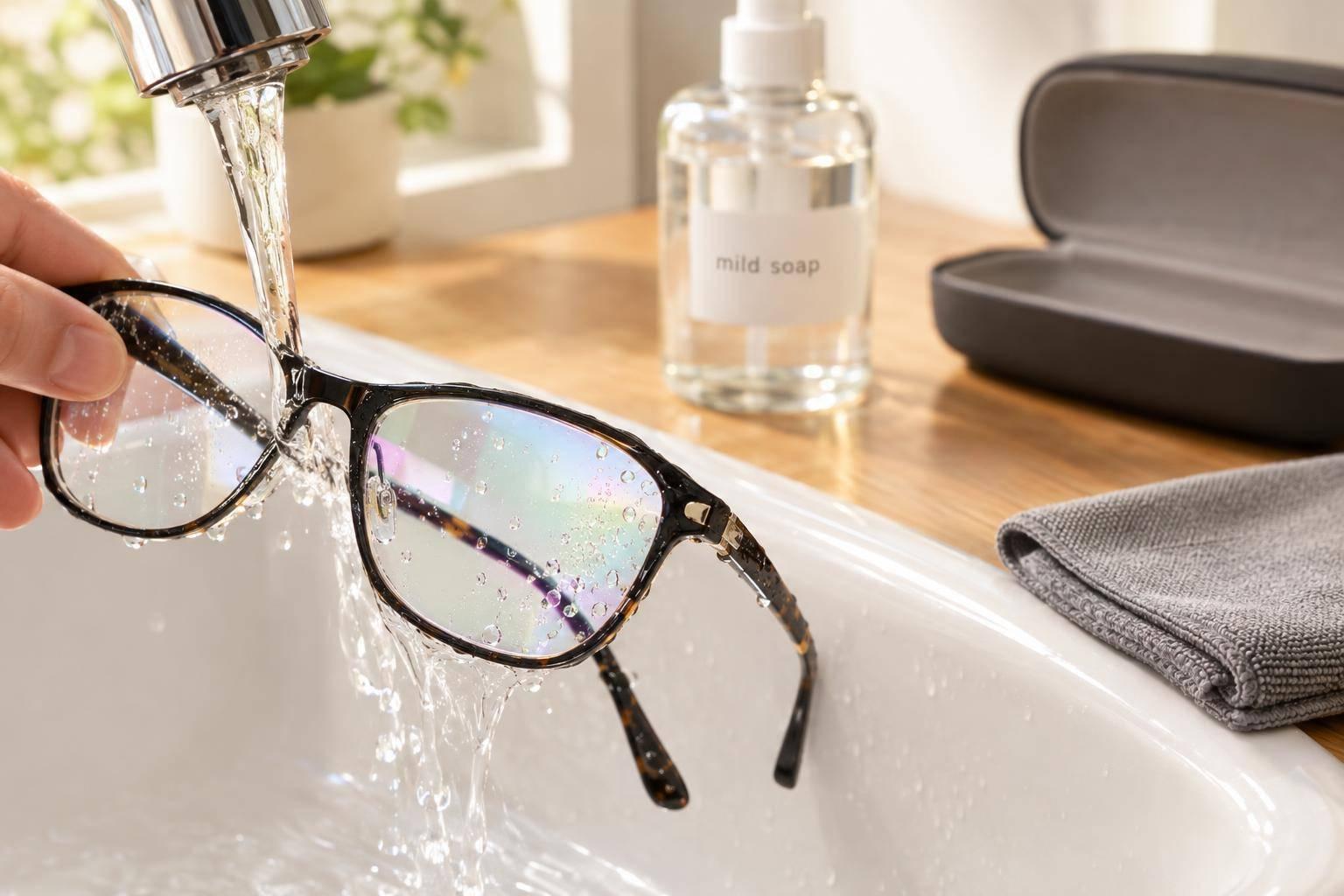
Scratch-resistant lenses can still scratch. My rule: check the manufacturer’s care instructions, then rinse away grit with lukewarm water before wiping.
Here’s the five-step routine I recommend:
- Rinse first. Use lukewarm – not hot – water to wash away loose grit.
- Wash with approved mild soap. If your manufacturer allows it, use one small drop of lotion-free dish soap, then rinse well.
- Dry gently. Use a clean microfiber lens cloth, not tissues or your shirt.
- Choose coating-safe sprays and wipes. Use approved products for smudges – not as a substitute for rinsing off grit.
- Store glasses in a clean, rigid case. Keep lenses away from heat, harsh cleaners, and rough surfaces.
<u>Cleaning removes dirt, not scratches.</u> I recommend skipping abrasive home remedies and asking an optician about lasting scratches or peeling coatings. If clean lenses still leave you with blur or double vision, get an eye exam.
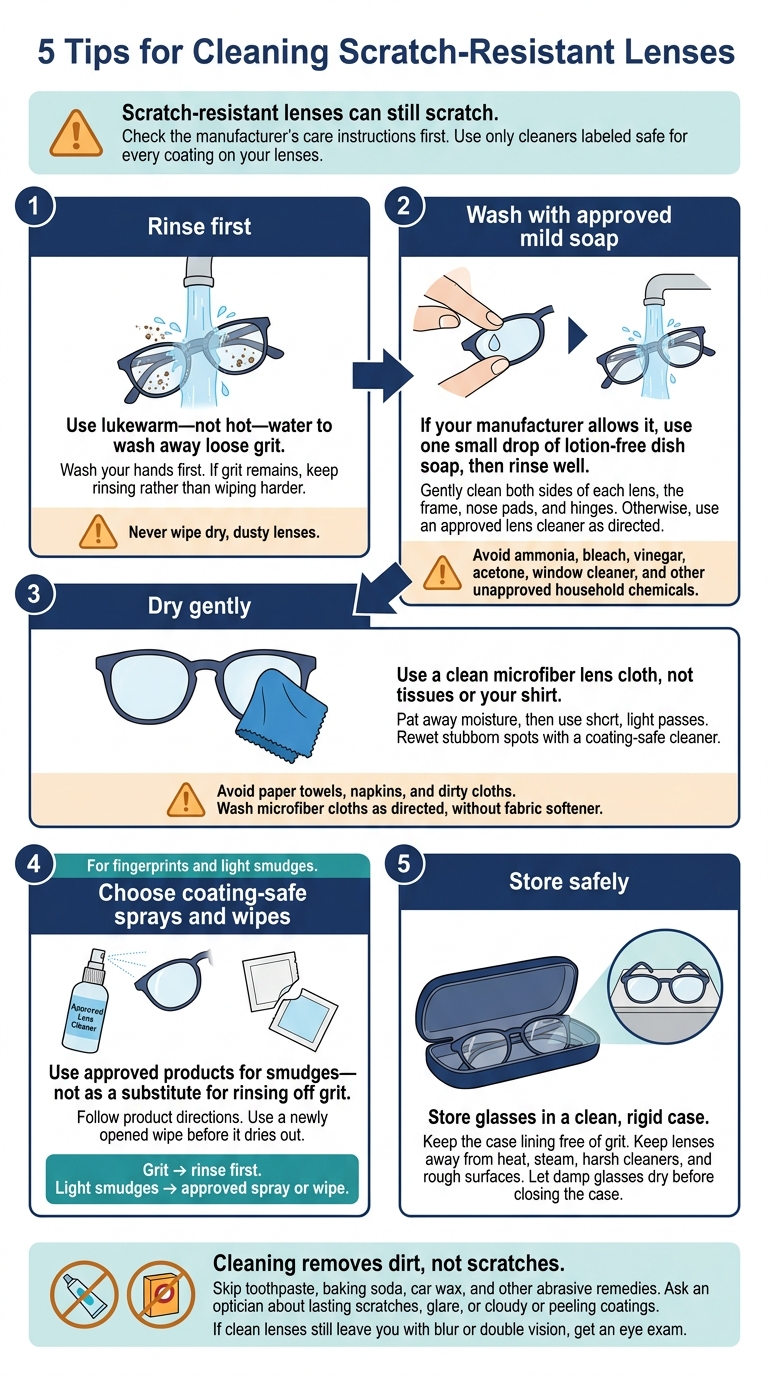
5 Tips for Cleaning Scratch-Resistant Lenses
Follow Your Lens Care Instructions
Before trying any cleaner, check your care guide for your lens material, coatings, approved cleaners, and drying method. Use only cleaners labeled safe for every coating on your lenses, including anti-reflective, photochromic, and water- or oil-repellent coatings. Don’t assume window or screen cleaners are safe for coated eyeglasses.
Lost the guide or unsure which coatings you have? Contact the optical department where you bought your glasses. Ask them to check your order records and share the manufacturer’s care instructions before you try a new soap, spray, or wipe.
Cleaning removes dirt and oil – not scratches. Skip toothpaste, baking soda, car wax, and other abrasive remedies.
You may be able to live with scratches near the edges. But scratches in your viewing area, glare, or cloudy or peeling coatings call for an optician’s exam.
Once you know what’s safe for your lenses, rinse away loose grit with lukewarm water before wiping.
sbb-itb-5ef6ec9
1. Rinse With Lukewarm Water Before Wiping
Rinse before you wipe. Water helps wash away abrasive particles that could scratch your lenses.
What you need
Gather lukewarm tap water, lotion-free hand soap, and a clean microfiber cloth. Check that the cloth has no dust, oils, or grit that could transfer to your lenses.
How to rinse safely
Check your lens care instructions before you begin. Wash your hands, then dry them with a clean, lint-free towel. Hold your glasses by the bridge or temple tips to avoid touching the lenses.
Run lukewarm – not hot – water over both sides of each lens, followed by the frame and nose pads. Let the water flush away loose particles before you do any wiping.
Check both lens surfaces under good lighting. If you still see grit, keep rinsing rather than wiping harder. Oily smudges may remain; leave those for the next cleaning step with your approved mild soap.
Damage risks to avoid
Don’t wipe dry, dusty lenses. Trapped particles can scratch the surface.
Avoid hot water and steam, which can damage coatings. Skip strong spray settings, and don’t set your glasses lens-down in the sink.
2. Wash With Mild Soap Approved for Your Lenses
Recommended tools and materials
After rinsing away the grit, use one small drop of mild, lotion-free dish soap – but only if your lens manufacturer approves it. Otherwise, choose a cleaner labeled for eyeglass lenses and follow its directions.
How to wash lenses safely
Apply the approved soap to clean fingertips. Gently wash both sides of each lens, then clean the frame, nose pads, and hinges. Don’t twist the frame or force cleaner into hinge gaps.
Rinse under lukewarm water until all soap film is gone.
Damage risks to avoid
Avoid ammonia, bleach, vinegar, acetone, window cleaner, and other unapproved household chemicals. These can damage lens coatings or frame parts. Skip oily soaps and those containing lotion, too. They can leave residue that makes lenses smear.
3. Dry Gently With a Clean Microfiber Cloth
Recommended tools and materials
Use a clean, lint-free microfiber lens cloth. If it’s dirty, replace it.
Coating-safe technique
After washing, dry the lenses before leftover moisture or residue dries back onto the surface.
Hold your glasses by the bridge or temples. Gently pat away moisture, then wipe both sides of each lens with short, light passes. If a spot won’t come off, rewet it with a coating-safe cleaner.
Damage risks to avoid
Don’t use tissues, paper towels, napkins, shirt sleeves, or dirty cloths. Their fibers and trapped debris can scratch lenses – even those with a scratch-resistant coating.
Wash microfiber cloths as directed, without fabric softener, and let them dry completely before using them again.
4. Use Sprays and Wipes Safe for Your Coatings
After removing grit with soap and water, use a coating-safe spray or wipe to clean fingerprints and light smudges.
Recommended tools and materials
Choose a manufacturer-approved lens spray with a clean microfiber cloth, or individually packaged premoistened wipes labeled safe for eyeglasses and your lens coatings. If the label is unclear, check your lens care instructions.
Coating-safe technique
Follow the product directions, including spraying the cloth rather than the lenses if instructed. Use a newly opened wipe before it dries out. Clean with light pressure and small circles.
Match the cleaning method to the mess: soap and water for grit, spray and a cloth for smudges, and premoistened wipes for quick touch-ups. Sprays and wipes help remove residue – not embedded debris.
Damage risks to avoid
After a trip to the beach, time in a workshop, or other dusty exposure, rinse your lenses under lukewarm running water before wiping. Sprays and wipes alone won’t remove grit.
Use only products approved in your lens instructions.
5. Protect Your Lenses Between Cleanings
Once your lenses are clean, keep them safe from scratches between uses.
Recommended tools and materials
Choose a clean, rigid case that closes without squeezing the frames. Keep its lining free of grit and debris. A hard case helps protect your glasses from keys, dust, and accidental impacts.
Coating-safe technique
Store your glasses in their case whenever you’re not wearing them. Open the case fully, then hold the glasses by the bridge or temples as you lower them inside. If you set them down outside the case, choose a clean, secure surface and keep the lenses facing up.
Damage risks to avoid
Keep your glasses away from heat and steam between cleanings. If they’re damp, let them air-dry before closing the case – never use a hair dryer. Keep harsh cleaners away from the lenses, too.
Never try to polish out scratches with toothpaste, baking soda, or abrasives. Ask an optician to check lenses with persistent scratches, peeling, or cracks.
Conclusion: Clean Gently and Get Damaged Lenses Checked
Together, these habits help protect the coating and reduce new scratches. Keep cleaning simple and use only approved products.
If a mark remains after cleaning, stop scrubbing. Check the clean lenses in bright, indirect light. Lines or cloudy patches that don’t go away usually point to scratches or coating damage – not leftover residue. Ask an optician whether you need replacement lenses, especially if the damage crosses your main viewing area or causes glare.
If haze keeps returning or you notice coating damage, contact the optical team at Eye Center of Northern Colorado for a lens check.
If your lenses are clean but you still have blur, double vision, headaches, or poor clarity, get an eye exam rather than repeating the cleaning routine.
FAQs
How often should I clean my scratch-resistant lenses?
Clean your scratch-resistant lenses whenever they get dirty or smudged, at a minimum. Use proper lens-cleaning steps to protect the coating.
If you wear contact lenses, clean them daily and every time you store them. Use new solution each time, and follow your prescribed replacement schedule.
How can I clean my glasses without running water?
Remove dust with a dry microfiber cloth. Then apply a lens-safe cleaner or use pre-moistened lens wipes, wiping gently in small circles. Don’t use saliva or non-sterile liquids. For lingering smudges, lightly wipe again with a clean, dry part of the cloth to prevent streaks.
If you’re unsure how to clean your lenses safely, don’t improvise. Ask the Eye Center of Northern Colorado optical team for lens-care guidance.
When should I replace my microfiber lens cloth?
Replace your microfiber lens cloth regularly – or sooner if you see dirt or debris. Dust and oils can build up over time, causing the cloth to scratch your lenses instead of cleaning them.
Not sure whether your cloth needs replacing? Eye Center of Northern Colorado can check its condition and offer lens care advice to help keep your lenses clear and protected.