If your glasses slide, pinch, or sit crooked, the bridge or nose pads are often the fix. In many cases, a small change in pad spacing, pad condition, or bridge fit can change comfort and lens position right away.
Here’s the short version:
- Glasses sliding down: pads may be too far apart, too slick, or too worn
- Red marks and soreness: pressure may be focused on one small spot
- Crooked glasses: one pad may sit higher, looser, or more worn than the other
- Fixed plastic bridges: need more care than frames with adjustable pads
- At home: clean pads, check for even alignment, and tighten loose screws
- Stop and get help: if bending keeps failing or the frame still feels off
A poor fit is not just annoying. Lens position matters too. Even a few millimeters can change where you look through the lens, which can affect comfort and sharpness. And since about 64% of U.S. adults wear prescription eyewear, fit problems are common enough that most people run into them at some point.
| Problem | Likely cause | First check |
|---|---|---|
| Glasses slip down | Pads too far apart or worn | Clean pads and look at spacing |
| Nose pain or red marks | Too much pressure in one area | Check pad width and pad material |
| Frame sits unevenly | One side shifted or loose | Compare left and right pads |
| Fit issue keeps coming back | Worn pads or frame shape mismatch | Get an optician to adjust it |
My take: start with the simple stuff first – cleanliness, screws, and worn pads. If that does not fix the problem, the frame likely needs a proper adjustment rather than more bending at home.
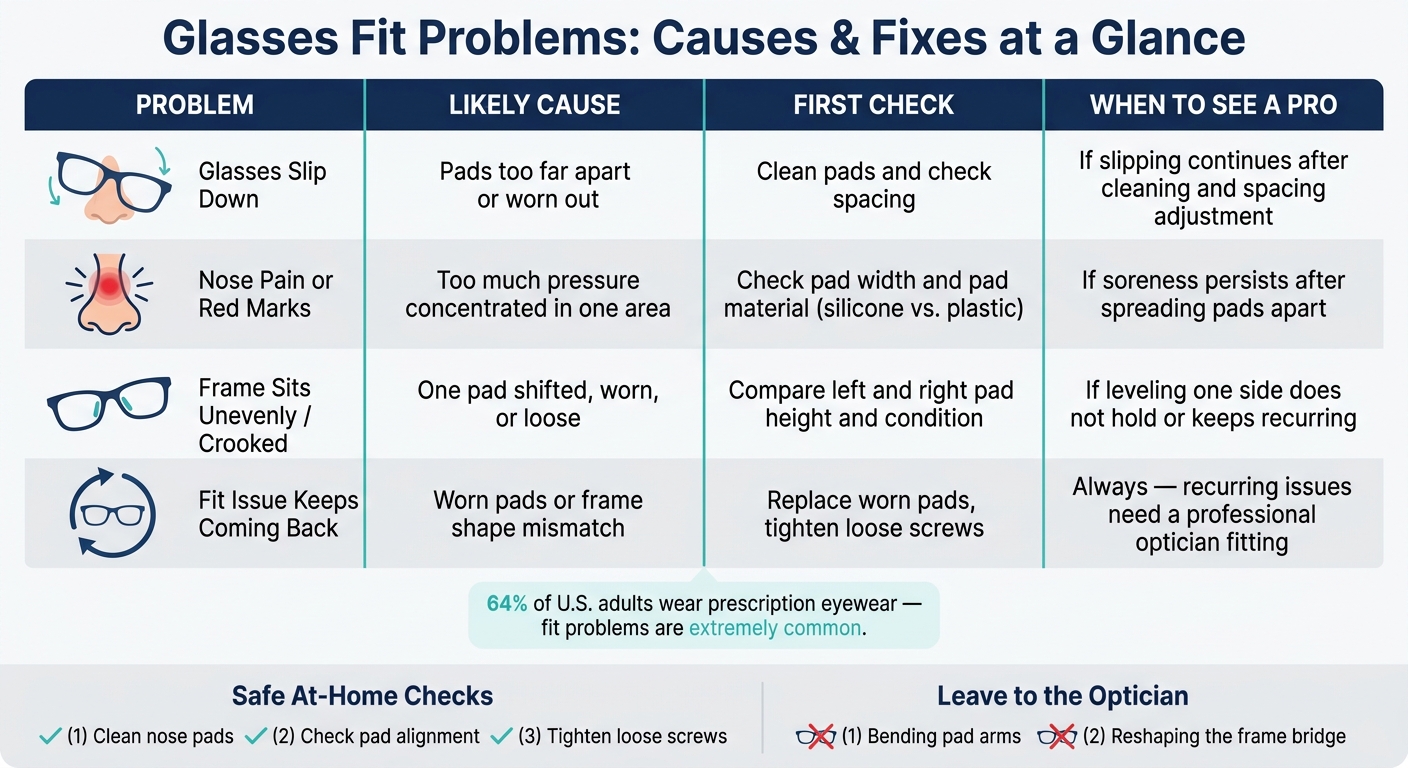
Glasses Fit Problems: Causes & Fixes at a Glance
My Nose Hurts! and I Have Red Marks – How to Adjust Nose Pads On Your Glasses
sbb-itb-5ef6ec9
Common bridge and nose pad problems
Most fit issues show up in a few familiar ways: frames that slide, pressure on the nose, or lenses that sit unevenly. In many cases, the bridge or nose pads are the reason. And each issue usually has its own fix.
Glasses sliding down or sitting at the wrong height
Glasses that slip down or sit too low are common. Usually, the bridge or nose pads aren’t giving the frame enough support, so it won’t stay where it should.
Pressure, red marks, and soreness on the nose
If you take your glasses off and notice red marks or feel soreness on the bridge of your nose, the frame may be putting too much force on one small area. That can happen when the pads press on too small a spot, when the frame is too heavy for your bridge, or when the bridge shape doesn’t match your nose very well.
Crooked frames and worn or loose nose pads
If one lens sits higher than the other, an uneven nose pad may be part of the issue. When one pad shifts, wears down, or comes loose, the frame can tilt to one side.
These signs usually point to different adjustments based on the frame style and the fit problem.
How adjustments solve each problem
Most fit issues come back to three things: pad spacing, bridge shape, or one side sitting higher than the other. The best move is to adjust in small steps and check the fit after each one. Start with the change that lines up with the problem you see.
Fixing slipping and correcting frame height
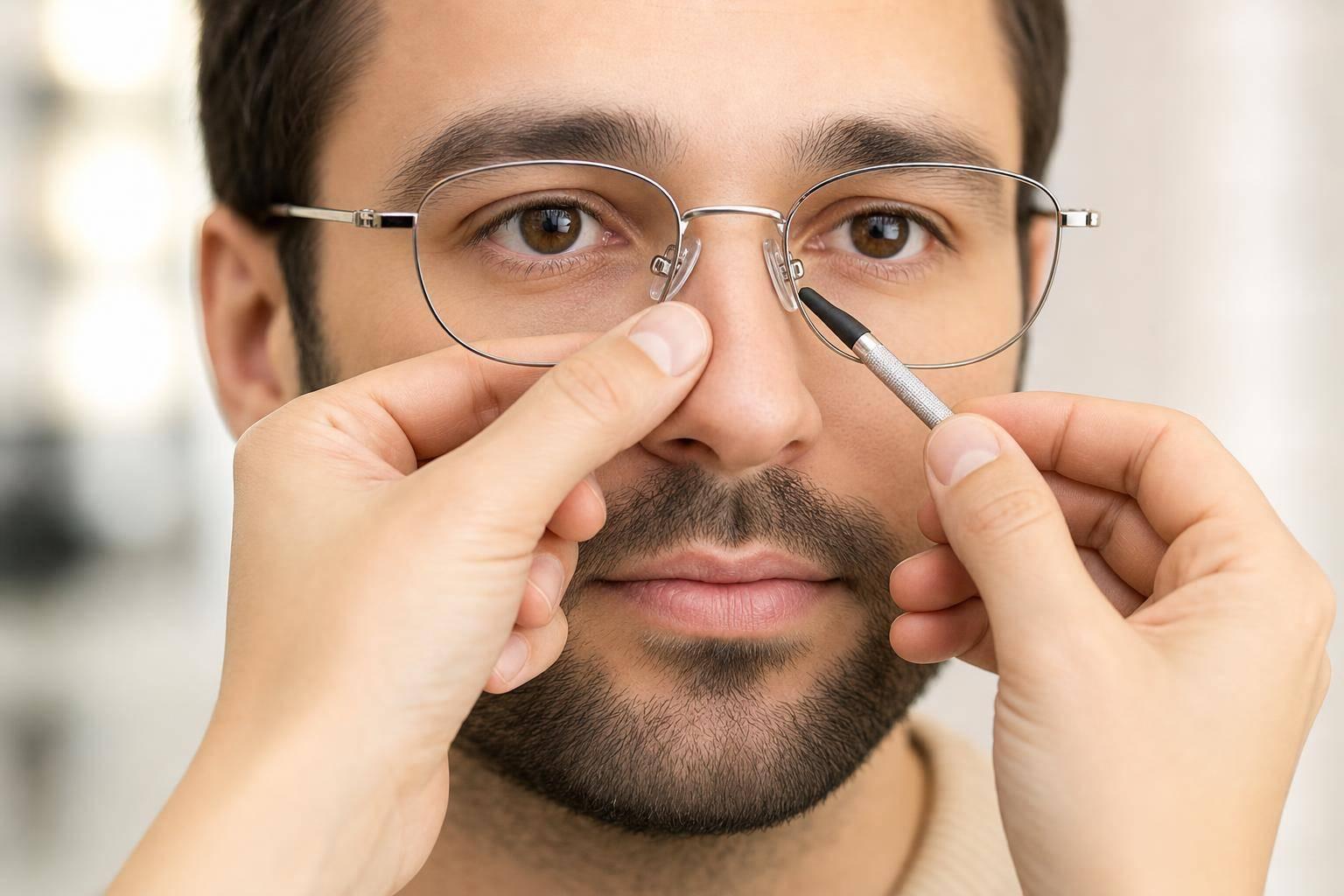
With adjustable nose pads, bring the pads closer together if you want more grip and a higher frame position. Move them farther apart if the frame sits too high and needs to come down a bit.
Fixed plastic bridges work differently. Since there are no pad arms to move, the bridge itself has to be reshaped with care.
Reducing pressure and red marks
Spread the pads farther apart to distribute pressure more evenly and cut down on pinching. In many cases, that helps with red marks because the frame’s weight rests across a larger area instead of pressing into one small spot.
Leveling crooked glasses
Crooked glasses usually need a pad change on just one side. If one lens sits higher than the other, adjust the lower side up or bring the higher side down until both lenses look level and the frame rests evenly.
Bridge designs, nose pad materials, and comfort differences
Once you know the main fit problem, the bridge design and pad material usually explain why one frame feels fine and another doesn’t. Soft silicone pads grip the skin more firmly and cushion pressure points. Hard plastic pads have less give, so they can put more weight into a smaller spot. A broader bridge spreads the frame’s load across more of the nose, while a narrow bridge puts that load in one area.
That’s why the exact same adjustment can feel different depending on whether the frame uses silicone, plastic, or metal pads.
How pad materials affect grip, softness, and wear
Silicone pads grip better and absorb more pressure, which makes them a good match for heavier frames or noses with less natural support. Harder plastic pads keep their shape longer, but they leave less room for small fit changes.
If an adjustment doesn’t seem to last, the pad material is often part of the problem.
How bridge design affects weight distribution
A saddle bridge rests across a broader surface, so it spreads weight more evenly without depending only on pad position. A standard keyhole or adjustable bridge supports the frame at two contact points, which makes pad placement much more important.
Frames usually respond better to small adjustments when the bridge shape matches the wearer’s nose width and profile.
When to see a professional for frame adjustments
Some glasses fit issues are simple. Others are better left to an optician. Knowing where that line is can keep a minor annoyance from turning into a bigger problem.
If your glasses still slip, feel sore, or sit crooked after a few basic checks, stop there and get a professional fitting.
At-home checks versus adjustments that need an optician
A few at-home checks are safe:
- Clean the nose pads
- Check whether the pads line up evenly
- Tighten any loose screws
That said, don’t keep bending pad arms or try to reshape the frame on your own to fix a crooked fit. Those changes need an optician and the right tools.
If the same problem keeps coming back after these checks, the frame likely needs a professional adjustment.
Routine frame maintenance and local optical support
Clean nose pads, tighten loose screws, and replace worn pads when needed. If the pads look worn or feel slippery, it’s time to swap them out. A professional fit check can confirm whether the bridge or nose pads need adjustment or replacement.
The Eye Center of Northern Colorado offers optical services and frame adjustments at multiple Northern Colorado locations.
Conclusion: Small fit changes can solve big comfort problems
Bridge fit and nose pad position affect slipping, pressure, and comfort. Most common issues have simple fixes when you catch them early. If slipping, soreness, or crookedness keeps showing up, an optician can reset the fit safely.
FAQs
How do I know if my nose pads need replacing?
Replace your nose pads if they look yellowed, brittle, or cracked. It’s also time for a new pair if they feel uncomfortable, bother your skin, or stop holding your glasses in the right spot.
The Eye Center of Northern Colorado’s optical department can check your eyewear, adjust the fit, and swap out worn nose pads so your glasses feel more comfortable and stay put.
Can nose pad adjustments affect how clearly I see?
Yes. Nose pad adjustments can affect your vision.
If your glasses sit at the wrong distance or tilt at the wrong angle, your eyes may not line up with the optical center of the lenses. And that can lead to blurry vision or distortion.
A proper adjustment helps place the lenses at the right height and depth for your prescription.
When should I stop adjusting my glasses at home?
Stop adjusting your glasses at home if the fit issue doesn’t get better soon or if new discomfort shows up, like pain, redness, numbness, headaches, or marks on your skin.
You should also stop if the fix goes beyond a simple nose pad or bridge tweak. At that point, lens alignment can shift and affect how you see.
If the problem keeps going, book an appointment with an eye doctor or optician.