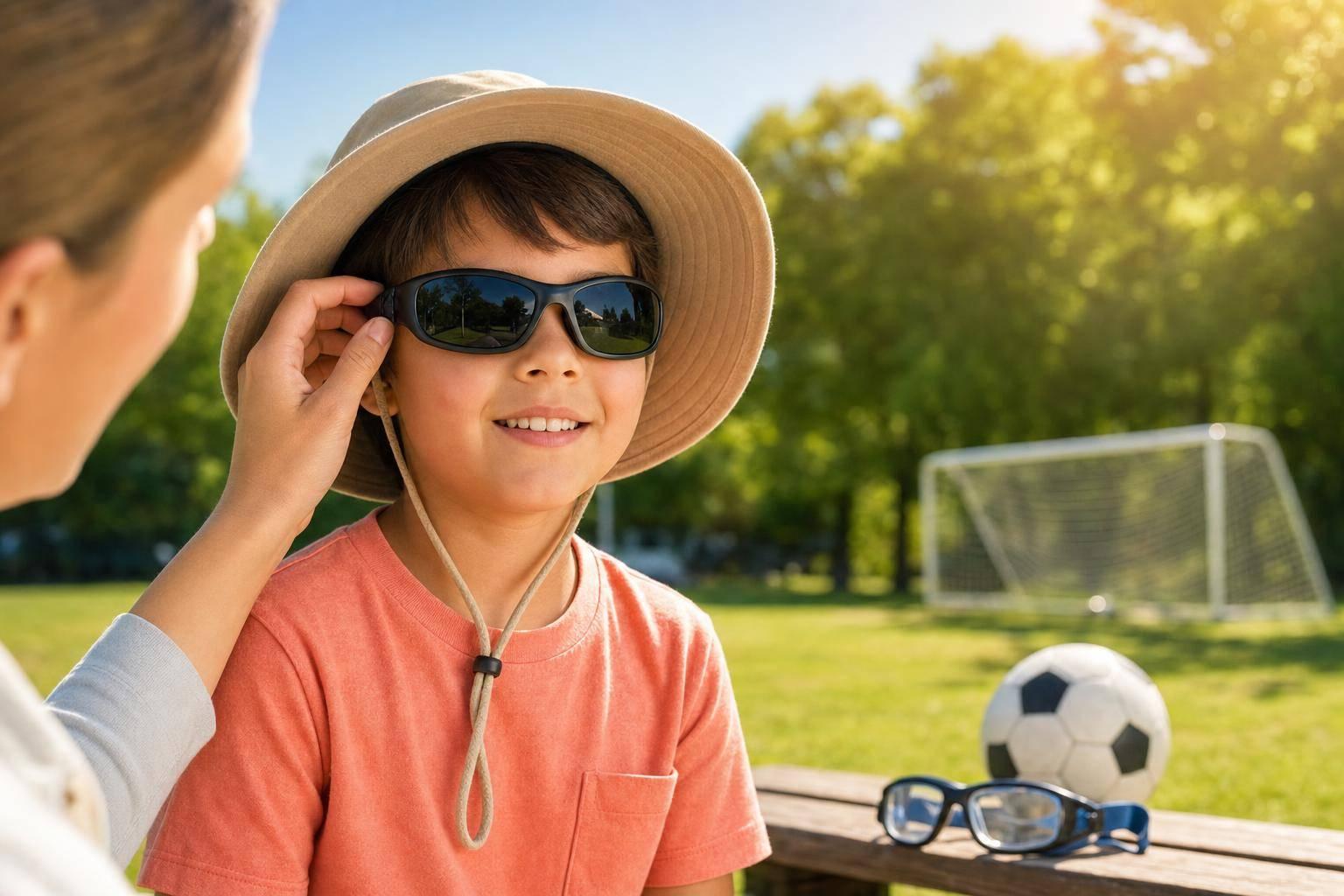
Kids’ eyes need protection every time they’re outside. I’d focus on 3 things first: block UV rays, prevent impact injuries, and know when an eye problem needs urgent care.
Here’s the short version:
- Use UV400 sunglasses or lenses labeled 100% UV protection
- Add a wide-brimmed hat
- For sports and fast-moving toys, use ASTM F803-rated protective eyewear
- Keep kids away from yard tools, chemicals, and fireworks
- Get medical help fast for vision changes, severe pain, blood in the eye, cuts, or chemical splashes
A few numbers show why this matters:
- About 30,000 children in the U.S. are treated for sports-related eye injuries each year
- About 90% of many sports eye injuries may be preventable with proper protective eyewear
- At 5,000+ feet, UV exposure can be 20% higher than at sea level
- About 35% of fireworks eye injuries affect kids 15 and under
What I take from this is simple: dark lenses alone are not enough, regular glasses are not sports protection, and small eye problems can turn serious fast.
If you want one simple rule, use this: sun protection for daily outdoor time, impact protection for play and sports, and fast action for warning signs.
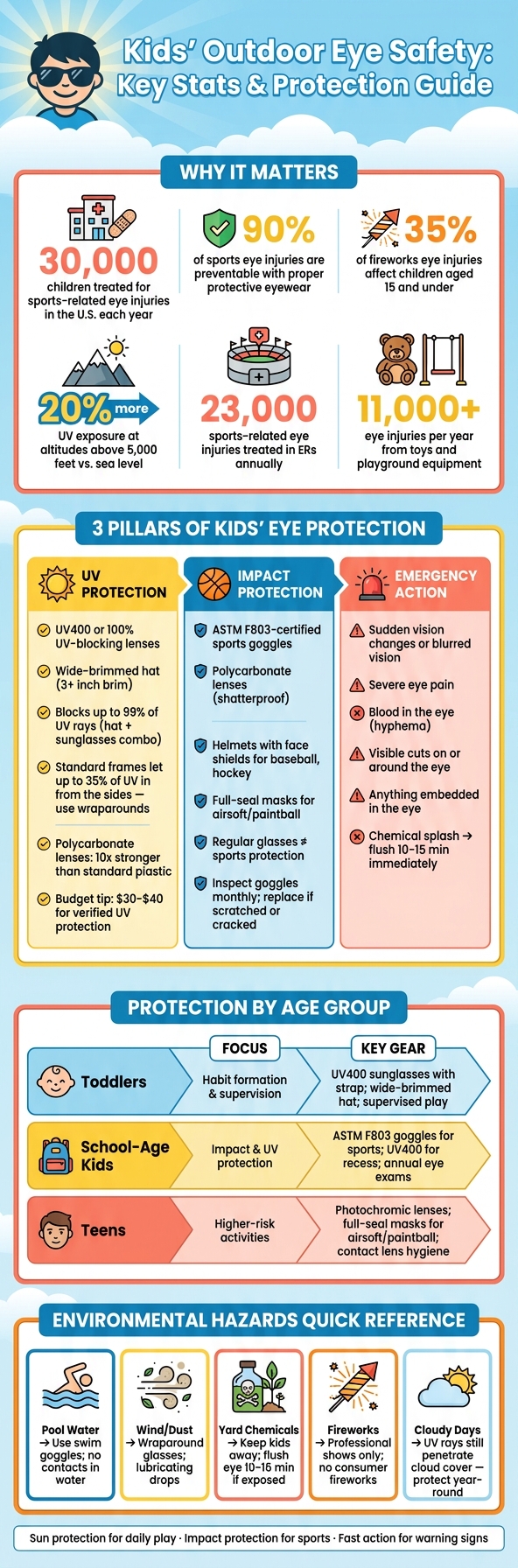
Kids’ Outdoor Eye Safety: Key Stats & Protection Guide
Summer eye safety: What parents need to know before pool days and fireworks
sbb-itb-5ef6ec9
Sun and UV Safety for Kids’ Eyes
Children’s lenses let more UV reach the retina than adult lenses, so early protection matters. UV damage builds up over time, and early exposure can increase the risk of cataracts and macular degeneration later in life. The habits kids learn now can stick for years.
The sun is strongest from 10 AM to 4 PM, which makes that the highest-risk stretch. But cloudy days can still be a problem because UV rays pass through cloud cover. And after strong exposure on water or snow, kids can develop photokeratitis, or eye sunburn. So yes, the right lenses matter on bright days, but they matter on overcast days too.
How to Pick Sunglasses That Protect Kids’ Eyes
Start with UV400 or 100% UV protection. That means the lenses block both UVA and UVB rays. One thing trips up a lot of parents: lens color and darkness do not tell you whether sunglasses block UV. In fact, dark lenses without UV protection can make things worse by increasing exposure. That’s why toy sunglasses are a bad bet.
If your child runs, climbs, bikes, or plays hard, go with polycarbonate lenses. They’re shatterproof, about 10 times stronger than standard plastic, and they come with built-in UV protection. Frame shape matters too. Wraparound or close-fitting frames help block side exposure, since standard glasses can let up to 35% of UV light reach the eyes from the side. For a pair that’s durable and verified for UV protection, expect to spend about $30 to $40.
Here’s a quick look at the main lens types:
| Lens Feature | Benefits | Best Use Case for Kids |
|---|---|---|
| UV400 / 100% UV | Blocks 99% to 100% of UVA and UVB rays; needed to help prevent long-term damage | Everyday wear, school recess, park play |
| Polarized | Cuts glare from reflective surfaces like water, snow, and pavement | Beach days, boating, fishing, skiing |
| Photochromic | Darkens in sunlight and clears indoors; handy for prescription wearers | Kids who wear prescription glasses full-time |
| Polycarbonate | Shatterproof and impact-resistant; 10 times stronger than standard plastic | Sports, cycling, and high-impact play |
Daily Habits That Cut UV Exposure
Sunglasses help a lot, but they work even better with a wide-brimmed hat with at least a 3-inch brim. That combo can block up to 99% of harmful UV rays. It’s a smart move for sports practice, summer camp, and long family outings when kids stay outside for hours.
Another simple shift is timing. Moving outdoor activities outside the 10 AM to 4 PM peak window can cut exposure. A morning soccer practice or an evening walk is easier on the eyes than midday play. For school-age kids, it also helps to make sunglasses part of the routine during recess and keep a backup pair in their bag so it feels normal, not forced.
A simple outdoor kit can help:
- Sunglasses
- A wide-brimmed hat
- Water
- A backup pair for high-impact activities
Parents set the tone here too. When adults wear sunglasses often, kids are more likely to do the same.
UV protection is the starting point; active play still calls for impact protection.
Preventing Eye Injuries During Sports, Play, and Outdoor Activities
Once kids head outside, impact injuries become the next big concern. Most of these injuries don’t come out of nowhere. It’s usually the same stuff: a fast ball, an elbow to the face, a stick at the wrong angle, or a toy that hits harder than expected.
Hospital emergency rooms treat nearly 23,000 sports-related eye injuries every year. Toys and home playground equipment cause more than 11,000 eye injuries in children each year. That’s why certified protective eyewear matters so much.
Blunt-force injuries happen when something strikes the eye without breaking the skin, like a basketball, an elbow, or a hard fall. Even without a cut, the damage can be serious. These injuries can lead to a hyphema, which is blood pooling inside the eye, or even retinal detachment. Penetrating injuries involve cuts or punctures from sharp objects such as a stick, pencil, dart, or debris thrown by a lawnmower. These injuries often lead to surgery and hospitalization.
Protective Eyewear for Sports and High-Impact Activities
Regular glasses don’t provide real protection. In fact, if a standard frame shatters on impact, a blunt hit can turn into a penetrating injury.
Use ASTM F803-certified sports goggles with polycarbonate lenses. They’re tested for high-velocity impact and made to stay intact when a ball or elbow makes contact. In sports like baseball, softball, and hockey, helmets with face shields or masks add another layer of coverage.
| Activity | Main Eye Hazards | Recommended Protective Eyewear |
|---|---|---|
| Basketball | Fingers, elbows, ball impact | ASTM F803-certified wraparound goggles |
| Baseball / Softball | Fast-moving balls, bats | Helmet with ASTM-certified face shield |
| Racquet Sports | High-speed balls, racquets | ASTM F803-certified wraparound goggles |
| Field / Ice Hockey | Sticks, pucks, balls | Helmet with polycarbonate or wire face mask |
| Airsoft / Paintball | High-velocity projectiles | Full-seal masks with thermal anti-fog ventilation |
| Biking / Skiing | Falls, branches, wind, UV | Impact-resistant wraparound goggles or sunglasses |
Check sports goggles once a month. Scratches and cracks weaken them, and damaged gear should be replaced right away. The same idea applies beyond sports too. Toys, tools, and moving equipment can all put a child’s eyes at risk.
Safer Rules for Toys, Yard Work, and Outdoor Play
Outside of organized sports, backyard play and yard work bring a different set of dangers. Sharp toy edges, sticks, bungee cords, rubber bands, and projectile toys can all cause eye injuries. When buying toys, look for ASTM-marked products.
Foam dart blasters and pellet-style toys need extra caution. Young children shouldn’t use them at all. Older kids who do use them need full-seal safety goggles, not regular glasses and definitely not bare eyes.
Yard work is one of those risks people often brush off, but it shouldn’t be. Lawnmowers and weed trimmers can send rocks, wood chips, and dirt flying at high speed. Keep children indoors or well away while power equipment is running. And if a child is old enough to help with yard work, safety goggles aren’t optional.
Environmental Hazards: Wind, Allergies, Water, Chemicals, and Fireworks
Not all outdoor eye harm comes from a hit to the eye. Sometimes the problem is irritation, chemicals, or burns. Those risks don’t always look dramatic at first, which is part of what makes them easy to miss.
Impact injuries get a lot of attention. But wind, pollen, pool water, yard chemicals, and fireworks can also do real damage to a child’s eyes – sometimes with little warning.
Managing Eye Irritation, Allergies, and Dry Eyes Outdoors
Wind is one of those eye hazards people don’t always think about, especially during colder months. Cold, dry air is a leading cause of dry eye symptoms in children. Wind can also blow sand and dust into the eye. And once a child starts rubbing, a small irritation can turn into a corneal abrasion.
If something gets in your child’s eye, skip the rubbing. Have your child blink steadily so natural tears can help wash the particle out. If debris won’t come out, gently pull the upper lid over the lower lashes to help the eye flush itself. Lubricating drops can also help after a long stretch outside, especially when eyes feel dry or scratchy. Wraparound sunglasses add a simple layer of protection by blocking wind-driven particles. It also helps to teach kids not to touch or rub their eyes with hands that may have sunscreen or bug spray on them.
Seasonal allergies can make things worse. Pollen and other airborne allergens can lead to itching, redness, and tearing. If the redness gets worse, light sensitivity shows up, or the rubbing doesn’t stop, contact a pediatric eye provider to rule out infection or another issue.
When water, chemicals, or heat enter the picture, irritation can shift into an actual injury.
Pool Chemicals, Yard Products, and Fireworks Safety
Pool water can be rough on the eyes. Chlorine and saltwater can strip the eye’s tear film, which may leave eyes red, dry, and irritated after swimming. A good pair of swim goggles is the easiest fix. If eyes still feel uncomfortable afterward, preservative-free artificial tears can help bring back moisture. One hard rule: never let children wear contact lenses in pools, lakes, or the ocean.
Yard and household chemicals – including fertilizers, pesticides, drain openers, and toilet cleaners – can cause serious eye burns. Keep these products out of reach, and keep children away while they’re being used. If a chemical splashes into a child’s eye, flush it right away with clean water or saline for 10 to 15 minutes and get medical care immediately.
Fireworks bring a different kind of danger. Sparklers and bottle rockets can burn the eye and cause severe injury. Children should only watch professional displays. Roughly 35% of fireworks-related eye injury victims are children aged 15 and under.
| Hazard | Primary Risk | What to Do |
|---|---|---|
| Pool water | Chlorine irritation, dryness | Use swim goggles; apply artificial tears after swimming |
| Sand/dust | Corneal abrasion | Blink to flush; no rubbing; rinse with water if needed |
| Wind | Dry eye, foreign bodies | Wraparound glasses; lubricating drops |
| Yard chemicals | Chemical burns | Secure storage; flush eye 10–15 min if exposed |
| Fireworks | Burns, explosive trauma | Professional shows only; no consumer fireworks |
When to Seek Emergency Care and How to Build Long-Term Eye Safety Habits
Emergency Warning Signs Parents Should Not Ignore
After sun, impact, and other outdoor risks, parents need a simple line: when does home care stop, and when is it time to get emergency help?
Some eye injuries can seem small at first and then get worse fast. If your child has an embedded object, a chemical splash, a visible cut, or blood in the eye, get emergency care right away. The same goes for these warning signs:
- Sudden vision changes or blurred vision
- Severe pain
- Redness or swelling
- Cuts on or around the eye
- Blood in the eye (hyphema)
- Anything stuck in the eye
- Chemical splash
Don’t rub the eye. And don’t try to pull out anything that’s stuck. If a chemical gets in the eye, flush it with clean water immediately. If the injury came from blunt impact, use a cold compress around the eye, not on the eyeball, to help with swelling. For cuts, blood in the eye, or a suspected ruptured globe, get emergency eye care at once.
Key Takeaways by Age Group: Toddlers, School-Age Kids, and Teens
Once you know the red flags, the next step is matching eye protection to your child’s age and what they do day to day. A toddler at the playground doesn’t need the same setup as a teen driving to practice or working outdoors.
| Age Group | Primary Focus | Key Habits & Gear |
|---|---|---|
| Toddlers | Habit formation & supervision | UV400 sunglasses with strap-retention; wide-brimmed hat (3+ inches); supervised play |
| School-Age Kids | Impact & UV protection | ASTM F803-certified goggles for sports; UV400 sunglasses for recess; annual eye exams |
| Teens | Higher-risk activities | Photochromic lenses for driving and outdoor work; full-seal masks for airsoft or paintball; contact lens hygiene |
The pattern is pretty clear: younger kids need close supervision and simple habits, school-age kids need gear that fits active play, and teens need eye protection that keeps up with sports, work, and more freedom.
FAQs
How can I tell if kids’ sunglasses really block UV?
Check the label for 100% UVA/UVB protection or UV400.
UV400 means the lenses block light up to 400 nanometers, which covers both UVA and UVB rays.
Don’t judge sunglasses by lens darkness alone. A dark lens without UV protection can be risky because it may make your pupils open wider and let in more UV light.
Skip toy or novelty sunglasses that don’t show these labels.
When should my child wear sports goggles instead of regular glasses?
For any organized school or community sport, kids should wear ASTM F803-certified sports goggles with polycarbonate lenses, not regular glasses. Regular glasses and sunglasses aren’t made to protect the eyes during sports, and they can even make an injury more likely.
If your child needs vision correction, prescription sports goggles can be custom-fitted. The Eye Center of Northern Colorado can help you choose the right protective eyewear.
What eye symptoms mean I should get emergency care right away?
Get emergency care right away if your child has vision loss or blurred vision, severe eye pain, or double vision.
Other signs that need urgent care include blood or cloudy fluid behind the cornea, pupils that are not the same size, nonstop tearing or blinking, keeping the eye shut and refusing to open it after an injury, getting hit by a high-speed object, or having a large, deep cut.