
If your eyes feel dry, drinking more water can help, but it usually won’t fix the whole problem. Dry eye often comes from tear evaporation, oil gland issues, screen time, dry indoor air, and wind or altitude – not just low fluid intake.
Here’s the short version:
- Drink water through the day, not all at once. A common target is 64 oz daily, though some people need more.
- Cut tear evaporation by blinking more, using the 20-20-20 rule, and keeping indoor humidity around 50% to 60%.
- Watch your drink choices. Water is best. Alcohol, lots of caffeine, and sugary soda can make dryness worse.
- Support your tear film with food, including omega-3 fats and water-rich produce.
- Protect your eyes outside with wraparound sunglasses, especially in windy, sunny, or high-altitude places.
- See an eye doctor if symptoms last more than a few weeks, or if you have pain, discharge, or sudden vision changes.
Most dry eye is linked to evaporative dry eye and meibomian gland dysfunction, which means hydration is just one part of the fix. And during screen use, people may blink up to 35% less often, which can make symptoms worse fast.
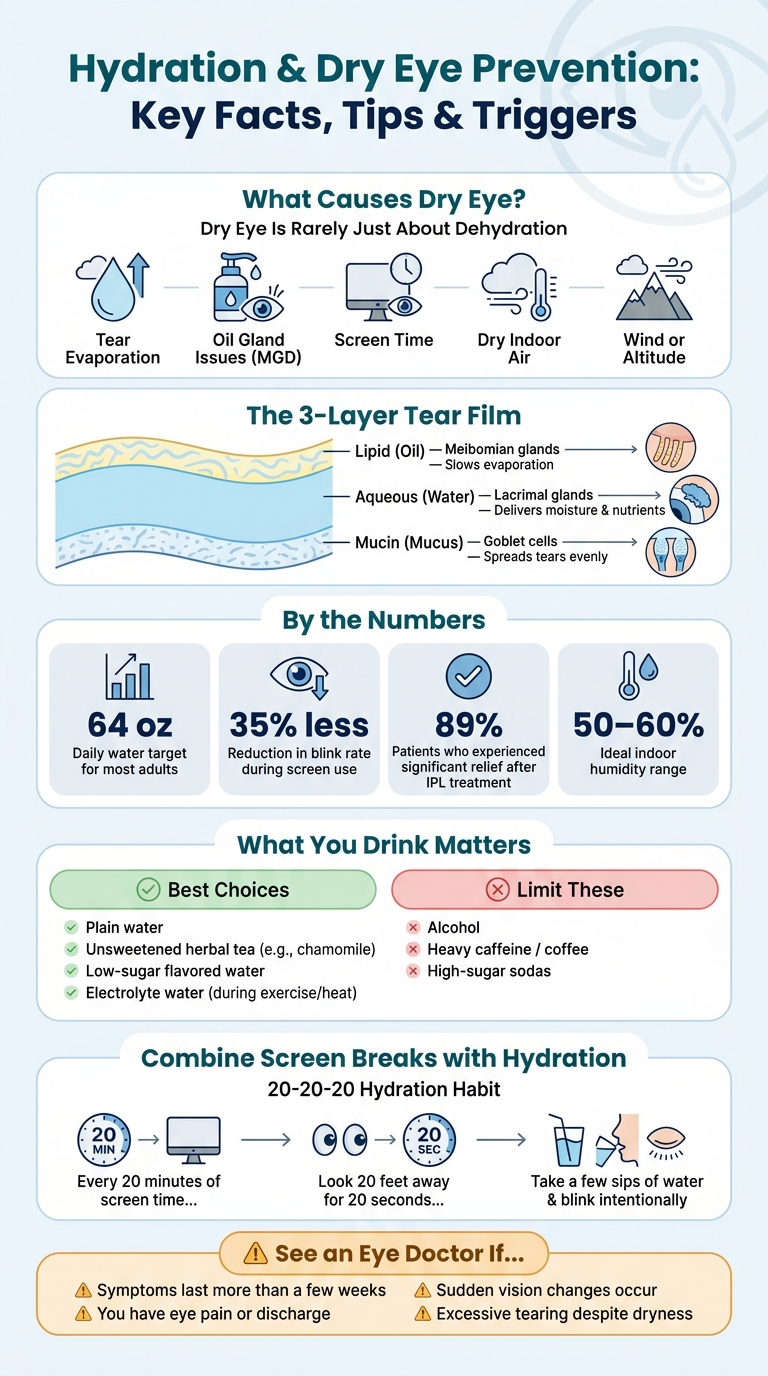
Hydration & Dry Eye Prevention: Key Facts, Tips & Triggers
The SHOCKING Truth About Water and Dry Eyes!
sbb-itb-5ef6ec9
Quick overview
| What helps | What to do |
|---|---|
| Daily hydration | Sip water across the day; aim for about 64 oz as a starting point |
| Screen strain | Follow the 20-20-20 rule and blink on purpose |
| Indoor air | Use a humidifier and avoid direct air from fans or vents |
| Diet | Eat omega-3 foods and water-rich fruits and vegetables |
| Outdoor exposure | Wear wraparound sunglasses and bring water |
| Lasting symptoms | Get an eye exam to check tear production and oil glands |
I see this article as a simple guide to what hydration can do for dry eye – and where you need other steps to get relief.
Dry Eye and the Role of Hydration
What Dry Eye Disease Is
Dry eye disease happens when your eyes either don’t make enough tears or the tears evaporate too fast. That sounds simple, but the tear film is a small system with moving parts. It has three layers: oil, water, and mucus. All three need to do their job to keep the eye surface smooth, moist, and clear.
| Tear Film Layer | Produced By | What It Does |
|---|---|---|
| Lipid (Oil) | Meibomian glands in the eyelids | Slows evaporation and stabilizes the tear film |
| Aqueous (Water) | Lacrimal glands | Delivers moisture, nutrients, and electrolytes |
| Mucin (Mucus) | Conjunctival goblet cells | Spreads tears evenly across the eye’s surface |
When even one layer is off, the whole tear film can become unstable. There are two main forms of dry eye:
- Evaporative dry eye, where too little oil lets tears dry out too fast
- Aqueous-deficient dry eye, where the lacrimal glands don’t make enough fluid
Most dry eye cases are evaporative and tied to meibomian gland dysfunction (MGD). Inflammation can make things worse over time by damaging the ocular surface.
How Body Hydration Affects Tear Production
Your tear film is mostly water. So when you’re dehydrated, tear volume can drop and tear quality can get worse. The tears become more concentrated and less stable, which may lead to burning, stinging, redness, or that sandy, gritty feeling.
Steady hydration helps support the lacrimal glands. But here’s the catch: a large study found that drinking more water by itself is not a dependable treatment for dry eye. Electrolyte balance and overall nutrition matter too. In plain terms, hydration helps, but it can’t fix oil gland problems or inflammation by itself.
That’s why daily hydration habits matter just as much as how much water you drink.
Other Common Causes of Dry Eye
Hydration is only one part of the story. Age is one of the biggest risk factors, and most people over 65 have dry eye symptoms. Hormonal shifts linked to pregnancy, oral contraceptives, and menopause can also reduce tear production.
Some causes are easy to miss. Certain medications, including antihistamines, antidepressants, and blood pressure drugs, can reduce how much fluid the lacrimal glands make. Health conditions such as Sjögren’s syndrome, rheumatoid arthritis, lupus, diabetes, and rosacea can also affect the tear film. Contact lenses and past eye surgery, including LASIK, can add to the problem.
Daily habits and your surroundings matter too. Screen time cuts down blinking, which speeds up tear evaporation. Low humidity, wind, high altitude, and indoor air conditioning can dry the eyes even if you drink enough water. Smoking, alcohol, and poor sleep quality can put even more stress on the ocular surface.
Next, daily water habits and beverage choices can help reduce the strain.
Daily Hydration Habits That Help Protect Your Eyes
How Much Water to Drink Each Day
A simple goal for most adults is 64 oz of water a day, though your needs can go up with exercise, hot weather, dry air, higher altitude, and certain medications. At higher elevations, dry air can make tears evaporate faster. Air-conditioned offices can do the same. And some medications, including antihistamines and blood pressure drugs, may leave you needing more fluids.
Your body usually gives you a few clues when you’re running low. Common signs of dehydration include fatigue, headaches, dark urine, a gritty feeling in your eyes, and blurred vision. The total amount matters, but drinking water steadily through the day tends to work better than downing a lot all at once.
Why Timing and Consistency Matter
It helps to spread your water intake across the day instead of drinking it in one shot. One easy way to make that stick is to tie it to the 20-20-20 rule: every 20 minutes of screen time, look at something 20 feet away for 20 seconds.
Use each break as a small reset point:
- Rest your eyes
- Take a few sips of water
- Get back to work
That rhythm is simple, but it can make a big difference during long desk days. If your schedule gets hectic, phone reminders can help you stay on track.
What you drink matters too, since some options help hydration more than others.
Best and Worst Beverage Choices for Dry Eye
Plain water is still the safest bet. Unsweetened herbal teas, like chamomile, are another good pick. They help with hydration and may also offer anti-inflammatory support for the eyes. Low-sugar flavored water can work well too.
Some drinks can push things in the other direction. Alcohol and heavy caffeine use may increase fluid loss, so it’s smart to drink extra water alongside them. High-sugar sodas are also best kept in check.
| Beverage Type | Examples | Effect on Eye Hydration |
|---|---|---|
| Best choices | Plain water, unsweetened herbal tea (e.g., chamomile) | Supports tear production; chamomile may offer anti-inflammatory benefits |
| Helpful alternatives | Low-sugar flavored water | Adds hydration that supports the tear film |
| Limit these | Alcohol, caffeinated coffee, high-sugar sodas | Can increase fluid loss or worsen dryness; drink extra water to compensate |
| Use when needed | Electrolyte-enhanced water | Useful during intense exercise or extreme heat to maintain fluid balance |
Water does more for your eyes when you pair it with foods and daily habits that help slow tear evaporation.
Nutrition, Environment, and Habits That Reduce Tear Evaporation
Foods and Nutrients That Support Tear Film Health
Omega-3s help support the tear film’s oil layer, which can slow evaporation. Good sources include salmon, tuna, walnuts, flaxseed, and fish oil supplements.
Vitamins A, C, and E help protect the eye’s surface and may help limit inflammation. Vitamin D also plays a part in ocular surface health. Water-rich foods like cucumber, lettuce, oranges, berries, and watermelon can also add to your daily fluid intake.
Diet can help support the tear film. But it’s only part of the picture. Dry air and steady airflow can still make tears evaporate faster.
How to Set Up Your Home and Office to Reduce Dryness
Indoor air can dry out your eyes more than you’d think. Heat in the winter and air conditioning in the summer both lower humidity, so aim for 50% to 60% indoor humidity. A cool-mist humidifier can help, especially in the rooms where you spend the most time.
Airflow matters too. If you sit right in front of a fan, vent, or AC unit, air moves across the eye surface and speeds up evaporation. Try redirecting vents away from your face or moving your seat if possible. It also helps to place your screen slightly below eye level, which reduces how much of the eye surface is exposed.
Screen time brings another problem: people blink up to 35% less frequently when looking at screens. That drop can destabilize the tear film faster than many people realize. During reading, driving, or computer work, make a point to blink on purpose. Short eye-closure breaks can also help cut down on dryness.
| Environmental Trigger | Impact on Eyes | Protective Action |
|---|---|---|
| Low Indoor Humidity | Speeds up tear evaporation | Use a cool-mist humidifier; aim for 50–60% humidity |
| Direct Airflow (Fans/AC/Vents) | Dries the ocular surface quickly | Redirect vents; reposition seating away from direct airflow |
| Digital Screens | Reduces blink rate by up to 35% | Practice conscious blinking; take short eye-closure breaks |
Once you’ve handled indoor air, it makes sense to look at what happens outside too.
Outdoor and High-Altitude Habits That Help
Outdoors, wind, sun, and altitude can dry the eyes even more. Dry air, wind, and strong sun all speed evaporation. At about 5,000 feet, lower pressure can make the problem worse.
Wraparound sunglasses are a smart pick for dry eye protection. They help form a small moisture-rich zone around the eyes while also blocking wind, dust, and UV exposure. In snowy conditions, polarized lenses matter even more because snow can double the UV that reaches your eyes. It also helps to drink water before you head out and bring water with you.
When Hydration Is Not Enough: Getting Professional Dry Eye Care
Signs You Should Schedule an Eye Exam
If drinking more water and making changes at home still don’t get your symptoms under control, it’s time to get your eyes checked.
If dryness, burning, stinging, redness, blurry or shifting vision, or light sensitivity keep showing up after a few weeks of better hydration and environmental changes, schedule an eye exam.
Some symptoms need faster attention. Severe eye pain, sudden vision changes, or eye discharge should be checked right away. Fluctuating or blurry vision often points to tear-film instability. And if your eyes water a lot, that doesn’t always mean they’re well-lubricated. In some cases, poor tear quality or blocked glands can trigger reflex tearing instead.
What Dry Eye Treatment May Include
From there, treatment depends on what’s driving the problem: low tear production, evaporation, or both. Most dry eye is evaporative and linked to Meibomian Gland Dysfunction (MGD), not hydration alone.
An eye doctor may use tear testing and gland imaging to figure out what’s going on. That matters, because the right fix depends on the cause.
Treatment may include:
- Preservative-free eye drops
- Prescription medication
- Warm compresses
- Gland procedures
- Punctal plugs
- Advanced therapies based on the cause
Clinical studies show that 89% of patients experienced significant relief after Intense Pulsed Light (IPL) treatment.
Eye Center of Northern Colorado offers dry eye evaluations to identify the cause of symptoms.
Conclusion: Key Steps for Preventing Dry Eye
When hydration and home care aren’t enough, an eye exam can help pinpoint the cause and shape the next steps. Eye Center of Northern Colorado offers dry eye evaluations and personalized care plans.
FAQs
Can dehydration alone cause dry eye?
Dehydration isn’t the only cause of dry eye, but it can play a big part. Your eyes need enough fluid to make tears, and when your body is low on water, tear volume can drop. Tears may also evaporate faster, which can leave your eyes feeling more irritated.
Dry eye isn’t always just about low fluid intake, though. Tear production and oil gland function can also affect how your eyes feel. That’s why Eye Center of Northern Colorado recommends a professional evaluation to pinpoint what’s behind your symptoms.
How do I know if my dry eye is from screens?
If your dry eye symptoms start – or get worse – during or after screen time, digital eye strain may be part of the problem. When you look at a screen, you tend to blink less often. That means your eyes have a harder time spreading the tear film that helps keep the surface of the eye moist and protected.
Common signs include:
- A gritty or stinging feeling
- Redness
- Blurred vision
- Eye fatigue that gets worse the longer you stay on a screen
When should I see an eye doctor for dry eye?
Schedule an appointment with Eye Center of Northern Colorado if dry eye symptoms stick around or start getting in the way of daily life. That can include burning, stinging, scratchiness, blurred vision, redness, pain, or excessive tearing.
If drinking more water or using over-the-counter drops doesn’t help, it may be time for a professional evaluation. An eye doctor can find the cause and map out a treatment plan that fits your needs, including advanced options like LipiFlow.