
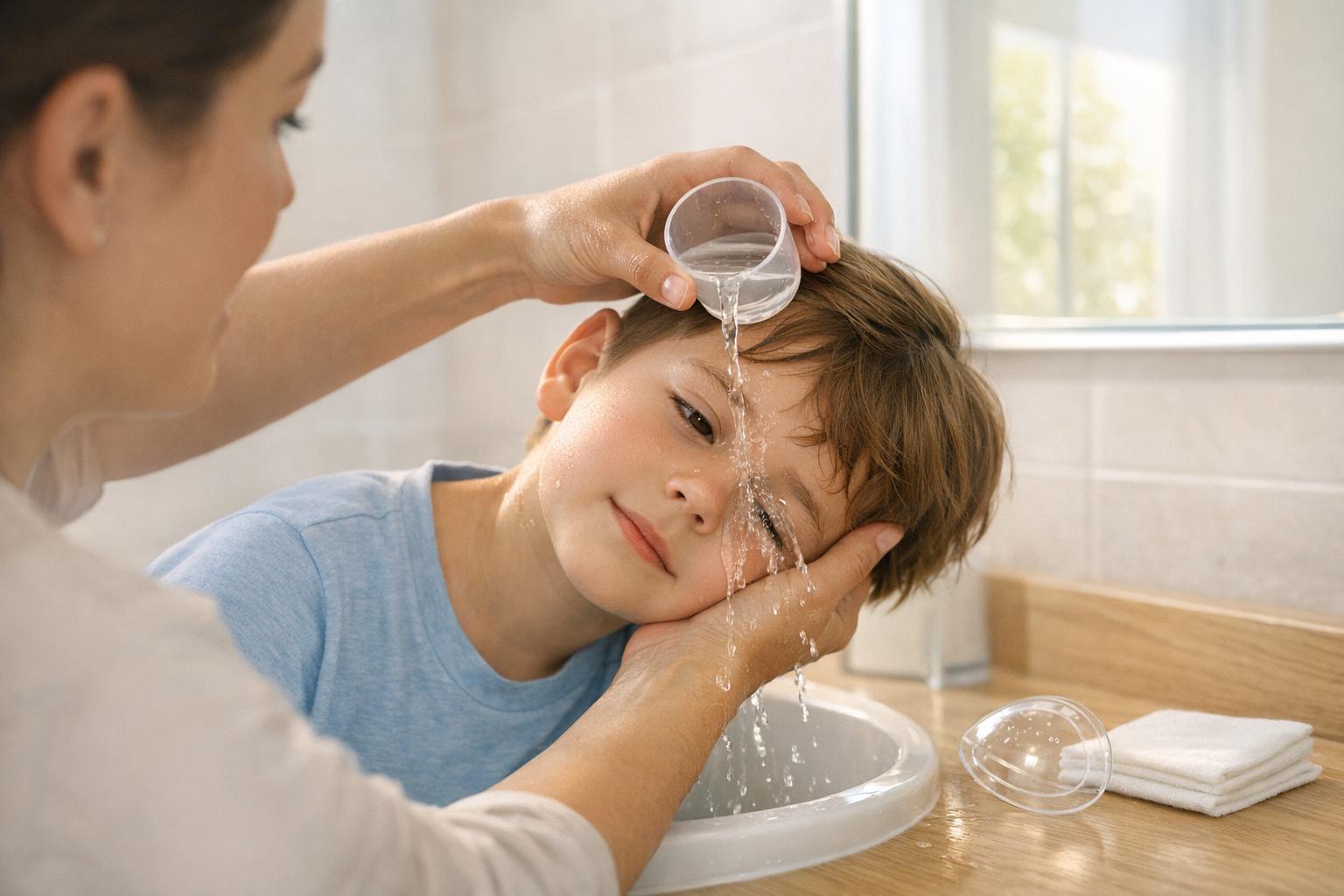
When a child experiences an eye injury, acting quickly can prevent long-term damage or even blindness. From chemical splashes to physical trauma, knowing the right first aid steps is critical. Here’s what you need to know:
- Chemical Splashes: Flush the eye with water for at least 15 minutes and seek medical help.
- Foreign Objects: Rinse with lukewarm water and avoid rubbing the eye. If debris remains, consult a doctor.
- Cuts or Trauma: Do not flush or remove embedded objects. Cover the eye gently and head to the ER.
Watch for emergency signs like uneven pupils, blood in the eye, or vomiting after an injury. Prevention is key – store hazardous items securely, and ensure children wear protective eyewear during risky activities. Quick action and proper care can safeguard their vision.
CPR Kids – First aid for eye injuries in children
sbb-itb-5ef6ec9
Types of Eye Injuries in Children
Understanding the type of eye injury your child has is crucial for providing the right first aid promptly. Eye injuries are a major cause of permanent vision loss in children aged 0–4 years, and kids make up about one-third of all eye injury-related visits to emergency rooms. Below are some of the most common types of injuries to watch for, along with key symptoms to help you identify them.
Chemical Splashes
Everyday household products like bleach, cleaning agents, dish detergent, laundry pods, nail polish remover, and even hand sanitizers can cause severe eye damage. Signs of a chemical splash include intense stinging or burning, rapid redness, and excessive tearing. If your child is crying near an open container of any of these substances, it’s a strong indicator of potential chemical exposure.
Foreign Objects or Dust
Small particles like dust, sand, or debris can irritate the eye, often causing a scratchy or gritty feeling. Symptoms include persistent tearing, frequent rubbing of the eyes, and sensitivity to light. You might also notice redness and irritation, especially if your child has been playing outside or in dusty conditions.
Cuts, Punctures, and Physical Trauma
Sharp items such as pencils, scissors, or even a pet’s claws can lead to cuts or punctures that require immediate care. Additionally, blunt force from sports, falls, or flying objects like toy rockets or balls can cause significant injuries. Look out for visible cuts on the eyelid or eyeball, bruising around the eye, swelling, or blood inside the eye. Projectile toys, including foam-tipped toy guns, are a common cause of serious eye injuries in children.
First Aid Steps for Eye Injuries
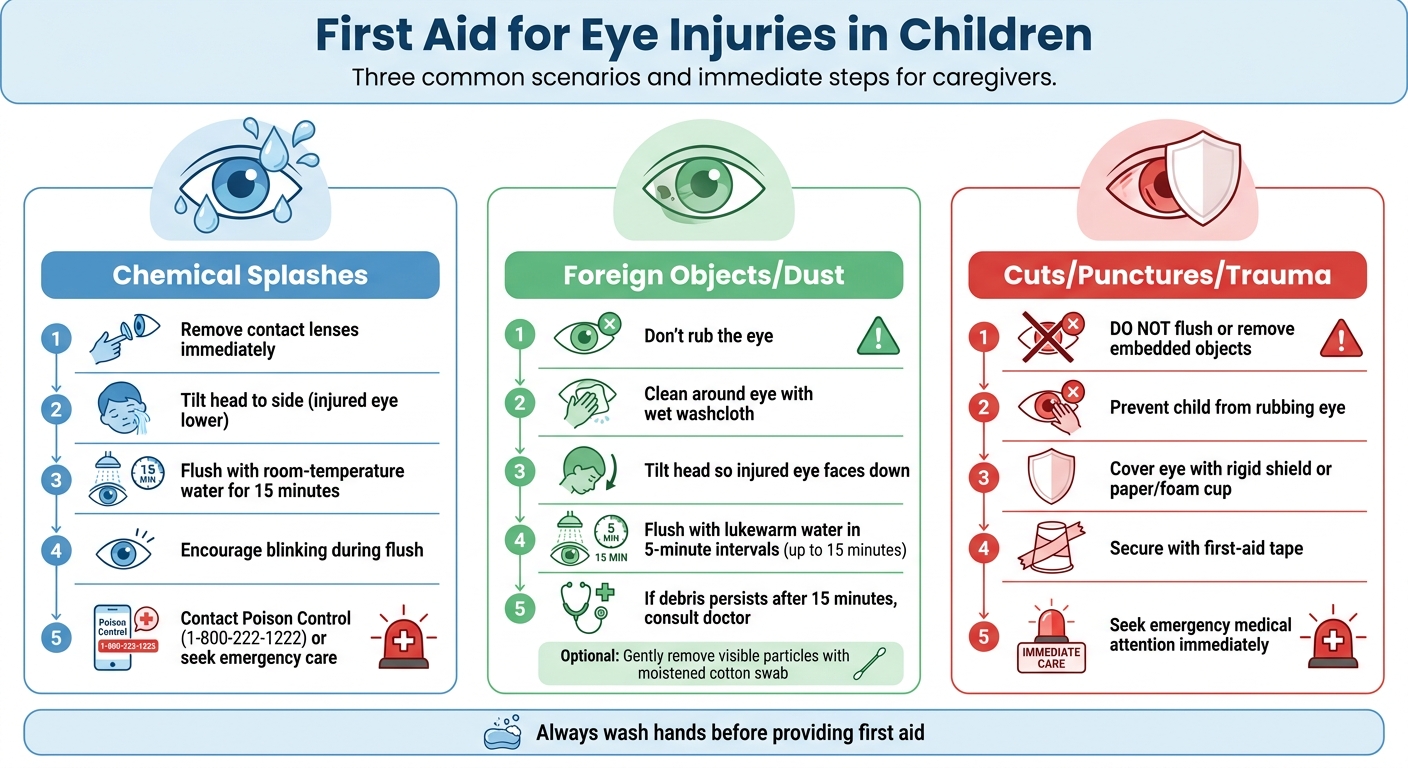
First Aid Steps for Common Eye Injuries in Children
When your child experiences an eye injury, quick and appropriate first aid can play a crucial role in safeguarding their vision. Before you begin, make sure to wash your hands thoroughly with soap and water. The steps you take should match the specific type of injury, as outlined below.
Treating Chemical Splashes
If your child wears contact lenses, remove them immediately before flushing the eye.
Tilt their head to the side so the injured eye is lower, letting the chemical drain away from the unaffected eye. Use room-temperature water to flush the eye for at least 15 minutes, encouraging your child to blink during the process. If both eyes are affected, rinsing with a gentle shower stream can be helpful. Once flushing is complete, contact Poison Control at 1-800-222-1222 or seek emergency medical care right away. Remember, even a thorough rinse doesn’t replace professional evaluation.
Treating Foreign Objects or Dust
Discourage your child from rubbing their eye, as this can lead to further irritation or scratches on the cornea. Use a wet washcloth to gently clean the area around the eye and face, preventing additional particles from entering.
After cleaning the area, flush the eye by tilting your child’s head so the injured eye faces downward over a sink. Gently pull down the lower eyelid and rinse with lukewarm water or an eyewash solution in 5-minute intervals. Check the eye between flushes and continue for up to 15 minutes if debris remains. For fine particles like sand, your child can submerge their face in a bowl of warm water and blink several times.
If you can see a particle in the corner of the eye or under the lower lid, try to remove it gently using a moistened cotton swab or the corner of a clean, damp cloth. For objects trapped under the upper lid, pulling the lid out and sliding it over the lower lid may help the lashes sweep the object out. If debris persists after 15 minutes of flushing, consult a doctor.
Treating Cuts, Punctures, or Physical Trauma
Do not flush the eye or attempt to remove any embedded objects. Prevent your child from rubbing the injured eye.
Cover the eye with a rigid shield or use a small paper or plastic foam cup placed over the eye (resting on the brow and cheekbone) and secure it with first-aid tape. This helps protect the eye during transport to medical care.
Seek emergency medical attention immediately if you notice blood in the eye, a visible cut, pupils that appear unequal or misshapen, severe pain, or vomiting after the injury. Symptoms like nausea following a blow to the eye may indicate a serious condition and should not be ignored.
When to Get Medical Help
Warning Signs That Need Emergency Care
After providing initial first aid, keep a close eye on your child for any signs that may need immediate medical attention.
Certain eye injuries go beyond a simple call to the doctor and require emergency care. Head to the emergency room if your child has blurred vision, visible blood, a cut near or on the eye, an embedded object, or pupils that appear uneven or misshapen.
Other signs like severe eye pain, nausea, or vomiting also indicate a need for urgent attention. These symptoms could point to a deeper issue affecting more than just the surface of the eye.
For less critical situations, contact a pediatric eye specialist if you notice the following:
- Redness, swelling, or pain in the eye or eyelid
- Persistent eye rubbing
- Sensitivity to light
Additionally, if you’ve flushed out dust or debris for 15 minutes and particles are still present, stop flushing and consult a doctor.
Getting Follow-Up Care from Eye Specialists
Even if the immediate danger passes, follow-up care is crucial. Eye injuries in children can sometimes lead to long-term vision issues or even blindness if not properly addressed. A pediatric eye specialist can thoroughly examine your child’s eye, including structures not visible on the surface, to rule out hidden damage.
The Eye Center of Northern Colorado provides specialized pediatric eye care and emergency services in multiple locations across Northern Colorado and Wyoming. Their team of fellowship-trained ophthalmologists and optometrists offers detailed evaluations to ensure your child’s eye heals correctly, safeguarding their developing vision. It’s important to schedule a follow-up appointment even if symptoms seem to improve, as some complications may appear later.
How to Prevent Eye Injuries in Children
Safety Tips at Home
A surprising number of eye injuries occur right at home. To minimize risks, keep hazardous chemicals like bleach and oven cleaners stored in locked cabinets or on high shelves out of children’s reach. When cooking, use grease splatter shields to prevent hot oil from splashing into the eyes.
If your child is helping with home projects or working in the yard, make sure they wear ANSI Z87.1-certified safety goggles. Activities such as mowing the lawn or using power tools can send debris flying, which can cause serious harm. As Primary Children’s Hospital explains, "Regular glasses do not protect the eyes well. The glass in regular glasses usually isn’t shatterproof. If it breaks, small pieces can go into the eye".
Opt for eyewear with polycarbonate lenses, which are designed to crack rather than shatter, reducing the risk of sharp fragments. And remember, contact lenses offer no physical protection, so they should never be considered a substitute for proper safety goggles.
Safety During Sports and Outdoor Activities
Once your home is secure, it’s time to focus on protecting your child’s eyes during sports and outdoor play. Choose protective gear that matches the activity. For sports like basketball, baseball, soccer, and racquetball, sports goggles with polycarbonate lenses are a must. For ice hockey and men’s lacrosse, helmets with full face masks or polycarbonate shields are non-negotiable.
For activities with higher risks, such as paintball or airgun use, ensure your child wears eyewear that meets military ballistic standards. Additionally, UV-rated sunglasses or goggles are essential for outdoor activities to shield against long-term issues like cataracts or immediate problems like "snow blindness", which occurs when sunlight reflects off ice or snow. This is especially important at high altitudes or in snowy environments.
Conclusion
Eye injuries in children demand immediate attention, as they are a leading cause of permanent vision loss in kids aged 0–4. In fact, children make up one-third of all emergency department visits for eye injuries. Acting quickly can make all the difference in preventing serious outcomes like blindness.
Knowing how to respond is just as important as acting swiftly. For chemical splashes, cuts, or debris, follow key first aid measures – like flushing the eye for 15 minutes or shielding it in the case of cuts – and then seek professional medical care without delay. Be vigilant for warning signs of deeper injuries that may require urgent evaluation.
Prevention, however, is just as vital as immediate care. Store hazardous chemicals out of reach, and ensure children wear protective goggles during sports or outdoor activities. By combining quick action with preventative measures, you can safeguard your child’s vision.
If you have concerns or need follow-up care, the Eye Center of Northern Colorado offers specialized pediatric eye care services. Visit their website (https://eyecenternoco.com) for more information. They serve families across Northern Colorado and Wyoming, providing expert care to protect your child’s eyesight.
FAQs
Should I call Poison Control or go to the ER?
If your child experiences an eye injury involving chemicals, severe pain, bleeding, or vision issues, head to the ER without delay. For milder injuries, like irritation or a small object in the eye, rinse the area gently with water and keep an eye on their symptoms. If things get worse or you’re uncertain about what to do, it’s better to be cautious – visit the ER or call emergency services. In cases of chemical exposure, flush the eye with water for 15 minutes and seek medical attention immediately.
How can I tell if my child’s vision changed after an injury?
If your child experiences an eye injury, it might not be obvious right away that their vision has changed. Keep an eye out for symptoms like blurry or double vision, trouble focusing, tilting their head in an unusual way, or complaints about seeing spots or flashes of light. If you notice any of these signs or have concerns about their vision, it’s important to get medical attention quickly to have the injury assessed and treated properly.
What should I bring or do on the way to urgent eye care?
If a child’s eye is exposed to chemicals or debris, rinse it gently with clean, lukewarm water for about 15 minutes. While doing so, try to gather details about the incident – how it happened, any noticeable symptoms like pain, bleeding, or changes in vision. Having the child’s medical history or a list of current medications ready can also be helpful. For severe symptoms, chemical exposure, or if a foreign object is involved, seek medical attention right away.