Your eyes face hidden risks every summer – UV rays can cause both immediate and long-term damage. Without protection, you risk conditions like cataracts, macular degeneration, and even eye sunburn (photokeratitis). The good news? Shielding your eyes is simple with the right strategies:
- Wear sunglasses labeled "100% UV protection" or "UV 400" to block harmful rays.
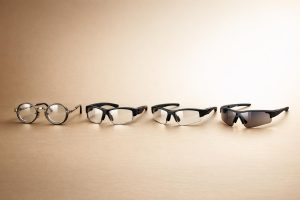
- Choose wraparound frames or large lenses to minimize exposure from the sides.
- Pair sunglasses with a wide-brimmed hat for extra coverage.
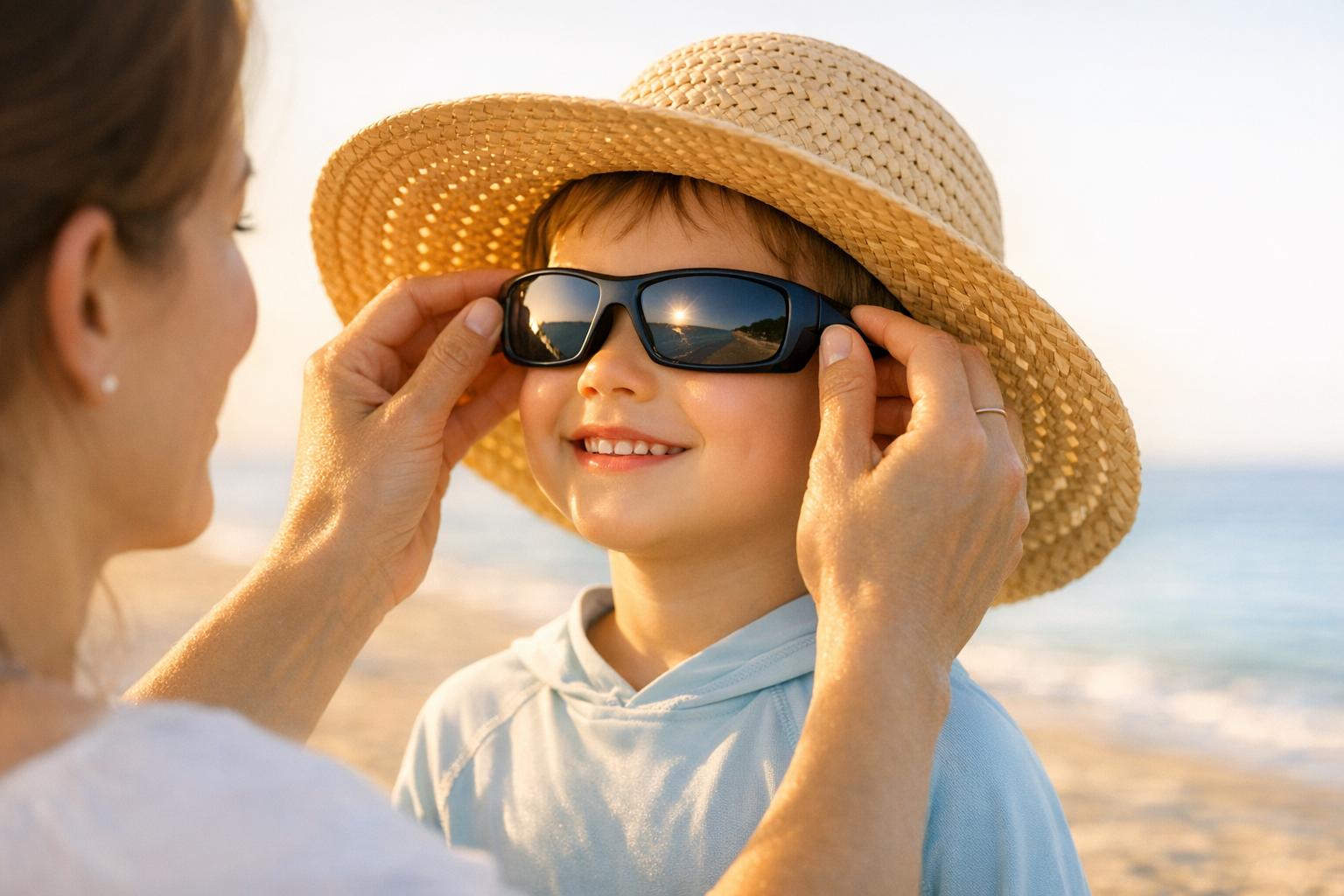
- Protect children’s eyes early with UV-blocking eyewear, as they’re more vulnerable.
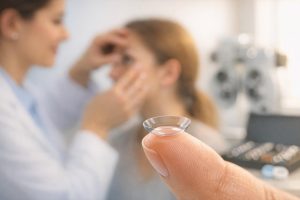
- Use UV-blocking contacts or goggles for added protection during outdoor activities.
UV rays are strongest between 10:00 a.m. and 4:00 p.m., especially in summer or at higher altitudes. Even on cloudy days, up to 89% of UV rays reach your eyes. Start protecting your vision now – your future self will thank you.
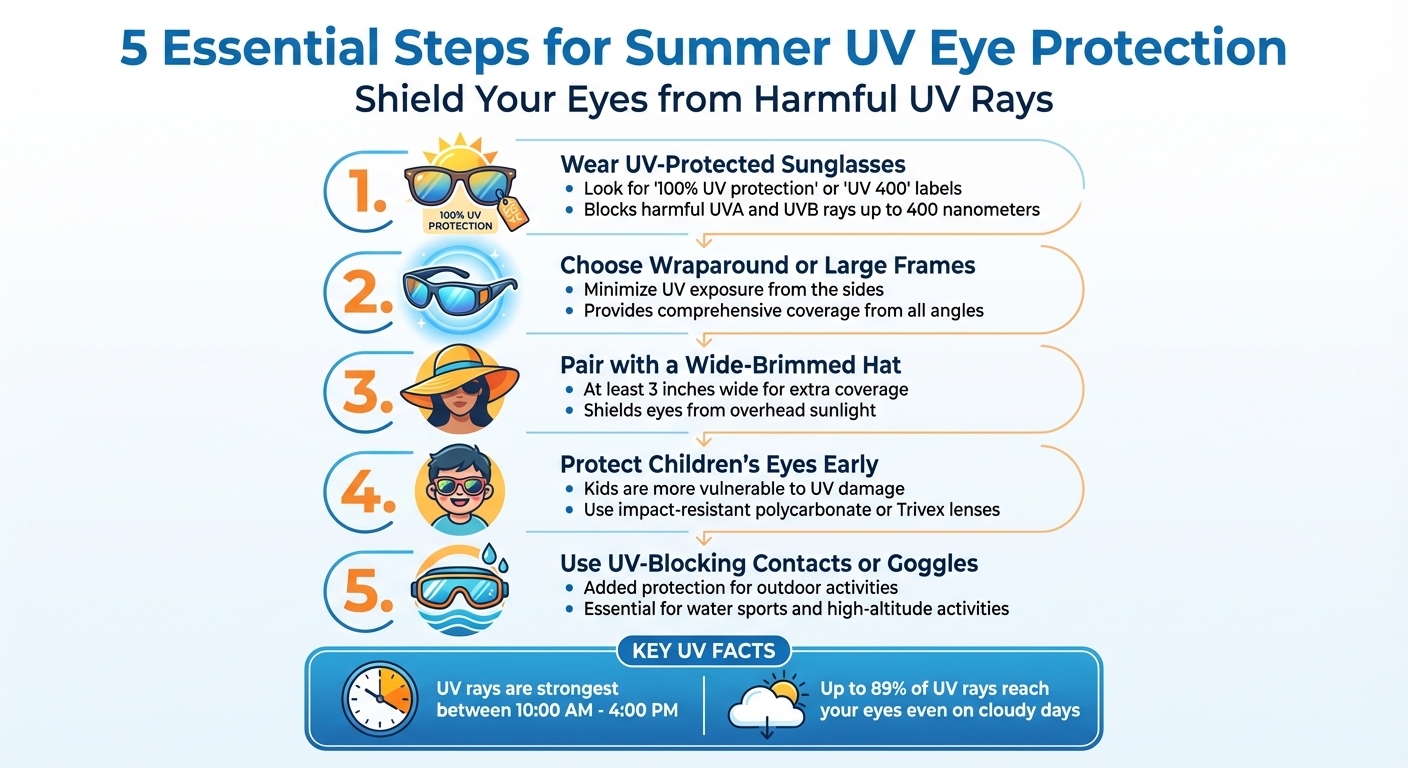
5 Essential Steps for Summer UV Eye Protection
UV rays can burn your eyes even on cloudy days
sbb-itb-5ef6ec9
Health Risks of UV Exposure to Eyes
UV radiation can harm your eyes both instantly and over time, with effects ranging from temporary discomfort to lasting damage.
Immediate Effects: Photokeratitis and Sunburned Eyes
Photokeratitis, often referred to as "sunburn of the eye", occurs when excessive UV exposure damages the cornea and conjunctiva. This condition causes sharp pain, redness, a gritty sensation, and extreme sensitivity to light. Other symptoms include excessive tearing and blurry vision.
"Eyes can be ‘sunburned’ in a condition called photokeratitis. This commonly leads to urgent medical visits because of severe eye pain and an abrupt onset of symptoms." – Steven Quan, OD, UChicago Medicine
Although photokeratitis symptoms usually resolve on their own, the sudden and severe discomfort often prompts medical attention. Surprisingly, this condition can occur in unexpected settings – snow, for example, reflects up to 80% of UV rays, nearly doubling exposure. Artificial sources like welding torches and tanning beds can also cause photokeratitis. And never stare directly at the sun, as it can lead to permanent vision loss.
While the immediate effects are painful, the real danger lies in the long-term consequences of UV exposure.
Long-Term Damage: Cataracts and Macular Degeneration
Even after the acute symptoms fade, UV exposure can silently cause lasting harm. Over time, UV rays alter proteins in the eye’s lens, leading to cataracts, a condition that clouds vision and often requires surgery. UVA rays, with wavelengths between 315 and 400 nanometers, can penetrate deep into the eye, reaching the lens and even the retina in small amounts.
Prolonged UV exposure is also linked to age-related macular degeneration (AMD), a condition that damages the macula – the part of the eye responsible for sharp, central vision. Studies suggest that unprotected, long-term UV exposure increases the risk of AMD. Since a large portion of UV exposure happens before the age of 18, protecting children’s eyes early on is crucial.
How to Choose the Right UV Eye Protection
Picking the right sunglasses isn’t just about style or price – it’s about protecting your eyes from harmful UV rays. Here’s what you need to know to make the best choice.
Selecting Sunglasses with 100% UV Protection
The most important feature to look for is a label that says "100% UVA-UVB protection" or "UV 400." UV 400 means the lenses block light rays up to 400 nanometers, effectively covering both UVA and UVB rays. Without this label, you’re risking your eye health.
Here’s a common misconception: darker lenses don’t necessarily mean better protection. In fact, dark lenses without UV coating can be worse than no sunglasses at all. Why? They cause your pupils to dilate, letting in more harmful UV rays. On the flip side, even clear or lightly tinted lenses can offer full UV protection if treated correctly.
"Sunglasses provide important protection from ultraviolet (UV) sunlight in the same way that sunscreen or covering up helps protect our skin." – Bryce St. Clair, Optometrist, Johns Hopkins Medicine
For extra coverage, consider wraparound or large lenses, which reduce UV exposure from the sides. Polarized lenses are great for cutting glare off surfaces like water or snow but remember: polarization doesn’t guarantee UV protection. Always check the UV rating. If you’re unsure about your sunglasses, many optical shops can test them with a photometer to confirm UV protection.
The lens material matters, too. Polycarbonate and Trivex lenses naturally block UV rays and are impact-resistant, making them a solid choice for kids and outdoor activities. Standard plastic (CR-39) lenses, however, only block about 80% of UV rays unless they’re specially treated, and glass lenses need specific coatings to provide full protection.
But sunglasses alone aren’t enough to fully shield your eyes.
Additional Protection: Hats and Shade
Sunglasses can’t block UV rays from every angle. Pair them with a wide-brimmed hat (at least 3 inches) to shield your eyes from overhead sunlight.
UV rays are strongest between 10:00 a.m. and 4:00 p.m.. Staying in the shade or indoors during these hours can significantly reduce your exposure. And don’t forget – UV protection isn’t just for summer. It’s important to safeguard your eyes all year round.
Additional UV Protection Options
Besides sunglasses and hats, there are specialized options to provide extra protection for your eyes against harmful UV rays. Whether you’re swimming, wearing contact lenses, or safeguarding your kids’ vision, these tools can make a big difference.
UV-Blocking Contact Lenses and Swim Goggles
UV-filtering contact lenses can help block harmful radiation from reaching your eye’s internal structures, shielding the cornea and lens from UV-A and UV-B rays. However, they don’t cover the conjunctiva (the white part of your eye), eyelids, or the surrounding skin.
"UV radiation, whether from natural sunlight or indoor artificial rays, can damage the eye’s surface tissues as well as the cornea and lens."
– Michael Kutryb, MD, Ophthalmologist
For full protection, pair UV-blocking contacts with sunglasses that offer 100% UV protection. If you’re heading into the water, UV-protective swim goggles are a smart choice. Water reflects UV rays, increasing exposure even in shaded areas. At higher altitudes, like in Colorado, sunlight can be about 20% stronger than at sea level. Swim goggles not only block UV rays but also protect your eyes from irritants like chlorine and bacteria, reducing the risk of infections. Look for goggles labeled UV400 or 100% UVA/UVB protection. If you wear contact lenses while swimming, make sure to discard them afterward, as they can trap bacteria.
Taking these steps is especially important when it comes to protecting children’s eyes.
Protecting Children’s Eyes from UV Damage
Children’s eyes are particularly vulnerable to UV damage because their lenses are clearer, allowing more UV rays to penetrate. Starting UV protection early can help prevent long-term harm.
"Don’t forget protection for children and teenagers. They typically spend more time in the sun than adults."
– American Optometric Association (AOA)
For kids, wraparound sunglasses with polycarbonate or Trivex lenses are ideal. These materials are impact-resistant and naturally block UV rays. Always check for labels that indicate 99% to 100% UVA/UVB protection or UV400. If your child isn’t a fan of sunglasses, a wide-brimmed hat can provide excellent shade. For swimming, goggles not only shield young eyes from UV rays but also protect against pool chemicals.
The Eye Center of Northern Colorado offers a range of durable, UV-protective eyewear designed specifically for active kids, ensuring they stay safe while enjoying the outdoors.
Conclusion
Summary of UV Protection Methods
Shielding your eyes from harmful UV rays is simpler than you might think. The key is consistent, year-round protection using a combination of strategies. Start with sunglasses that block 100% of UV-A and UV-B rays or carry a UV400 rating. Opt for wraparound or close-fitting frames to reduce peripheral exposure. Look for lenses that provide both clarity and protection to ensure your vision isn’t compromised. For added defense, pair your sunglasses with a wide-brimmed hat, especially during the sun’s peak hours between 10:00 a.m. and 4:00 p.m..
Remember, UV damage builds up over time, increasing the likelihood of developing conditions like cataracts and macular degeneration. This is especially important for children, who often spend more time outdoors and are more susceptible to UV exposure.
"The longer the eyes are exposed to solar radiation, the greater the risk of developing cataracts, eye cancer, pterygium (surfer’s eye) or macular degeneration later in life."
– American Optometric Association
Combining these protective measures with regular professional care is essential for maintaining your long-term vision health.
Eye Center of Northern Colorado: Your Partner for Eye Health
For comprehensive support in protecting your vision, the Eye Center of Northern Colorado is here to help. With over 50 years of experience serving Northern Colorado and Wyoming, their fellowship-trained specialists are equipped to detect early signs of UV-related damage and manage conditions like cataracts and macular degeneration. Their optical services include prescription sunglasses and contact lenses designed to provide full UV protection while meeting your specific vision needs. By scheduling an annual eye exam, you can integrate expert care with your daily UV protection strategies to ensure lasting eye health.
FAQs
What are the short- and long-term effects of UV exposure on your eyes?
Exposure to UV rays, even briefly, can harm your eyes. It can cause photokeratitis – essentially a painful sunburn on the cornea – along with irritation and surface growths like pinguecula or pterygium. Over time, prolonged UV exposure can lead to more severe problems, such as cataracts, macular degeneration, premature aging of eye tissues, and even an increased risk of eye cancers.
To safeguard your eyes, opt for sunglasses that offer 100% UV protection. Avoid direct sunlight during peak hours, and consider wearing a wide-brimmed hat for extra shade. Taking these steps now can go a long way in protecting your vision for the future.
How do I know if my sunglasses provide proper UV protection?
To protect your eyes effectively, choose sunglasses labeled 100% UV protection or UV 400. These block both UVA and UVB rays. Opt for styles with larger or wraparound lenses, as they shield your eyes from sunlight sneaking in from the sides, giving you better overall coverage.
Want to check the quality of the lenses? Here’s a simple trick: hold the sunglasses up to a straight-edged pattern, like a grid or set of lines. Move them slightly. If the lines remain straight, the lenses are solid. But if the lines warp or look wavy, the lenses might not be up to par. Also, in the U.S., sunglasses must meet FDA standards for impact resistance, which ensures they are both safe and durable.
Choosing sunglasses with these features helps protect your eyes from harmful UV rays and minimizes the risk of long-term damage.
Why is it important to protect children’s eyes from UV rays at an early age?
Protecting children’s eyes from UV rays is crucial, as their eyes are more sensitive and absorb more UV radiation compared to adults. This heightened exposure can increase the likelihood of serious eye issues later in life, including cataracts and macular degeneration.
Simple steps, like having them wear sunglasses that provide 100% UV protection and pairing them with wide-brimmed hats, can go a long way in preserving their vision and supporting healthy eyesight for years to come.