Contact lenses can be a safe and effective option for kids, but only with proper care and responsibility. Here’s what you need to know:
- Safety First: Improper use of contact lenses can lead to serious eye issues like infections or corneal ulcers. Every year, around 13,500 kids visit the ER due to contact lens-related problems.
- Readiness Matters: Age isn’t the only factor. Maturity, hygiene habits, and fine motor skills are crucial in determining if your child is ready for contact lenses.
- Lens Types: Daily disposables are the safest for beginners, while reusable lenses require consistent cleaning. Hard lenses and Ortho-K lenses are options for specific needs.
- Hygiene Rules: Always wash hands before handling lenses, never “top off” old solution, and avoid water exposure. Replace lens cases every three months.
- Habits to Avoid: Don’t sleep in lenses, swim with them, or share them with others.
- Eye Exams: Annual checkups are essential to monitor eye health and ensure proper lens use.
Is Your Child Ready for Contact Lenses?
Age and Responsibility Factors
While most children start wearing contact lenses between 8 and 12 years old, their maturity level is far more important than their age. Some kids as young as 6 may be ready, while others might not be prepared even at 16. The real question is whether your child can handle the responsibility of caring for a medical device that goes directly on their eyes.
Take a close look at your child’s daily habits. Do they brush their teeth, finish homework, and complete chores without constant reminders? If so, they may be ready to manage contact lens care. Dr. Kari Cardiff from Nationwide Children’s Hospital advises that if your child needs frequent reminders about basic hygiene, like hand washing or teeth brushing, they might not be ready yet. On the other hand, kids who consistently maintain good hygiene and take care of their belongings are usually better candidates for contact lenses.
Another important factor is whether your child has the fine motor skills needed to insert, remove, and clean lenses. If they frequently lose or damage their glasses, it may be a sign they’re not quite ready for contacts.
Interestingly, about 90% of nearsighted children aged 8–11 can independently apply and remove one-day disposable lenses. Kids in this age group also tend to experience fewer eye-related issues compared to teenagers because they’re generally more diligent about following instructions. The risk of serious infections is low, with daily disposable lenses having an annual rate of approximately 1 in 5,000 wearers.
"Motivation determines successful contact lens use."
Motivation plays a huge role. Children who express a genuine desire to wear contact lenses and are eager to learn the process are much more likely to succeed than those who feel pressured into it. It’s also helpful to allow extra time in the mornings while your child gets the hang of inserting their lenses. Evaluating their readiness not only ensures they can handle the responsibility but also helps you decide when contacts might be a better option than glasses.
When Contact Lenses Work Better Than Glasses
Once your child shows they’re ready, it’s worth considering the practical advantages contacts can offer. For active kids, contact lenses provide a clear edge. They allow for unobstructed peripheral vision that moves naturally with the eye, making them ideal for sports and other physical activities. In fact, over 71% of children aged 8–12 say they prefer contact lenses over glasses.
Unlike glasses, contact lenses don’t fog up, streak with sweat, or risk falling off during intense play. They’re especially useful for activities requiring helmets or rapid movement, thanks to their secure fit. Beyond convenience, specialized lenses – like multifocal or dual-focus options – can even slow the progression of nearsightedness in children as young as 8. This is a benefit regular glasses can’t provide, as these lenses go beyond vision correction to offer therapeutic advantages.
Studies also show that wearing contact lenses can boost a child’s self-esteem and positively influence how they feel about their appearance compared to wearing glasses. However, it’s always a good idea to keep a backup pair of glasses with an updated prescription. Make sure your child removes their contact lenses at least an hour before bed or immediately if they experience any irritation.
sbb-itb-5ef6ec9
Are Contact Lenses Safe for Kids? Age, Safety & Best Options | Art of Optiks
Choosing the Right Contact Lenses for Your Child
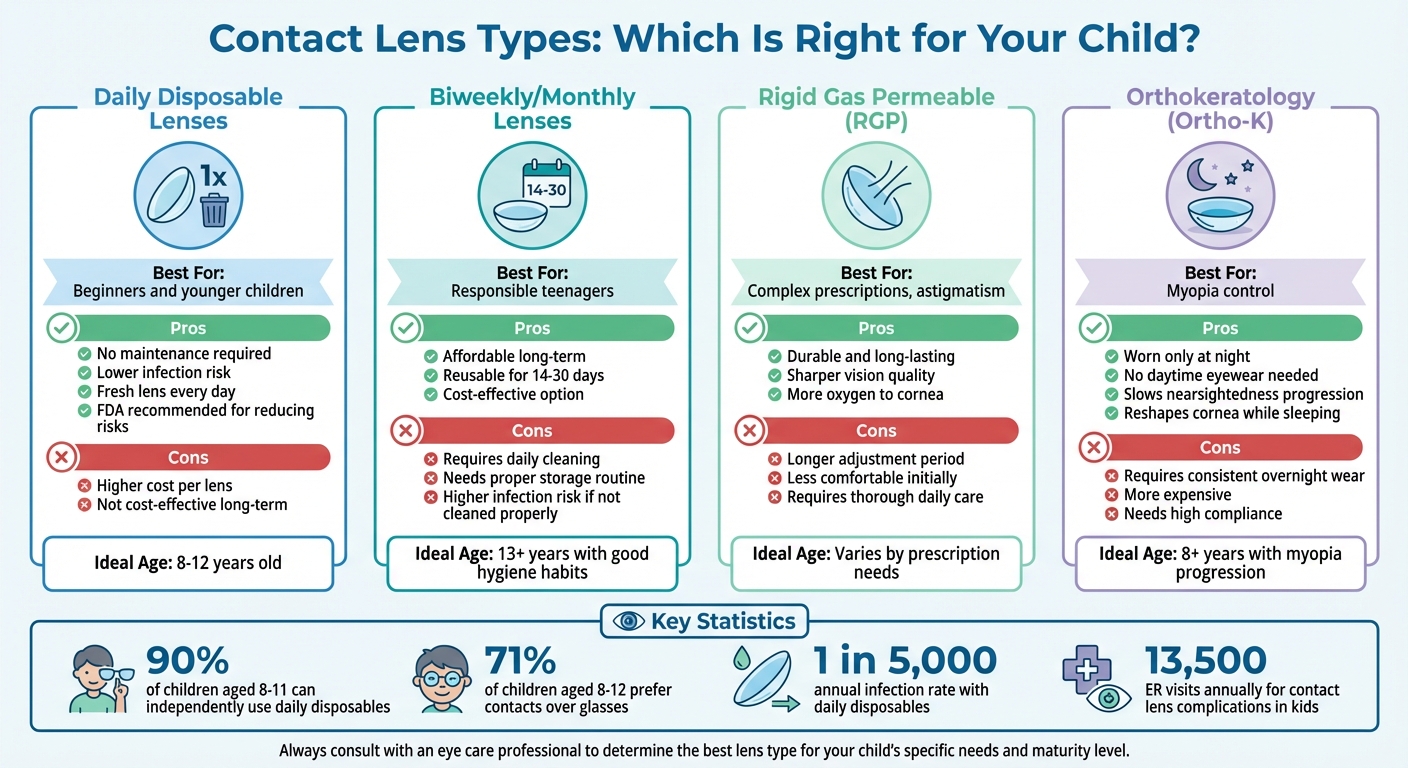
Contact Lens Types Comparison for Kids: Pros, Cons, and Best Uses
Types of Contact Lenses Available
When selecting contact lenses for your child, consider their specific needs and level of responsibility. Daily disposable lenses are single-use and discarded at the end of each day. These lenses are an excellent option for children because they eliminate the need for cleaning, significantly reducing the risk of infections. According to the U.S. Food and Drug Administration, "daily disposable lenses can reduce some of the risks associated with wearing lenses since a new pair is used each day".
Biweekly or monthly lenses are soft lenses designed for reuse over 14 to 30 days. These are more affordable in the long run but require daily cleaning and proper storage to avoid eye infections. These lenses are better suited for older or more responsible teenagers who can manage a consistent hygiene routine without reminders.
Rigid Gas Permeable (RGP) lenses, also called "hard lenses", are durable and provide sharper vision, especially for children with complex prescriptions or astigmatism. These lenses allow more oxygen to reach the cornea compared to soft lenses. However, they require a longer adjustment period for comfort.
Another option is Orthokeratology (Ortho-K), which involves wearing rigid lenses overnight to reshape the cornea. This allows your child to enjoy clear vision during the day without needing additional eyewear. Ortho-K lenses are often used to slow the progression of nearsightedness.
Choosing the right lens type is essential for reducing risks and maintaining your child’s eye health. Below is a quick breakdown of the advantages and challenges of each type.
Comparing Lens Types
The best lens type for your child will depend on their lifestyle and ability to follow proper hygiene practices. Daily disposables are perfect for beginners due to their ease of use and low risk of infection, though they are more expensive per lens.
Biweekly and monthly lenses are a cost-effective choice for long-term use but require diligent cleaning and storage. These are ideal for teens who can independently stick to a cleaning routine. RGP lenses offer the sharpest vision for conditions like astigmatism but take time to adjust to and demand thorough daily care.
| Lens Type | Pros | Cons |
|---|---|---|
| Daily Disposable | No maintenance, lower infection risk | Higher cost per lens |
| Biweekly/Monthly Lenses | Affordable, reusable | Requires daily cleaning and storage |
| Rigid Gas Permeable | Durable, sharp vision | Longer adjustment period, less comfort |
It’s worth noting that contact lenses are associated with about 13,500 of the 70,000 annual emergency room visits for medical device-related complications. Picking the right lenses and ensuring proper care can help your child avoid becoming part of that statistic.
Daily Hygiene Practices for Contact Lenses
How to Wash and Dry Hands Properly
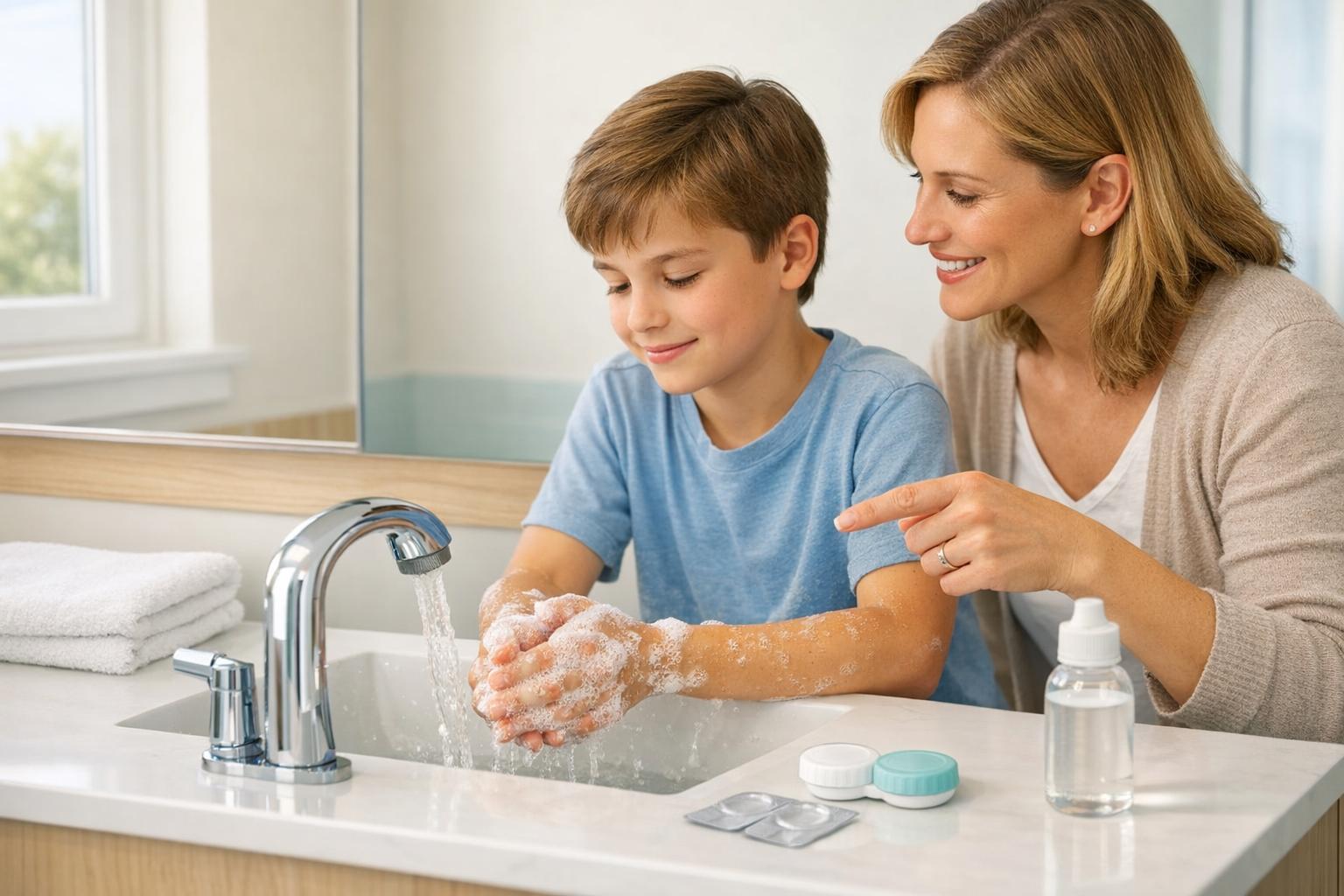
Maintaining clean hands is key to preventing eye infections. Make sure your child washes their hands with non-perfumed, antibacterial soap before handling contact lenses. Steer clear of cream-based soaps, as they can leave a residue on the fingers that may transfer to the lenses and cause irritation.
Once the hands are clean, dry them thoroughly using a lint-free cloth or a clean tissue. This step is critical because water can carry harmful microorganisms, like Acanthamoeba, which can contaminate the lenses. Damp hands can also leave behind fibers that may scratch or irritate the eyes.
With clean and dry hands, your child is ready to move on to proper lens cleaning and storage, ensuring their eyes stay protected.
Cleaning and Storing Lenses Correctly
After washing and drying hands properly, follow the "rub and rinse" method for cleaning lenses – even if the lens solution is labeled "no-rub." Instruct your child to place the lens in their palm, add a few drops of fresh solution, and gently rub it for about 5 seconds. This action helps remove biofilm, debris, and protein deposits that rinsing alone might miss. After rubbing, rinse the lens thoroughly with more solution before placing it in the storage case.
Never "top off" old solution by adding fresh solution to what’s already in the case. Old solution loses its disinfecting effectiveness, and mixing it with new solution dilutes the active chemicals. Always discard the old solution, rinse the case with fresh solution (not water), and refill it with entirely fresh solution each time lenses are stored. Avoid exposing lenses or the storage case to any type of water – tap, bottled, distilled, or natural sources like lakes – since water exposure is a major cause of serious eye infections.
Once lenses are inserted, the storage case should be emptied, rinsed with fresh solution, and left to air-dry upside down on a clean tissue. Replace the storage case every three months to minimize bacterial buildup. If your child uses makeup, have them insert lenses before applying cosmetics and remove them before taking makeup off.
| Solution Type | Purpose | Key Hygiene Rule |
|---|---|---|
| Multipurpose Solution | Cleans, rinses, disinfects, and stores | Do not mix old and fresh solutions |
| Hydrogen Peroxide Systems | Deep cleans and disinfects; ideal for allergies | Must remain in the special case for 4–6 hours to neutralize before wearing |
| Saline Solution | Rinsing only | Does not disinfect; never use for storage |
Preventing Eye Infections and Problems
Habits to Avoid
Did you know that about 85% of adolescents who wear contact lenses engage in at least one risky behavior? One of the most dangerous habits is sleeping in lenses, which increases the risk of infection by 6 to 8 times. Despite this, around 30% of teens admit to sleeping or napping while wearing their lenses.
Another big risk comes from water exposure. Approximately 27% of adolescents swim with their contact lenses. This is a major no-no because water – whether from swimming pools, hot tubs, showers, or natural bodies of water – can be a breeding ground for harmful microorganisms that lead to serious eye infections.
"Contact lenses safely correct vision when properly used. However, adolescents and adults can improve the way they take care of their contact lenses to reduce their risk of serious eye infections."
- Jennifer Cope, M.D., M.P.H., Medical Epidemiologist, CDC
Sharing lenses is another behavior to avoid. It might seem harmless, but sharing lenses with friends or teammates can transfer bacteria between eyes, causing infections. And here’s a tip: never use saliva to wet a lens. Saliva isn’t sterile and can introduce harmful germs to the eye. If a lens feels dry, stick to fresh contact lens solution or rewetting drops recommended by your eye doctor.
| Habit | Risk Level | Recommended Practice |
|---|---|---|
| Sleeping in lenses | High (6-8x infection risk) | Always remove lenses before sleeping |
| Cleaning with tap water | High (Bacterial exposure) | Use only prescribed disinfecting solution |
| "Topping off" solution | Moderate to High | Discard old solution; use fresh solution daily |
| Replacing lens case | Variable | Replace every 3 months to avoid bacterial buildup |
These tips aren’t just for everyday use – they’re especially important during physical activities.
Contact Lenses During Sports and Activities
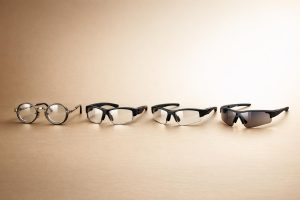
While contact lenses offer great perks for sports – like better peripheral vision and no fogging – they don’t protect your child’s eyes from impact. That’s why protective safety goggles or glasses should be worn over contact lenses during sports like basketball, soccer, or baseball.
"When playing sports, wear safety goggles or glasses over your lenses."
- U.S. Food and Drug Administration (FDA)
Soft lenses are a great option for sports because they stay securely in place during movement. For active kids, daily disposable lenses are ideal. They minimize the risk of infection from sweat and dirt since your child can simply throw them away after the game and start fresh the next day.
And don’t forget: always have a pair of backup glasses with a current prescription in your child’s sports bag. This is especially important considering that about 13,500 emergency room visits each year are related to contact lens complications or injuries in children. Following these precautions can help keep your child’s eyes healthy while they enjoy their favorite activities.
Monitoring Your Child’s Eye Health
Once you’ve established proper hygiene and safe practices, keeping a close eye on your child’s eye health becomes critical.
Signs of Eye Problems to Watch For
Be alert for symptoms like redness, itching, burning, persistent irritation, blurry vision, sharp pain, sensitivity to light, or unusual watery discharge. If any of these arise, have your child remove their lenses immediately and consult an eye care professional. These could be signs of conditions such as corneal abrasions, keratitis, or corneal ulcers – issues that, if untreated, could lead to lasting vision damage.
"Contact lenses should be used safely, responsibly, and only under the supervision of your eye care professional. Otherwise, serious injury to the eye can result, particularly if the contact lenses are not removed at the first hint of a problem."
- U.S. Food and Drug Administration
At the first sign of discomfort, it’s essential to remove the lenses and seek professional advice.
Importance of Regular Eye Exams
Routine checkups are a key part of maintaining your child’s eye health. For most school-age kids, eye exams are recommended every two years. However, children who wear contact lenses should visit their eye doctor annually. These visits help track prescription changes and ensure their eyes remain healthy. During these exams, the eye care professional will also assess your child’s hygiene and lens care habits to minimize the risk of infections.
For thorough pediatric eye care and contact lens evaluations, consider scheduling an appointment with a trusted eye care provider, like the team at Eye Center of Northern Colorado.
In addition to regular checkups, having a reliable pair of backup glasses is another way to protect your child’s vision.
Keeping Backup Glasses on Hand
Every child using contact lenses should have a pair of backup glasses with an updated prescription. These glasses should be easily accessible and used as needed, especially during emergencies such as irritation, infection, or if a lens is lost or damaged. Encourage your child to switch to their glasses at least one hour before bedtime to give their eyes a break from contact lenses. Keeping backup glasses on hand ensures your child is prepared for any situation, whether at school, during sports, or at home.
Conclusion
Key Takeaways for Parents
Contact lenses can be a great vision correction option for kids, but it all hinges on proper care and responsibility. Rather than focusing solely on age, consider your child’s maturity level. Are they able to follow instructions, maintain good hygiene, and handle the responsibility of lens care? These factors are far more important in determining readiness.
The cornerstone of safe contact lens use is sticking to hygiene rules. Your child should never expose lenses to water, avoid sleeping in them unless specifically prescribed, and remove them immediately if they experience redness or irritation. Parents play a critical role in supervising lens care. If proper care routines aren’t followed, it’s best to put contact lens use on hold.
Keep a close eye on your child’s lens care habits and ensure they attend annual eye exams to keep their prescription up to date and their eyes healthy.
Trusted Eye Care for Your Child
Professional guidance is essential for a safe and successful contact lens experience. The Eye Center of Northern Colorado offers comprehensive pediatric eye care, including specialized contact lens evaluations and fittings. With experts like Dr. Patrick Arnold, the region’s only full-time pediatric ophthalmology and strabismus specialist, your child’s eye health is in excellent hands.
Schedule your child’s annual eye exam today. With the right professional support, your child can enjoy the freedom, confidence, and convenience that contact lenses provide – safely and responsibly.
FAQs
How do I know my child is ready for contacts?
Determining whether your child is ready for contact lenses comes down to their responsibility and hygiene habits rather than their age. Kids as young as 8 years old can safely wear contact lenses if they’re motivated, practice good hygiene, and handle the lenses properly. Before deciding, it’s important to consult an eye care professional to evaluate your child’s maturity and overall eye health.
Which contact lens type is safest for kids to start with?
Daily disposable soft contact lenses are a great choice for kids. Since they are replaced daily, they require little to no cleaning, which reduces the chance of contamination. This makes them a safer and more hygienic option, significantly lowering the risk of eye infections for young wearers.
What should I do if my child’s eye turns red or hurts with contacts?
If your child’s eye turns red or becomes painful while wearing contact lenses, take the lenses out right away and consult an eye care professional. Misusing contact lenses can cause serious problems, including infections or even lasting damage. Don’t try to handle the issue on your own, and make sure your child avoids wearing the lenses again until a professional has assessed the situation.