Finding the right contact lenses is more than just knowing your prescription. It involves a detailed process to ensure safety, comfort, and clear vision. From assessing your eye health and lifestyle to testing trial lenses, every step matters. Here’s what you need to know:
- Consultation: Your doctor reviews your medical history, daily habits, and vision goals to recommend suitable lenses.
- Eye Exam: Tests like corneal curvature, tear film evaluation, and pupil size measurement help determine the best fit.
- Trial Fitting: You’ll try lenses to check for comfort and proper alignment, followed by training on insertion, removal, and hygiene.
- Follow-Up: Adjustments may be made after testing the lenses in real-world conditions.
Proper fitting ensures your lenses align with your eye shape and lifestyle, reducing risks like dryness or infections. Always schedule regular follow-ups to maintain eye health and comfort.
Contact Lens Fitting Process: 6 Essential Steps from Consultation to Final Prescription
Your Complete Guide To Contact Lens Fitting (ft. Two of a Kind) | The Gist Of It
Initial Consultation and Lifestyle Assessment
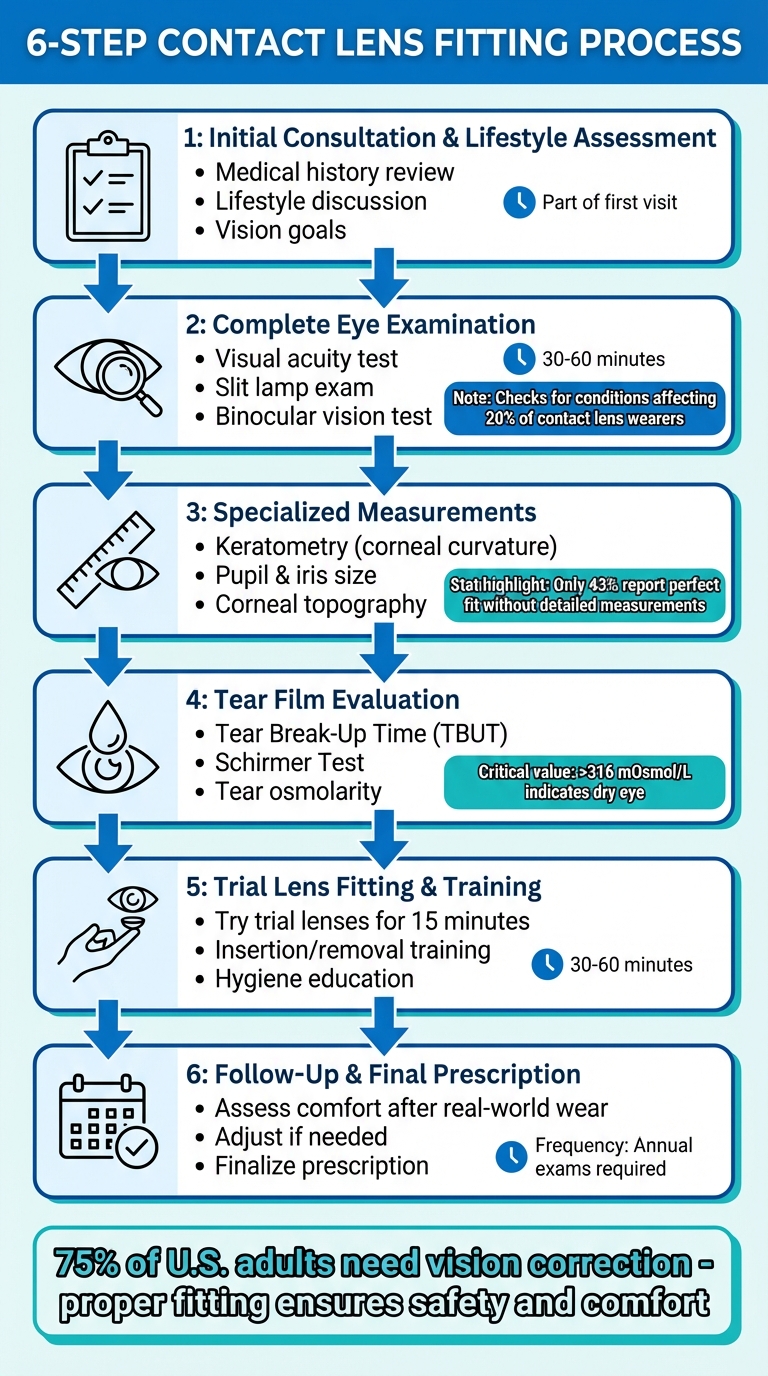
The process of finding the right contact lenses starts with a personalized discussion. Your eye care provider will take the time to understand your medical history and daily habits to recommend lenses that suit your needs. This initial consultation focuses on two key areas: your health background and how you plan to use your lenses.
Medical History Review
Your provider will begin by asking about your eye health, including any history of dry eyes, infections, or conditions like strabismus (crossed eyes). For example, if you’ve dealt with giant papillary conjunctivitis – an allergic reaction affecting up to 20% of contact lens wearers – this will influence the choice of lens materials.
Be sure to bring any previous prescriptions for eyeglasses or contacts. If you’ve stopped wearing contacts in the past due to discomfort, sharing those details can help your provider find lenses that prioritize breathability and moisture retention. Additionally, let them know if you have severe or seasonal allergies, as these can irritate your eyes and might make daily disposable lenses a better fit.
Your provider will also review any past eye surgeries or injuries to ensure your corneal surface can handle standard lenses. They’ll consider your current medications, including medicated eye drops, as these can affect how well lenses work for you. If you’re experiencing age-related near vision changes, options like multifocal or monovision lenses may be discussed.
Once your medical history is covered, the focus shifts to how your lifestyle impacts lens selection.
Lifestyle and Vision Goals
Your daily routine plays a big role in determining the best lenses for you. Your provider will ask about your job, hobbies, and environment. For example, if you spend long hours in front of screens, lenses designed for enhanced moisture retention can help reduce digital eye strain. On the other hand, if you work in dusty or hazardous environments, special safety considerations may be necessary.
Your willingness to clean and care for your lenses is another important factor. If you prefer low-maintenance options, daily disposable lenses might be the way to go, while monthly lenses could work if you’re comfortable with regular cleaning. If you’re active in sports, mention this so your provider can recommend lenses that stay secure during physical activity. And don’t forget to share your vision goals – whether you’re looking for the convenience of overnight wear or want to experiment with tinted lenses to change your eye color.
Complete Eye Examination
After your initial consultation, your eye care provider will conduct a thorough 30–60 minute examination. This process confirms whether you’re a good candidate for contact lenses and checks for any conditions that might affect lens wear.
Visual Acuity and Eye Health Testing
The exam kicks off with a refraction test to determine the exact corrective lens power you need, followed by a visual acuity test using an eye chart.
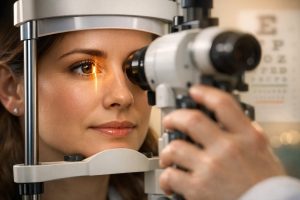
Next, your provider uses a slit lamp to closely examine your eyelashes, cornea, and iris. This helps identify any signs of infections, allergies, or conditions like giant papillary conjunctivitis, which affects up to 20% of contact lens users. Your eyes are then dilated to allow a detailed look at the retina and optic nerve – an especially important step for individuals who are nearsighted.
A binocular vision test ensures that your eyes work well together and can track moving objects effectively. Since contact lenses sit directly on the eye (unlike glasses, which rest about half an inch away), a vertex adjustment fine-tunes your prescription for the best lens performance.
These foundational tests are crucial for moving on to the more specialized measurements required for contact lens fitting.
Specialized Tests for Contact Lens Wearers
Fitting contact lenses involves additional specialized tests to ensure comfort and proper functionality. One of these is keratometry, which measures the curvature of your cornea. This is vital for selecting the right base curve, as an incorrect fit could lead to discomfort or even harm.
Tear film evaluation is another key step. Your provider might use the Schirmer test, where small paper strips are placed under your eyelids to measure tear production, or apply fluorescein dye to check how quickly your tears evaporate. These results guide the choice of lens material to enhance comfort and wearability.
Lastly, precise measurements of your pupil and iris ensure the lens centers correctly and aligns with your optical zone. Interestingly, a survey of 81 adults wearing prescription contacts revealed that only 43% reported a perfect fit without vision issues, highlighting just how important these detailed measurements are.
Measuring for the Right Fit
Getting the right measurements is key to achieving comfortable and clear vision. Your eye care provider uses specialized tools to measure the unique shape and size of your eye, ensuring the lenses fit perfectly on your cornea. These measurements are the foundation for evaluating both the curvature of your cornea and the size of your iris.
Corneal Curvature Measurements
After the initial keratometry, your provider determines the best base curve for your contact lenses. If the lens is too flat, it may shift every time you blink. On the other hand, a lens that’s too steep can block oxygen from reaching your cornea. For more complex fittings, a corneal topographer creates a detailed 3D map of your cornea. This map can reveal astigmatism or irregular shapes that might require toric lenses. This precise mapping helps design lenses that offer maximum comfort and sharp vision.
Pupil and Iris Size Assessment
Your provider also measures the size of your pupil and iris using tools like a slit lamp or template card. These measurements are crucial for selecting the right lens diameter and ensuring the optical zone aligns with your line of sight. Proper alignment reduces vision disturbances, especially in dim lighting. For larger scleral lenses, which sit on the white part of your eye, accurate iris measurements ensure the lenses stay stable and allow proper tear exchange to maintain eye health. With these detailed measurements, the fitting process transitions seamlessly to trying and adjusting trial lenses.
Tear Film Evaluation and Material Selection
After measuring your cornea and iris, the next step is evaluating your tear film – a crucial factor in ensuring contact lens comfort. This thin layer of moisture on your eye can be affected by contact lenses, sometimes leading to discomfort or even harm to your corneal tissue if tear stability or volume is insufficient. To prevent such issues, your eye care provider carefully assesses your tear film before recommending the best lens material for your eyes.
Tear Film Testing
Your provider uses several methods to check how well your tears protect and lubricate your eyes. One common test is the Tear Break-Up Time (TBUT), which measures how long your tear film stays intact after a blink. During this test, fluorescein dye is applied to your eye, and a slit lamp is used to monitor how quickly dry spots form on your cornea. If the tear film breaks too soon, it could indicate evaporative dry eye.
Another method, the Schirmer Test, measures tear production over five minutes using a small strip of paper placed under your lower eyelid. For a more detailed analysis, your provider might evaluate tear osmolarity, which determines the salt concentration in your tears. A reading above 316 mOsmol/L typically points to dry eye disease, which may need to be addressed before you can comfortably wear contact lenses.
These evaluations help guide the selection of the most suitable lens material for your eyes.
Choosing the Right Lens Material
The results of your tear film tests play a key role in determining which lens material will work best with your eye’s natural moisture. For example, soft contact lenses are known for their flexibility and comfort, but they can absorb moisture from your eyes, potentially worsening dry eye symptoms. If your tear production is low, your provider might suggest Rigid Gas Permeable (RGP) lenses, which help maintain moisture and are less likely to dry out.
"The health of the tear film and ocular surface influences the likelihood of being able to achieve successful contact lens wear." – Jennifer Craig, Clinical and Experimental Optometry
For those with dry eyes, daily disposable lenses can be a great option, as they eliminate the need for cleaning solutions and avoid protein buildup. Additionally, lenses made from silicone hydrogel allow more oxygen to reach your cornea, promoting better eye health and comfort throughout the day. Your provider will also consider factors like your lifestyle, work environment, and any existing eye conditions to ensure you get the clearest vision with minimal discomfort.
sbb-itb-5ef6ec9
Trial Lens Fitting and Insertion Training
Once you’ve chosen your lens material and specifications, the next step is trying on trial lenses. This phase not only confirms the fit determined earlier but also helps you get comfortable with handling and caring for your lenses. Expect this hands-on session to last about 30 to 60 minutes, during which you’ll test how the lenses feel and learn the skills needed to manage them safely at home.
Trying on Trial Lenses
Your eye care provider will begin by placing trial lenses on your eyes to assess their fit and movement. These lenses are usually generic versions tailored to match your corneal curvature, iris size, and prescription. After insertion, you’ll wear them for around 15 minutes to let your tear film stabilize and any initial tearing settle. Using a slit lamp, the provider will examine how the lens aligns with your cornea when you blink or look around. They’re checking for proper centering – lenses that are too tight or too loose can cause discomfort or even harm your eyes.
This is also your chance to experience how the lenses feel in everyday conditions. If you notice anything unusual, like a “foreign body” sensation, blurry vision, or discomfort, let your provider know right away. This feedback is essential for ensuring the lenses are a good match for you and sets the stage for learning proper handling techniques.
Insertion, Removal, and Hygiene Training
Before heading home with your trial lenses, you’ll receive detailed instructions on how to handle them properly. Your provider will guide you through the correct insertion process, starting with washing your hands thoroughly using mild, fragrance-free soap and drying them with a lint-free towel. You’ll learn to place the lens on your fingertip, check that it’s not inside out (it should look like a bowl, not a flared saucer), and gently place it on your eye while holding your eyelids open.
For removal, you’ll be taught to use your fingers rather than tools. This is especially important in emergencies, like if the lens becomes contaminated or exposed to chemicals.
"Soft contact lens removal should generally be done without the use of tools, because a contact lens may need to be removed quickly in certain situations, like contamination or chemical exposure." – Acuvue
Hygiene is a key focus during this training. You’ll learn essential practices, such as avoiding the reuse or “topping off” of old solution, cleaning lenses using the rub-and-rinse method, and replacing your storage case every one to three months. These habits are crucial for preventing infections and keeping your lenses comfortable throughout their wear cycle.
Evaluating the Fit and Making Adjustments
Assessing Comfort and Vision
After wearing trial lenses for a few days, your eye care professional will schedule a follow-up appointment to evaluate how well they’re working for you. This check-in is essential because certain fit issues might not show up during a quick office visit but become noticeable during everyday activities. At this appointment, your provider will use a slit lamp to examine how the lenses sit on your eyes after extended wear, paying close attention to their position and movement when you blink.
You’ll also undergo an over-refraction test, which assesses your vision while wearing the trial lenses. This helps determine if any tweaks to the prescription are needed to achieve clearer vision. Be sure to mention any discomfort or blurriness, especially at the end of the day.
"Often, your doctor will be able to see warning signs even before you begin to notice them. If such warning signs are evident in your follow-up visits, your doctor may recommend trying a different lens or lens material." – Colorado Eye Center
These evaluations guide adjustments to ensure the lenses fit and perform as well as possible for your specific needs.
Adjusting Fit or Trying Alternatives
Based on what they observe during the follow-up, your provider may make adjustments to the lenses. Using feedback from your trial period, they can fine-tune the lens specifications to better suit your daily routine. This might include modifying the base curve, diameter, or even switching to a different lens material for improved comfort and vision. For those with astigmatism, trying another brand of toric lenses may help if the current lenses aren’t aligning correctly.
If dryness is an issue, your provider might suggest silicone hydrogel lenses, which allow more oxygen to reach the eye, or recommend switching from monthly lenses to daily disposables, which tend to feel fresher and reduce the risk of infection.
"Always discuss options with the patient and let them make the final decisions. When the patient has some autonomy in their medical decisions, they are more likely to commit to them." – David Schaeffer, OD
In some cases, underlying conditions like dry eye or meibomian gland dysfunction need to be addressed before settling on the right lenses. If standard soft lenses don’t provide the clarity you need – especially if you have irregular corneas – your provider might suggest Rigid Gas Permeable (RGP) lenses. These lenses hold their shape better and often deliver sharper vision.
Finalizing the Prescription and Follow-Up Care
Once the trial lens evaluation is complete, the next steps involve finalizing your prescription and planning for ongoing care.
Receiving the Final Prescription
When the trial lenses provide both clear vision and comfort, your eye care professional will finalize your prescription. Unlike a glasses prescription, a contact lens prescription includes detailed specifications like lens power, base curve (BC), diameter (Dia), brand, material type, and even an expiration date.
Because contact lenses sit directly on the surface of your eye, the prescribed power is adjusted to account for vertex distance. According to the Fairness to Contact Lens Consumers Act, your eye doctor is required to give you a written copy of your contact lens prescription once the fitting process is complete. Keep in mind that most contact lens prescriptions are valid for one year.
Follow-Up Appointments
Regular follow-up visits are essential to ensure your lenses continue to fit properly and your eyes remain healthy. During these appointments, your eye care provider will check for signs of corneal stress or dryness, often using fluorescein dye and a slit lamp to carefully examine your cornea and tear film.
Even if you’re not experiencing any issues, it’s important to schedule an annual eye exam. If you notice changes in your vision, redness, or discomfort between visits, remove your lenses immediately and consult your eye care provider. Acting quickly can help protect your eye health.
Conclusion
Fitting contact lenses involves more than just picking a size – it’s a detailed process that includes precise measurements, lifestyle considerations, trial fittings, and regular follow-ups. Each step ensures your lenses are tailored to your eye shape, tear film quality, and daily vision needs.
Experienced eye care professionals play a key role in achieving this personalized fit. Since one size doesn’t fit all, specialists rely on advanced tools like corneal topography and slit lamp exams to identify potential issues early and ensure optimal lens performance.
At the Eye Center of Northern Colorado, we take these steps further by offering personalized contact lens fittings at our Longmont and Lafayette locations. Our team works with you to find lenses that align with your lifestyle and vision requirements.
With about 75% of U.S. adults needing vision correction, contact lenses remain a versatile option when fitted and cared for properly. Even if your vision feels stable, annual eye exams are crucial. They help catch potential problems early, ensuring continued success with your lenses.
To make clear vision accessible, the Eye Center of Northern Colorado accepts Medicaid, Medicare, and most major insurance plans. Book a consultation today and let our professionals help you achieve not only better vision but also long-term eye health.
FAQs
How can I tell if contact lenses are right for me?
Determining if contact lenses suit your lifestyle means thinking about your daily habits, preferences, and overall eye health. When you go for a contact lens fitting, an eye care professional will evaluate your specific vision needs. For example, do you need lenses for sports, long hours of wear, or conditions like astigmatism or presbyopia?
The fitting process also involves checking your tear production and the shape of your cornea. These factors help ensure the lenses fit comfortably and safely. Based on this assessment, your eye care provider will suggest the most suitable lens type – whether that’s daily disposables, extended-wear lenses, or another option.
The ultimate aim? To find contact lenses that not only improve your vision but also fit effortlessly into your daily routine, keeping your eyes comfortable and healthy.
What should I do if my contact lenses feel uncomfortable during the trial period?
If your trial contact lenses are causing discomfort, it’s important to contact your eye care professional right away. They might need to adjust the fit, recommend a different lens material, or address issues such as dryness or improper alignment.
Wearing lenses that feel uncomfortable can lead to irritation or even harm your eyes. Prioritizing your comfort and eye health is key, so don’t wait to get advice from your provider.
How often should I have follow-up appointments for my contact lenses?
After your first contact lens fitting, it’s usually a good idea to have a follow-up visit about a week later. This allows your eye care provider to check that the lenses fit properly and that your eyes are adjusting without any issues. Beyond that, scheduling yearly check-ups is important to keep an eye on your overall eye health and make sure your lenses continue to meet your vision needs.
However, if you notice any discomfort, changes in your vision, or other problems with your lenses, don’t wait until your next routine appointment. Reach out to your eye care provider right away. Staying on top of follow-ups is key to keeping your eyes healthy and your vision clear.