Your eyes can reveal more than vision problems – they offer clues about your overall health. Regular eye exams can detect serious conditions like diabetes, high blood pressure, glaucoma, and even autoimmune disorders before symptoms appear. Here’s why scheduling routine exams matters:
- High Blood Pressure: Eye changes like stiffened blood vessels or retinal damage can indicate hypertension, which increases stroke risk by up to 137%.
- Diabetes: Early signs of diabetic retinopathy, such as microaneurysms, can be spotted before vision loss occurs, reducing blindness risk by 95% with timely care.
- Glaucoma: Often symptomless until advanced, glaucoma causes irreversible vision loss. Early detection through tests like tonometry and OCT is key.
- Thyroid and Autoimmune Disorders: Conditions like Graves’ disease or lupus may show early signs in the eyes, including inflammation or dry eye symptoms.
Eye exams provide a window into your overall health, enabling early intervention and better outcomes. If you’re over 60, have diabetes, or high blood pressure, annual exams are essential. Protect your vision and health by making eye exams a priority.
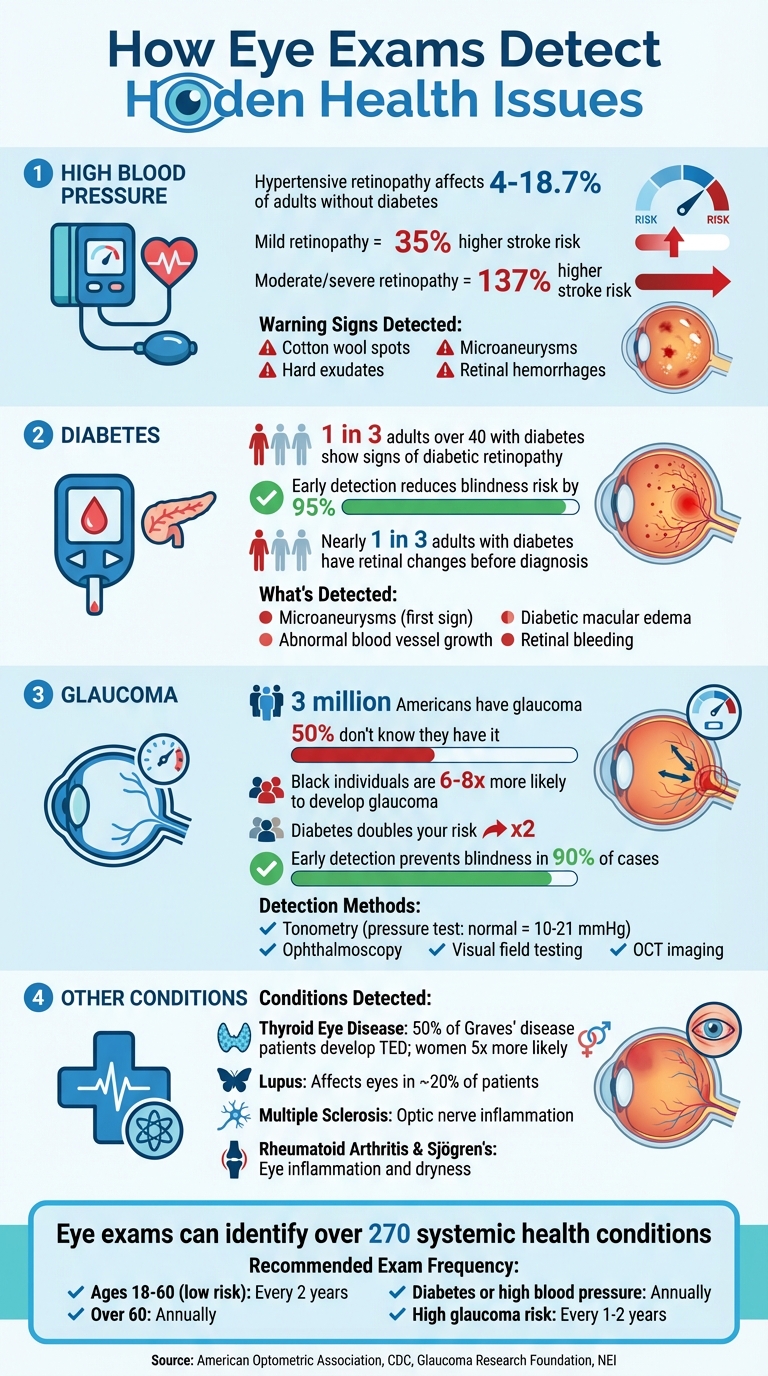
Health Conditions Detected Through Eye Exams: Statistics and Risk Factors
High Blood Pressure: What Your Eyes Reveal
Hypertensive Retinopathy: A Warning Sign
Your eyes can provide crucial clues about high blood pressure. As blood pressure rises, the tiny blood vessels in your retina begin to stiffen and narrow. Optometrist William White explains:
"The blood vessels in the retina can become a little more stiff and hardened. They’ll push on each other and cross, like two hoses in a confined space."
Hypertensive retinopathy, which impacts between 4% and 18.7% of adults without diabetes, often develops silently, without noticeable symptoms. White emphasizes, "People can feel absolutely fine, but high blood pressure has a cumulative effect. If it’s uncontrolled over years, it’s going to cause damage later in life."
The risks are real and significant. A 2013 study published in Hypertension followed around 2,900 individuals with high blood pressure over 13 years. It revealed that patients with mild hypertensive retinopathy had a 35% higher risk of stroke, while those with moderate or severe retinal changes faced a 137% increased risk of stroke. During an eye exam, doctors look for specific warning signs, including:
- Cotton wool spots: Small grayish-white areas that signal nerve fiber damage.
- Microaneurysms: Tiny red dots caused by bulging blood vessels.
- Hard exudates: Yellow spots formed from leaking fats and proteins.
- Retinal hemorrhages: Bleeding in the retina.
These changes highlight the importance of advanced imaging to catch the earliest signs of damage.
Early Detection with Retinal Imaging
Catching these warning signs early can make a huge difference. At the Eye Center of Northern Colorado, advanced tools like ophthalmoscopes and digital retinal imaging are used to take high-resolution images of the retina, optic disc, and blood vessels. These technologies allow doctors to spot even the smallest vascular changes that might go unnoticed during a routine physical exam. Because the internal carotid artery supplies blood to both the brain and the eyes, damage seen in the retina could signal potential blood flow problems in the brain.
The positive news? Retinal changes caused by high blood pressure can often improve if blood pressure is managed effectively. Lifestyle adjustments, a healthy diet, regular exercise, and medications can help control blood pressure. If an eye exam reveals damage to your retinal vessels, your eye doctor may recommend consulting your primary care physician to evaluate your heart and kidney health, as these organs are often affected alongside the eyes.
Diabetes: Finding Retinal Damage Early
Retinal Changes That Signal Diabetes
Diabetes can quietly impact your retina long before you notice any vision problems. During a detailed eye exam, doctors can detect microaneurysms – tiny blood vessel abnormalities that are often the first sign of diabetic retinopathy. If left untreated, this condition can progress to diabetic macular edema, where fluid accumulates and blurs your central vision.
Statistics show that about 1 in 3 adults over 40 with diabetes already exhibit signs of diabetic retinopathy. As Dr. Kristen Nwanyanwu, an ophthalmologist at Yale Medicine, points out:
"Even if you are seeing well, you can still have damage from diabetes in your eyes."
In more advanced stages, abnormal blood vessels may form on the retina. These fragile vessels can easily bleed into the vitreous gel, causing sudden floaters or dark spots in your vision. If untreated, scar tissue can develop, pulling the retina away from the back of the eye – a condition that can lead to permanent vision loss. Catching these changes early allows for timely treatment and better outcomes.
Protecting Vision with Regular Monitoring
The good news? Early detection and treatment of diabetic retinopathy can reduce the risk of blindness by 95%. Much like routine blood pressure checks, eye exams can uncover critical signs of diabetes-related damage. Clinics like the Eye Center of Northern Colorado use advanced tools to spot these issues early. For example, Optical Coherence Tomography (OCT) captures detailed cross-sectional images of the retina, helping doctors identify macular thickening or swelling before symptoms arise. Additionally, digital retinal imaging provides sharp, high-resolution photos, making it easier to track subtle changes over time.
For those with type 2 diabetes, it’s important to have a dilated eye exam as soon as you’re diagnosed. If you have type 1 diabetes, start these exams within five years of your diagnosis and continue annually. Pregnant women with pre-existing diabetes should schedule an eye exam early in their pregnancy, as retinopathy can progress more rapidly during this time.
Beyond regular checkups, managing your blood sugar, blood pressure, and cholesterol is essential for protecting your vision. If you notice sudden floaters, dark streaks, flashes, or blurred vision, contact your eye doctor immediately – these could be signs of a serious retinal issue requiring urgent care.
Glaucoma: A Gradual Threat to Vision
What Glaucoma Does to Your Eyes
Glaucoma is a condition that damages the optic nerve, which is crucial for maintaining clear vision. What makes this disease particularly concerning is its silent progression. It doesn’t cause pain or noticeable symptoms until the damage is already significant, often robbing you of a large portion of your vision before you even realize something is wrong.
The most common type, open-angle glaucoma, usually begins by affecting your peripheral vision. This loss happens so gradually that many people remain unaware of the problem for years. Dr. Vicente Diaz, an ophthalmologist at Yale Medicine, sheds light on this:
"The reason why glaucoma is scary is because there are no symptoms until the disease is most advanced. It progresses very gradually. First, you lose your far peripheral vision, and then slowly over time the vision loss moves toward the center of the eye."
Currently, around 3 million Americans are living with glaucoma, but shockingly, half of them don’t even know it. And here’s the hard truth: once vision is lost to glaucoma, it’s gone for good. That’s why glaucoma is often called "the silent thief of sight." This gradual and irreversible nature of the disease highlights the critical importance of early diagnosis.
Diagnostic Tools for Glaucoma Detection
To catch glaucoma before it causes irreversible damage, specialized diagnostic tools are essential. Because the disease is asymptomatic in its early stages, comprehensive eye exams play a vital role in detection. At facilities like the Eye Center of Northern Colorado, several tests are used to identify glaucoma early.
- Tonometry: This measures the pressure inside the eye. Normal eye pressure ranges from 10 to 21 mmHg, and anything above 21 mmHg is a potential warning sign. However, some people develop glaucoma even with normal pressure levels, so this test alone isn’t enough.
- Ophthalmoscopy: This test allows doctors to examine the optic nerve for signs of damage, such as unusual "cupping" or changes in color.
- Visual Field Testing (Perimetry): This maps your peripheral vision to identify blind spots.
- Optical Coherence Tomography (OCT): This advanced imaging technique provides detailed cross-sectional images of the optic nerve fiber layer, helping doctors monitor any progression.
Certain groups are at higher risk and should prioritize regular eye exams. If you’re over 60, Black or African American and over 40, or have a family history of glaucoma, it’s recommended to get a comprehensive exam every one to two years. Black individuals, in particular, are 6 to 8 times more likely to develop glaucoma than White individuals, and having diabetes doubles your risk. The good news? Routine screening and early detection can prevent or delay blindness in 90% of cases.
sbb-itb-5ef6ec9
Other Health Conditions Found During Eye Exams
Thyroid Disorders: Eye Changes That Matter
Your eyes can reveal thyroid issues even before you notice any other symptoms. One such condition is thyroid eye disease (TED), an autoimmune disorder where the immune system mistakenly targets the tissues behind the eyes. Often linked to Graves’ disease, TED can also occur with Hashimoto’s thyroiditis or even when thyroid function seems normal.
During a routine eye exam, doctors look for signs like bulging eyes (proptosis), eyelid retraction that gives a "staring" appearance, double vision, or inflammation around the eyes. Interestingly, around 50% of individuals with Graves’ disease develop thyroid eye disease, and women are five times more likely than men to experience these issues. If these warning signs are spotted, your doctor will likely refer you to an endocrinologist for blood tests to evaluate thyroid hormone and antibody levels.
One important risk factor you can manage is smoking. Smoking or exposure to secondhand smoke significantly increases your risk of developing thyroid eye disease. It also makes symptoms more severe and prolongs recovery. Quitting smoking is one of the best steps you can take to safeguard your eyes if you have a thyroid-related condition. Similarly, other autoimmune disorders can leave noticeable signs in your eyes, making regular eye exams a key part of early detection.
Autoimmune Diseases and Eye Inflammation
Eye exams can also detect autoimmune diseases that lead to widespread inflammation in the body. When the immune system attacks healthy tissues, the eyes are often among the first areas to show signs. For example, lupus can cause eyelid rashes, inflammation of retinal blood vessels, scleritis, and dry eye symptoms in about 20% of patients. Multiple sclerosis commonly affects the optic nerve, while rheumatoid arthritis and Sjögren’s syndrome are known for causing significant eye inflammation and dryness. Even inflammatory bowel diseases like Crohn’s and ulcerative colitis can trigger uveitis – an inflammation of the eye’s middle layer that, if untreated, can lead to permanent damage.
Dr. Andrew Iwach, a spokesperson for the American Academy of Ophthalmology, highlights the diagnostic value of eye exams:
"The eyes are the only part of the body where we can see bare arteries, veins and nerves without making an incision."
If you have an autoimmune disease, scheduling a comprehensive eye exam at least once a year is crucial to monitor for hidden inflammation. For those taking medications like hydroxychloroquine (Plaquenil) for lupus or rheumatoid arthritis, regular eye screenings are especially important, as this medication can occasionally cause retinal damage. Don’t overlook sudden vision changes, double vision, or a persistent "scratchy" sensation – these subtle symptoms could signal underlying systemic issues that need prompt attention.
Conclusion: Schedule Your Regular Eye Exam
The Importance of Early Detection
Your eyes can provide vital clues about your overall health. As Dr. Katherine Hu from the John A. Moran Eye Center puts it, "The eyes are quite literally a window into your overall health". Eye exams offer a unique opportunity for doctors to examine living blood vessels and nerves – something that isn’t possible in any other part of the body.
Detecting issues early can make a huge difference. For instance, up to 90% of people with glaucoma or diabetic retinopathy can avoid or delay blindness with timely intervention. A 2014 study found a significant number of undiagnosed diabetes-related retinal changes. Even more eye-opening, nearly one in three adults with diabetes experience retinal changes before receiving an official diagnosis.
The challenge with many serious eye conditions is that they often develop silently, without noticeable symptoms, until the damage is permanent. That’s why waiting for signs of trouble is risky. For low-risk adults aged 18 to 60, a comprehensive eye exam every two years is recommended. However, if you’re over 61 or have health conditions like diabetes or high blood pressure, annual exams are essential.
From detecting high blood pressure and diabetes to spotting glaucoma or autoimmune conditions, regular eye exams are a crucial step in safeguarding your health. These facts highlight the importance of expert care – read on to learn why the Eye Center of Northern Colorado is a trusted choice for your vision needs.
Why Choose Eye Center of Northern Colorado
For more than 50 years, the Eye Center of Northern Colorado has been a leading provider of advanced eye care. Combining cutting-edge technology with a team of expert specialists, the center offers a comprehensive approach to early detection and treatment. Their exams go far beyond standard vision checks, incorporating retinal imaging, eye pressure tests, and health screenings capable of identifying over 270 systemic conditions.
Convenience is another key benefit. With multiple locations across Fort Collins, Longmont, Lafayette, Boulder, Greeley, Arvada, and even Wyoming, accessing top-tier eye care has never been easier. You can schedule an appointment by calling or texting 772-3300, or by visiting https://eyecenternoco.com.
Don’t wait until problems arise – take charge of your vision and overall health by scheduling a comprehensive eye exam today.
Eye Doctors Can Detect Signs of 270+ Health Conditions
FAQs
How can routine eye exams reveal high blood pressure before symptoms start?
During an eye exam, your doctor can examine the small blood vessels in your retina, which can reveal early warning signs of high blood pressure. These signs might include narrowing, swelling, or minor damage to the vessels. Spotting these issues early enables timely medical care – often before you even notice symptoms. Regular eye exams don’t just help protect your vision; they also play a key role in keeping tabs on your overall health.
How can an eye exam reveal signs of diabetes?
A thorough eye exam, particularly one that includes dilation, can reveal early indicators of diabetes. Eye doctors might spot signs of diabetic eye disease, such as leaking blood vessels, unusual new blood vessel growth, or swelling in the retina (known as macular edema). Additionally, they can identify diabetes-related issues like cataracts, glaucoma, or persistent dry eye.
These observations are vital because they often surface before any other noticeable symptoms of diabetes. This makes regular eye exams a key step in catching the condition early and helping to prevent more serious health problems.
Why is it important to detect glaucoma early?
Detecting glaucoma early is crucial because it typically progresses silently, often without any visible symptoms until irreversible vision loss has already taken place. This makes regular eye exams an essential step in spotting the condition before it causes serious harm.
There are effective ways to manage glaucoma once it’s identified. Options like prescription eye drops or surgical procedures can help control the condition and prevent additional damage. Early detection gives you the best chance to safeguard your vision and maintain your daily quality of life.