Helping your child adjust to wearing glasses can feel overwhelming, but it doesn’t have to be. Here’s what you need to know:
- Start with the basics: Ensure the prescription is accurate, lenses are safe (e.g., polycarbonate for durability), and frames fit well without slipping or causing discomfort.
- Comfort is key: Glasses should sit level, align with the pupils, and avoid pressure points on the nose or ears.
- Boost confidence: Let your child choose their frames and talk positively about the benefits of glasses, like seeing the whiteboard clearly or reading with ease.
- Build habits: Teach them to wear glasses consistently and care for them properly – clean lenses daily and store them safely.
- Monitor progress: Watch for signs of discomfort, slipping, or vision issues. Regular eye exams are crucial to keep prescriptions up-to-date.
How To Fit Kids With Glasses | Optician Advice
Understanding Your Child’s Prescription and Frames
Essential Lens Features and Safety Options for Children’s Glasses
Confirm the Prescription Purpose
Take a close look at your child’s prescription. A negative SPH means nearsightedness, while a positive SPH indicates farsightedness. If there’s a CYL value, it points to astigmatism. Double-check with your eye doctor whether the glasses are meant for full-time wear, distance vision, or reading.
Verify Lens Material and Safety
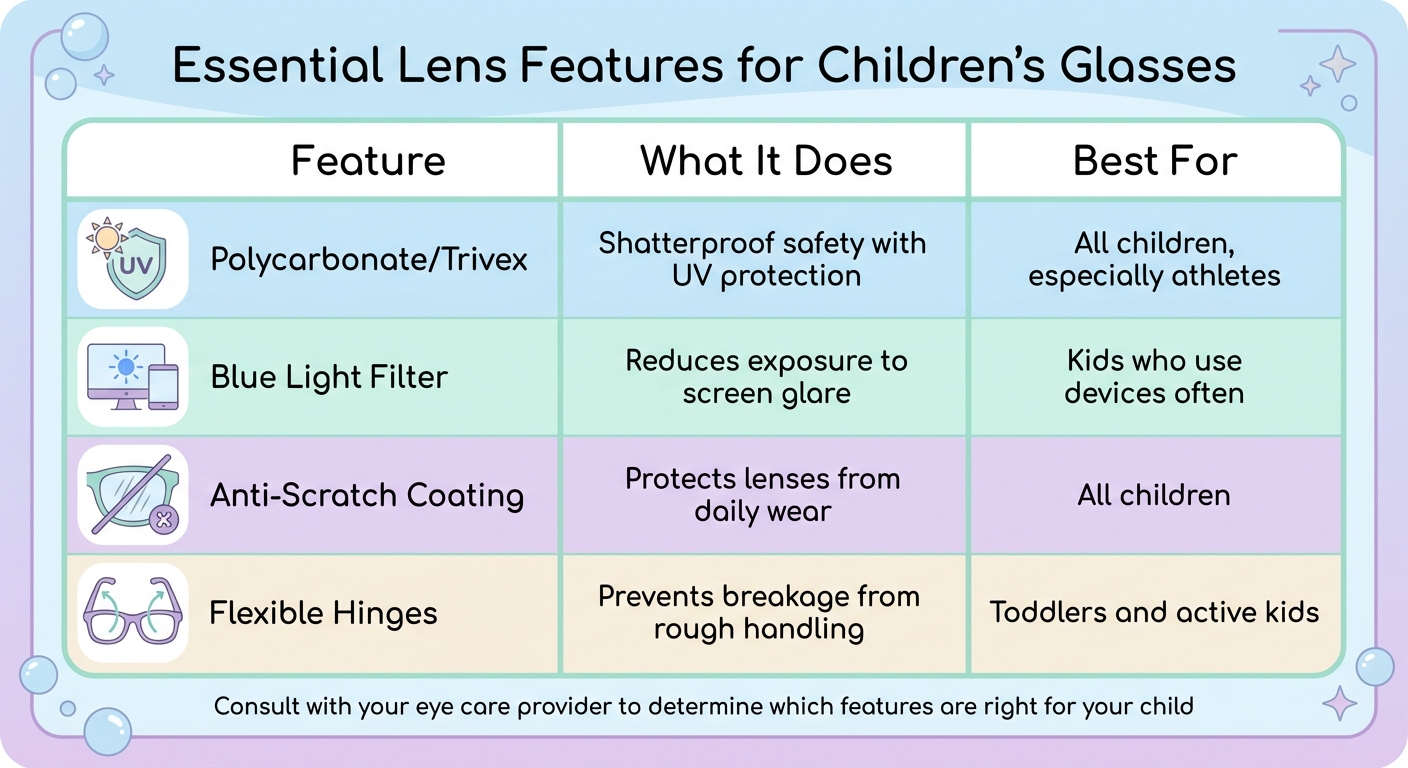
For kids, safety is key. Lenses made from polycarbonate or Trivex are shatterproof and offer UV protection, making them a solid choice. To increase durability, consider adding an anti-scratch coating. If your child spends a lot of time on screens, a blue light filter might also be worth adding. Once the lenses are sorted, make sure the frames fit properly.
Check Frame Fit and Features
Frames should fit comfortably right now – don’t buy glasses your child can "grow into". Ill-fitting glasses can slip down, cause discomfort, and discourage regular use. The frames should sit securely on the nose without touching the cheeks or lashes. For active kids, look for flexible frames with spring hinges designed to handle bending and twisting. Brands like Miraflex or Solo Bambini offer durable options for toddlers and highly active children. If your child has a nickel allergy, choose hypoallergenic frame materials. A well-fitted frame ensures comfort and sets the stage for effective vision correction.
Understand Special Lens Features
If your child’s nearsightedness is worsening, specialized lenses like multifocal designs or myopia control options can help slow the progression.
| Feature | What It Does | Best For |
|---|---|---|
| Polycarbonate/Trivex | Shatterproof safety with UV protection | All children, especially athletes |
| Blue Light Filter | Reduces exposure to screen glare | Kids who use devices often |
| Anti-Scratch Coating | Protects lenses from daily wear | All children |
| Flexible Hinges | Prevents breakage from rough handling | Toddlers and active kids |
Schedule Follow-Up Checks
Even after finding the perfect fit and features, regular eye exams are essential. Kids’ vision can change quickly, and prescriptions typically last about two years. Growth spurts, however, might cause faster changes, so aim for yearly comprehensive eye exams. Keep an eye out for signs that their prescription might need updating – like squinting, headaches, or holding screens too close. It’s also smart to ask about warranty options and have a backup pair of glasses on hand.
Ensuring a Comfortable Fit from Day 1
Once you’ve nailed down the right prescription and chosen the perfect frames, the next step is making sure they fit comfortably right from the start.
Check Alignment and Pupil Position
Take a close look at how the glasses sit on your child’s face. The pupils should be centered in each lens when viewed straight on, and the distance between the outer corners of the eyes and the frame edges should be even. The frames should sit level across the face without extending far beyond the widest part of the cheeks. Also, the temples (the arms of the glasses) should extend straight back to the ears without flaring outward – this could mean the frames are too narrow. For plastic frames, ensure there’s minimal to no gap between the bridge of the nose and the glasses to prevent slipping. Finally, double-check the bridge and temple fit to ensure everything is aligned properly.
Assess Bridge and Temple Fit
The bridge should rest gently on your child’s nose without causing dark marks or deep indentations – though faint lines are generally fine. The temples should extend just past the ears, with the frames touching the skin only slightly before curving around the ears. If the temples curve too soon, they might push the bridge down, while shorter temples can lead to unwanted pressure or headaches.
Make sure the frames don’t touch your child’s cheeks, even when they smile or talk. Also, check that the lenses don’t come into contact with their eyelashes. Keep an eye on the nose area for any redness or indentations, as these could indicate that the nose pads are too tight.
Monitor for Slipping or Pressure Points
Even with proper alignment and fit, it’s essential to watch for any signs of discomfort during daily wear. Let your child move naturally while wearing the glasses to see if they slide or wobble. If they’re constantly adjusting the frames or you notice dark marks around the temples or nose bridge, it’s a sign they might need a professional adjustment.
"If the glasses are too tight or slide down your child’s face, take them back for an adjustment. Never try to bend the frames yourself."
– WebMD
If you spot any slipping or pressure issues, don’t try to fix them at home. Instead, take the glasses to an optician for a professional adjustment. Many optical centers provide this service for free.
Helping Kids Emotionally Adjust to Wearing Glasses
Getting kids to feel comfortable wearing glasses isn’t just about finding the right fit – it’s also about helping them embrace their new look and feel confident. Once the glasses sit comfortably, the focus shifts to building their self-esteem and encouraging a positive attitude.
Encourage Frame Selection
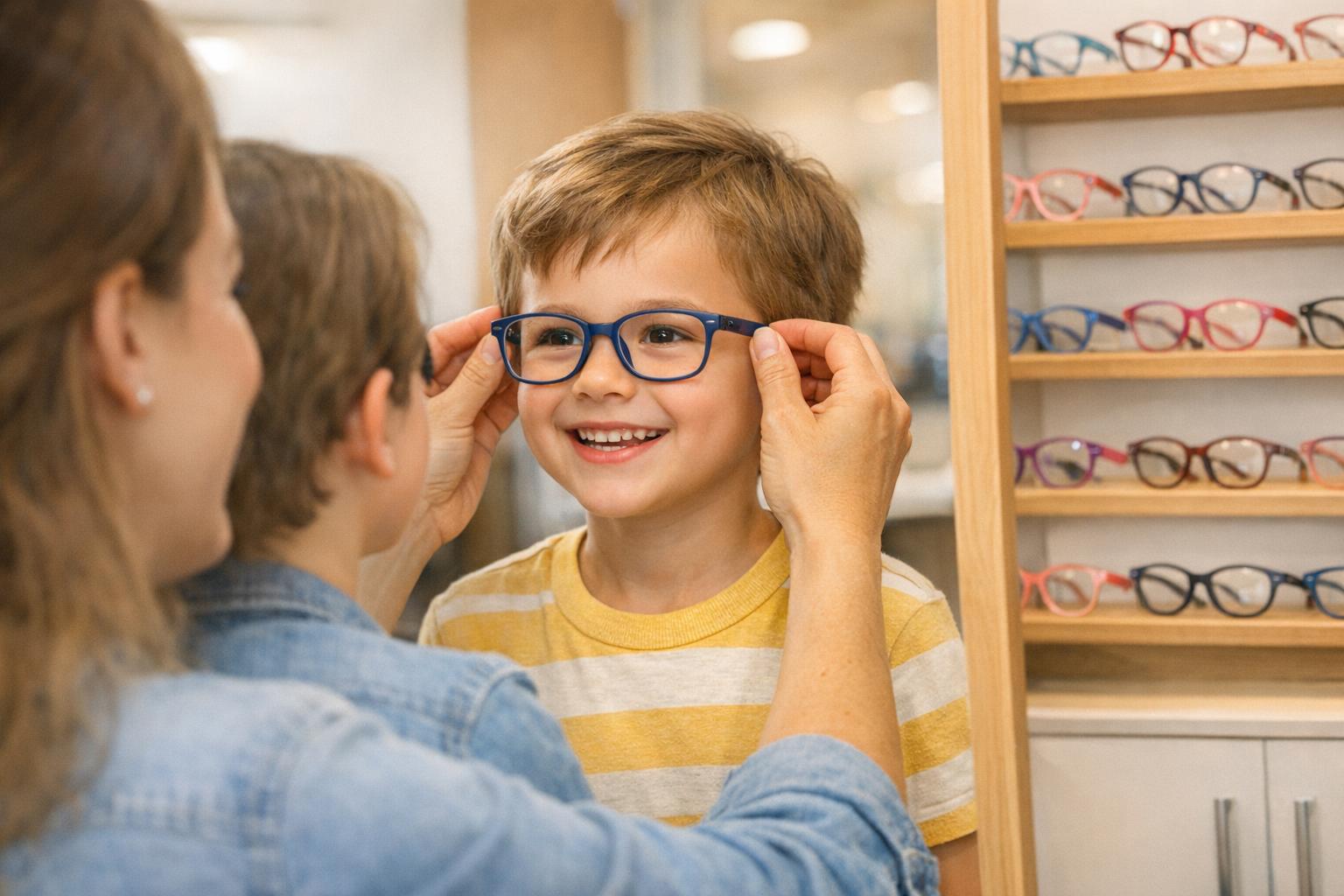
Letting your child pick their frames can make a big difference in how they feel about wearing glasses. When kids get a say in the selection, they’re more likely to feel connected to their choice and wear them with pride. Set some basic guidelines, like sticking to a budget or choosing durable materials such as polycarbonate, and then give them the freedom to pick a style they love. Visiting an optical shop that specializes in kids’ eyewear, like the Eye Center of Northern Colorado, can be a great option since they offer a wide range of fun and stylish frames designed just for kids.
"This piece of paper is the token that lets your child into the magical world of the optical shop, where they get to explore spectacles in all different shapes and colors and styles to find their perfect pair."
– Hersh Varma, MD, Ophthalmology
Build a Positive Narrative
Help your child see glasses as something exciting and beneficial. Talk about all the things they’ll now be able to see more clearly, like the whiteboard at school or the details in their favorite books. You could even point out that some superheroes, like Clark Kent (Superman), wear glasses. If you wear glasses, show them off with pride. If you don’t, consider getting a pair of clear frames to show your support. Celebrate their progress with specific praise – whether it’s spotting faraway objects or coloring within the lines.
Establish Routines and Habits
Consistency is key when it comes to forming good habits. Create a simple daily routine for wearing glasses, like putting them on first thing in the morning and taking them off before bed. Teach your child the golden rule: "Glasses stay on your face or they go in your case". If they have more than one pair, let them decide which to wear each day to give them a sense of control.
Prepare for Social Situations
Before your child wears glasses to school for the first time, take some time to talk with them about what to expect. Address any worries they might have and help them practice how to respond to questions or comments from classmates. It’s also a good idea to involve teachers and caregivers, who can help reinforce positive messages and create a supportive environment.
"You’re helping your child build a sense of community and belonging, which can build their own confidence in wearing glasses."
– Hersh Varma, MD, Ophthalmology, Nationwide Children’s Hospital
sbb-itb-5ef6ec9
Establishing Daily Care and Protection Habits
Once your child feels comfortable wearing glasses and understands their importance, teaching them how to care for their eyewear is the next step. With nearly 40% of children in the United States needing glasses, building these habits early can make a big difference in keeping their glasses in great shape and ensuring they last.
Teach Proper Cleaning Techniques
Show your child how to clean their glasses the right way. Start by having them wash and dry their hands first. Then, rinse the glasses under lukewarm water and apply a small drop of lotion-free dish soap (like Dawn) or a dedicated eyeglass cleaning solution. Make sure they clean areas like the nose pads, temples, and bridge – these spots tend to collect oils and germs. After rinsing thoroughly, they can dry the glasses with a clean microfiber cloth.
It’s important to avoid common cleaning mistakes. Household glass cleaners, like Windex, can damage special lens coatings, and paper towels, tissues, or napkins can scratch the lenses with their rough fibers. Microfiber cloths should also be washed regularly, but skip fabric softeners or dryer sheets, as they can leave residue that causes smudging. To make cleaning a habit, consider adding it to their morning routine – right after brushing their teeth is a great time. Once the glasses are clean, proper storage is the next step.
Designate a Safe Storage Spot
Having a designated storage spot for glasses helps keep them safe. A personalized case on a bedside table or near the sink works well. Make it a rule: glasses should always be on their face or in their case. Let your child pick out and personalize their eyewear case to make it feel special and encourage them to take responsibility for their glasses. For younger kids, a quick bedtime routine to store their glasses can help reinforce the habit.
Monitor Frames and Lenses
Regularly checking the condition of your child’s glasses is just as important as cleaning them. Inspect them weekly for loose screws, misaligned frames, or scratches that might affect vision. Keep an eye out for signs that the frames don’t fit properly, like pressing against their cheeks, touching their eyelashes, or slipping down their nose. Make sure your child knows to handle their glasses with both hands to avoid bending or damaging the frames.
If you notice any issues, take the glasses to an optician for professional adjustments – many offer these services for free. Avoid trying to fix them yourself, as DIY repairs can sometimes make things worse. For quick fixes in a pinch, consider keeping an inexpensive eyeglass tool kit with a small screwdriver and extra screws on hand.
Monitoring Vision, Comfort, and School Performance
Spotting Signs of Discomfort or Problems
Keep an eye out for glasses that slip when your child leans forward – this could mean the temples or bridge need to be adjusted. Also, check for dark marks on their nose or behind their ears, which can indicate the glasses are pressing too tightly . The frames should cover at least 80% of their field of vision to ensure proper functionality .
Behavioral signs can be just as telling. If your child is still squinting, rubbing their eyes often, tilting their head, or sitting unusually close to screens or books even with their glasses on, it might mean the prescription or pupillary distance isn’t quite right . Mild headaches during the first two weeks of wearing new glasses are normal, but if headaches, eye strain, or double vision persist beyond that, it’s time for a professional checkup . These physical and behavioral signs can also impact your child’s ability to perform well in school.
Keeping an Eye on Academic and Activity Changes
Beyond physical symptoms, pay attention to changes in your child’s behavior and academic performance. Look for improvements in their ability to focus on homework, read more fluently, or stay engaged with tasks . Teachers can also provide valuable insights, such as noticing if your child is now able to see the whiteboard clearly or participate more actively in class .
"Kids generally don’t know they have bad vision. They adapt to whatever eyesight they have."
– Marcela Maria Estrada, Assistant Professor of Pediatric Ophthalmology, UC Davis
Be cautious if your child starts avoiding activities they used to enjoy, like reading or drawing, as this could indicate their prescription needs to be updated. On the flip side, you might notice better coordination during play or an improved ability to recognize objects or people from a distance . Persistent physical signs can interfere with classroom focus and overall engagement.
Make Regular Eye Exams a Priority
Children’s vision can change quickly, sometimes within just six months. That’s why scheduling a comprehensive eye exam every year is essential for updating prescriptions and checking overall eye health . A back-to-school exam is especially useful to ensure their glasses are ready for the demands of a new academic year. Routine exams also help confirm that any adjustments made along the way are working and that your child’s glasses continue to meet their needs. Between visits, have your child cover one eye at a time to check if they can see clearly – this simple test can reveal if one eye is weaker or if the prescription is no longer effective.
Conclusion
Helping your child get used to wearing glasses requires patience and consistency. Every child adjusts differently – some may notice an immediate improvement, while others might need a little more time to adapt to the changes in their vision. During this process, your positive attitude and establishing daily routines can make a big difference in ensuring your child feels comfortable and sticks with wearing their glasses.
Involving your child in decisions, like picking out their frames, and following simple habits, such as the "face or case" rule, can keep things on track. Pay attention to how they’re feeling, both physically and emotionally, and monitor their school performance. If problems persist, don’t hesitate to reach out to your eye care provider.
As Hersh Varma, MD, from Nationwide Children’s Hospital, emphasizes:
"We would rather see your child for an extra visit to confirm that the glasses were made correctly and fit well than to see them back later with still uncorrected vision because they just did not wear glasses at all."
– Hersh Varma, MD, Ophthalmology
Professional guidance can make this transition much easier. The Eye Center of Northern Colorado offers specialized pediatric eye care services, including expert fittings, adjustments, and regular exams, to ensure your child’s glasses continue to meet their needs as they grow. With fellowship-trained specialists and convenient locations across Northern Colorado and Wyoming, they provide the support necessary to help your child thrive visually.
Building a strong relationship with your eye care provider early on lays the groundwork for a lifetime of healthy vision. By following these steps and seeking professional support when needed, you can help your child see their glasses as a valuable tool rather than a challenge.
FAQs
How can I make sure my child’s glasses fit comfortably and correctly?
To make sure your child’s glasses fit just right, start with a professional fitting. At the Eye Center of Northern Colorado, optometrists and opticians take precise measurements of your child’s face. This ensures the lenses are perfectly aligned with their eyes and the frames sit comfortably without pressing on their cheeks. For active kids, lightweight, flexible frames paired with polycarbonate lenses (which are shatter-resistant and offer UV protection) are excellent options.
When the glasses are ready, check for a snug but comfortable fit. The bridge should rest gently on your child’s nose, the temples should curve behind their ears without causing pressure, and the lenses should sit about an inch from their cheeks to avoid touching their eyelashes. If the glasses slide down or feel too tight, stop by the Eye Center for a quick adjustment. Simple fixes, like tweaking the nose pads or adjusting the temple length, can usually be done with ease.
Let your child choose a style they’re excited about – it makes wearing glasses more enjoyable. And don’t forget to schedule regular check-ins, especially after growth spurts, to ensure the fit stays just right. A well-fitted pair of glasses not only sharpens vision but also boosts your child’s confidence, making it easier for them to wear their glasses daily at school and during playtime.
What are the best lenses and features to consider for kids’ glasses?
For children’s glasses, polycarbonate lenses are a popular pick. They’re lightweight, resistant to shattering, and come with built-in UV protection – perfect for keeping up with active kids. Another excellent choice is Trivex lenses, which share the same durability and UV protection while also being lightweight.
To improve your child’s vision and comfort, you might want to explore lenses with these added features:
- Anti-reflective coating: Reduces glare from screens and classroom lighting.
- Blue-light blocking: Helps shield eyes from high-energy light emitted by digital devices.
- Photochromic lenses: Automatically adjust to changing light, darkening outdoors for extra UV protection and staying clear indoors.
The Eye Center of Northern Colorado provides a range of durable, kid-friendly lenses. These include UV protection, anti-scratch and anti-reflective coatings, with optional upgrades like blue-light blocking or photochromic features – making your child’s glasses both practical and comfortable.
How can I help my child adjust to wearing glasses comfortably and confidently?
Helping your child get used to wearing glasses can be a smooth process when you make it fun and personal. Start by letting them pick out frames they love – whether it’s a favorite color, a design featuring their favorite character, or a style that makes them feel cool. Choosing glasses they’re excited about can help build their confidence and make them more eager to wear them. Make sure the glasses fit just right – secure but not too tight – and consider lightweight, durable lenses with features like UV protection and anti-scratch coatings. An experienced optician, such as those at the Eye Center of Northern Colorado, can assist in ensuring the perfect fit and making any necessary adjustments.
You can also encourage your child by being a positive role model. If you wear glasses, show them off with pride, or point out celebrities, athletes, or characters they admire who wear glasses. Start small by having them wear their glasses during enjoyable activities, like reading a favorite book or watching a beloved show, and gradually increase the time they wear them each day. Don’t forget to praise their efforts and remind them how great they look in their new frames! Keeping a backup pair handy can ease concerns about losing or damaging them. With a little patience and plenty of encouragement, your child will soon feel at ease and confident in their glasses.