Laser vision correction offers a way to fix common vision problems like nearsightedness, farsightedness, and astigmatism by reshaping the cornea with lasers. Procedures like LASIK, PRK, and SMILE provide options based on your eye health, lifestyle, and vision goals. Here’s what you need to know:
- How it works: Lasers reshape the cornea to focus light correctly on the retina, improving vision.
- Key technologies: Excimer lasers for precise tissue removal and femtosecond lasers for cutting.
- Procedure types:
- LASIK: Quick recovery but involves a corneal flap.
- PRK: No flap, ideal for thinner corneas, but longer healing.
- SMILE: Minimally invasive with a small incision, preserving more corneal tissue.
- Benefits: Clear vision, freedom from glasses/contacts, and long-lasting results.
- Risks: Dry eyes, glare, or halos, with eligibility depending on factors like eye health and vision stability.
Quick Comparison
| Procedure | Incision Type | Lasers Used | Recovery Time | Best For |
|---|---|---|---|---|
| LASIK | Corneal flap | Femtosecond + Excimer | ~24 hours | Quick recovery, thicker corneas |
| PRK | Epithelium removal | Excimer only | 2–6 weeks | Thin corneas, avoiding flap risks |
| SMILE | 3mm keyhole incision | Femtosecond only | 1–2 days | Minimally invasive, fewer dry eye issues |
Laser vision correction can transform your daily life, but it’s not for everyone. Consult an eye specialist to determine the best option for your needs.
Should You Get SMILE, LASIK, or PRK Eye Surgery?
How Laser Vision Correction Works
Laser vision correction works by reshaping the cornea to adjust how light enters the eye, ensuring it focuses correctly on the retina. The cornea acts like a lens, bending light rays to create clear images. When refractive errors occur, this process gets disrupted, leading to blurry vision.
- Nearsightedness (myopia): The cornea is too steep, causing light to focus in front of the retina.
- Farsightedness (hyperopia): The cornea is too flat, making light focus behind the retina.
- Astigmatism: The cornea has an irregular shape, causing light to focus at multiple points.
Laser vision correction addresses these issues by removing tiny amounts of corneal tissue in precise patterns. For nearsightedness, the laser flattens the central cornea. For farsightedness, it steepens the cornea by targeting tissue at the edges. For astigmatism, the laser creates a more spherical shape by customizing tissue removal. Modern lasers can remove tissue as thin as 0.25 microns, achieving corrections measured in fractions of diopters.
The Role of Excimer Lasers
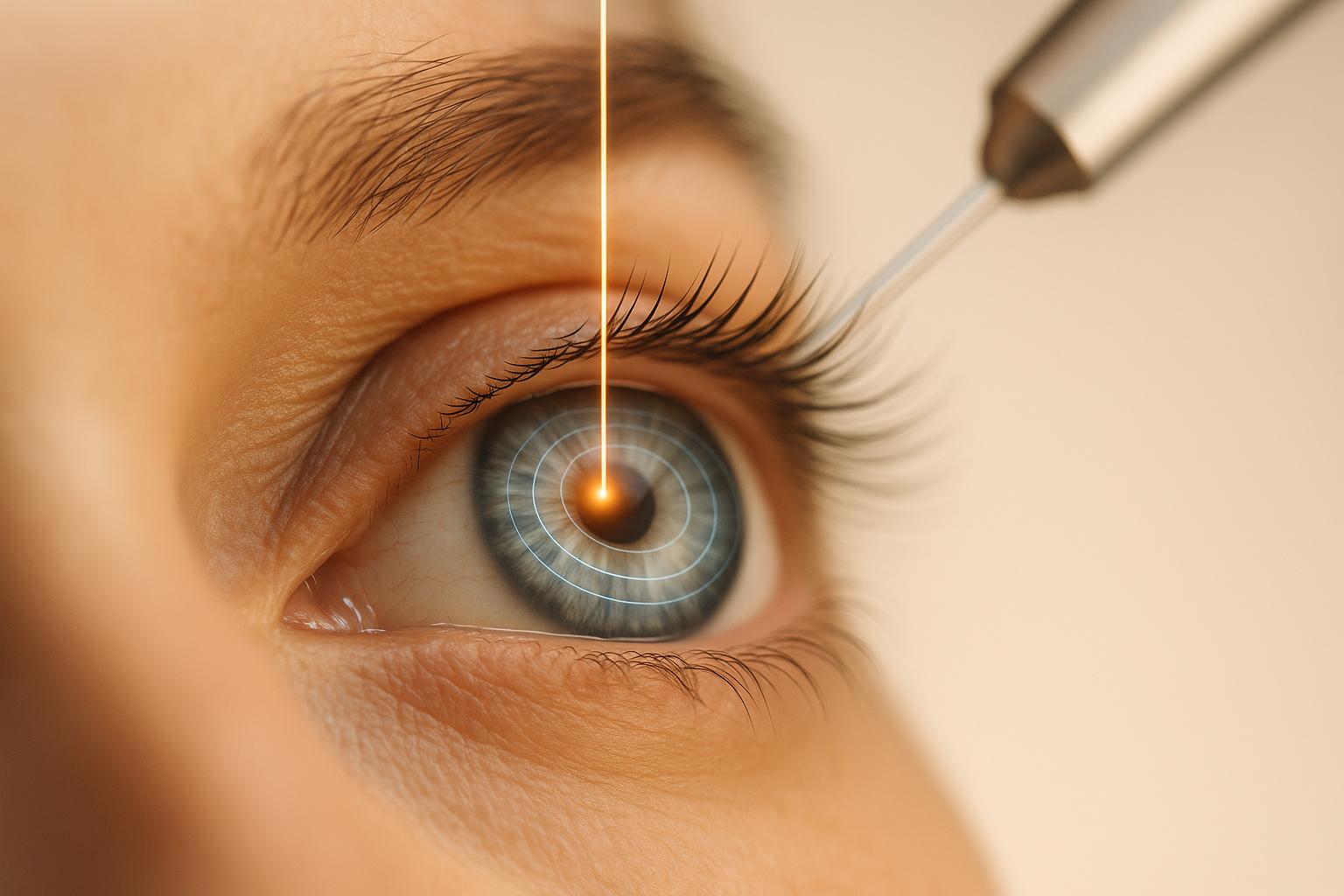
Most procedures rely on excimer lasers, which use ultraviolet light at a wavelength of 193 nanometers. This "cold" laser process, called photoablation, vaporizes tissue without generating heat, avoiding damage to surrounding areas. These lasers operate with remarkable precision, guided by a computer system that tracks eye movements up to 4,000 times per second. This ensures the laser stays aligned even if your eye moves slightly during the procedure.
Femtosecond Lasers: Precision Cutting
Femtosecond lasers are another key technology in vision correction. They emit ultra-short pulses – lasting just one quadrillionth of a second – to create precise cuts in the cornea. By producing tiny bubbles that separate tissue layers, femtosecond lasers are used in procedures like LASIK (to create the corneal flap) and SMILE (to cut the lenticule).
Customization Through Advanced Mapping
Before surgery, your cornea is mapped in incredible detail. Instruments like corneal topographers create 3D maps of the cornea, highlighting even the smallest irregularities. This data ensures the treatment is tailored to your specific needs.
Wavefront technology takes customization further by analyzing how light moves through your entire optical system. This creates a unique "fingerprint" of your vision, enabling the laser to correct not only basic refractive errors but also higher-order aberrations that can impact vision quality, especially in dim lighting.
The Procedure and Healing Process
During the procedure, the laser removes microscopic amounts of corneal tissue with thousands of precise pulses. Each eye typically takes less than 30 seconds to treat, though preparation and positioning extend the overall time. The cornea’s natural healing properties allow it to maintain its reshaped structure. Within days, the surface develops a smooth epithelial layer, while deeper layers continue healing over several months.
The excimer laser’s cool wavelength prevents heat buildup, and operating rooms are carefully controlled for temperature and humidity to ensure consistent results. Additionally, iris recognition technology aligns any future enhancements with the original treatment, maintaining accuracy over time.
Types of Laser Vision Correction Procedures
When it comes to laser vision correction, three main procedures stand out: LASIK, PRK, and SMILE. Each uses a different technique to reshape the cornea and improve vision. Here’s a closer look at how these procedures work, along with their key differences in technique and recovery.
LASIK
LASIK (Laser-Assisted Stromal In-situ Keratomileusis) is perhaps the most well-known laser eye surgery. Its popularity comes from its fast recovery time and reliable results. The procedure begins with creating a thin flap on the cornea using a femtosecond laser. This flap is lifted, and an excimer laser reshapes the cornea by removing tiny amounts of tissue with extreme precision. Once the cornea is reshaped, the flap is repositioned, and it naturally adheres without stitches.
Most patients experience clear vision within 24 hours and can resume daily activities, like driving or working, the very next day. However, the creation of the corneal flap does come with some risks, such as irregular astigmatism, inflammation, or dry eye. It’s also worth noting that LASIK requires a certain corneal thickness for safe treatment. For those with thinner corneas, PRK might be a better alternative.
PRK
PRK (Photorefractive Keratectomy) takes a different approach by avoiding the creation of a corneal flap. Instead, the surgeon removes the outer layer of the cornea (the epithelium) to expose the underlying tissue. An excimer laser then reshapes this tissue to correct vision. Over the next week, the epithelium regenerates naturally as part of the healing process.
Because PRK skips the flap, it avoids flap-related complications entirely. This makes it a great option for patients with thin or irregular corneas, those prone to dry eye, or individuals with active lifestyles where eye injuries are a concern. However, PRK has a longer recovery period. It can take several weeks for vision to fully stabilize, and patients often experience some discomfort during the initial healing phase. For those looking for an even less invasive option, SMILE might be worth considering.
SMILE
SMILE (Small Incision Lenticule Extraction) is the newest method in laser vision correction and is known for being minimally invasive. This procedure uses a femtosecond laser to create a thin, lens-shaped piece of tissue (called a lenticule) within the cornea. The surgeon then makes a tiny 3mm incision to remove the lenticule, reshaping the cornea without creating a large flap or disturbing the surface epithelium.
Since SMILE doesn’t involve an excimer laser or a large incision, it operates silently and reduces the risk of dry eye by preserving more corneal nerves. Recovery is also quick – most patients notice improved vision within one to two days.
"I don’t believe SMILE is replacing LASIK or excimer lasers. I view it as an additive procedure that will help grow refractive surgery in general and allow surgeons to offer comprehensive refractive surgery procedures to patients." – Dr. Kathryn M. Hatch, Director of the Refractive Surgery Service and Site Director of Massachusetts Eye and Ear in Waltham.
SMILE is particularly beneficial for those with thin corneas who aren’t candidates for LASIK. However, it currently lacks the wavefront-guided customization that LASIK offers for treating higher-order aberrations.
| Feature | LASIK | PRK | SMILE |
|---|---|---|---|
| Incision Type | Corneal flap | Epithelium removal | 3mm keyhole incision |
| Lasers Used | Femtosecond + Excimer | Excimer only | Femtosecond only |
| Recovery Time | Often within 24 hours | 2–6 weeks | 1–2 days |
| Farsightedness Correction | Yes | Yes | No |
| Flap-related Complications | Possible risk | None | None |
| Dry Eye Risk | Higher | Lower | Lower |
Benefits and Risks
Here’s a breakdown of the key benefits of laser vision correction to help you weigh your options.
Benefits
Say Goodbye to Glasses and Contacts: Laser vision correction eliminates the need for glasses or contact lenses. That means fewer daily inconveniences and no more ongoing costs for replacements or maintenance [7, 18, 19, 21, 22, 23].
Sharper Vision: Many patients achieve 20/20 vision or even better. For those with stronger prescriptions, this procedure can restore clear, functional vision without the need for eyewear [7, 18, 23].
Quick and Easy Recovery: The procedure itself only takes about 15–20 minutes, and numbing drops ensure minimal discomfort. Most people are back to their usual routines within a day or two [7, 18, 19, 20, 23].
Long-Lasting Results: By reshaping the cornea, laser vision correction provides a permanent improvement in vision.
sbb-itb-5ef6ec9
Who Is a Good Candidate?
Laser vision correction isn’t suitable for everyone. To qualify, you’ll need stable vision, healthy eyes, and good overall health. Skipping these requirements can put your vision at risk.
At the Eye Center of Northern Colorado, advanced diagnostic tools help determine your eligibility and pinpoint the best procedure for your needs – whether that’s LASIK, PRK, or SMILE.
Eligibility Requirements
When evaluating candidates, doctors look at specific criteria:
- Age and Vision Stability: You should be at least 18 years old with a stable prescription for 12–24 months.
- Eye Health: Your eyes must be free of active infections, chronic dry eye, or degenerative conditions.
- Corneal Thickness: Sufficient corneal thickness is necessary to reshape the eye safely.
- General Health: Good overall health supports proper healing after surgery.
Disqualifying Conditions
Certain factors may rule out laser eye surgery as a safe option:
- Eye Diseases: Conditions like keratoconus, glaucoma, or uveitis/iritis can interfere with healing and make surgery unsafe.
- Unstable Prescription: If your vision changes frequently due to age, diabetes, or hormonal shifts (like during pregnancy or breastfeeding), surgery may not deliver lasting results.
- Systemic Health Problems: Autoimmune disorders, uncontrolled diabetes, or other conditions that affect wound healing can complicate recovery.
- Dry Eyes and Pupil Size: Severe dry eye can worsen post-surgery, and large pupils may lead to issues like glare, halos, or starbursts, especially at night.
- Pregnancy: Hormonal changes during pregnancy can temporarily affect vision and healing. It’s best to wait until after pregnancy and breastfeeding, once hormone levels have stabilized.
Ultimately, only a skilled eye or refractive surgeon can assess your situation and determine whether laser vision correction is right for you – or if it’s better to explore other options.
What to Expect: Preparation, Procedure, and Recovery
Knowing what to anticipate before, during, and after laser vision correction can help you feel more at ease with your decision. Each step is carefully planned to prioritize your safety and deliver the best possible results for your vision.
Pre-Surgery Preparation
Your journey begins with a detailed eye exam at the Eye Center of Northern Colorado. This exam confirms whether you’re a good candidate for the procedure and identifies the method that aligns best with your needs.
Before your consultation, stop wearing contact lenses to ensure accurate corneal measurements. Soft lenses should be discontinued at least a week in advance, while hard or gas-permeable lenses may need to be avoided for several weeks.
Your surgeon will provide specific instructions about medications. You might need to pause certain prescriptions that could impact healing or start using antibiotic eye drops to lower the risk of infection.
Make arrangements for transportation on the day of surgery, as you won’t be able to drive afterward. Having someone with you for the first 24 hours is a good idea to ensure you’re safe and comfortable.
On surgery day, avoid wearing makeup, lotions, or perfumes. These can interfere with the laser equipment and increase the risk of infection.
Once you’re fully prepared, it’s time to move on to the procedure itself.
Surgery Day
Laser vision correction is performed on an outpatient basis, meaning you can head home the same day. The procedure you undergo will determine the specifics of your experience:
- LASIK: This takes about 15 minutes for both eyes. A femtosecond laser creates a thin flap, and an excimer laser reshapes the tissue underneath. You’ll hear clicking sounds and might notice a distinct odor during the process.
- PRK: Each eye takes around 5 minutes. The surgeon removes the corneal epithelium before using an excimer laser to reshape the tissue. Clicking sounds and an odor are also common here.
- SMILE: This procedure lasts between 9 and 20 minutes per eye, with the laser portion taking around 30 seconds. A femtosecond laser creates and removes a lenticule through a small 2–4 mm incision. Unlike the others, this process is quiet and odor-free.
| Procedure | Duration | Laser/Method | Sound/Odor |
|---|---|---|---|
| LASIK | ~15 minutes (both eyes) | Femtosecond laser for flap creation, excimer laser for reshaping | Clicking sounds, noticeable odor |
| PRK | ~5 minutes per eye | Excimer laser after removing corneal epithelium | Clicking sounds, noticeable odor |
| SMILE | ~9–20 minutes per eye (laser part ~30 seconds) | Femtosecond laser, small incision for lenticule removal | Quiet, no odor |
While you may feel slight pressure during the procedure, it’s generally pain-free. After surgery, the focus shifts to recovery and aftercare.
Recovery and Aftercare
Your recovery experience will depend on the procedure you’ve chosen:
- LASIK: Most patients notice clearer vision within 24 hours and can return to work in a day or two. Avoid rubbing your eyes for several weeks to allow the corneal flap to heal properly.
- PRK: Recovery takes longer since the corneal epithelium needs to regrow. Blurry vision and some discomfort are common in the first few days, with gradual improvement over 1–2 weeks. Full visual stabilization could take a few months, so plan to take some time off work and be cautious when driving during the initial week.
- SMILE: Recovery is quicker than PRK but slightly slower than LASIK. The small incision typically heals within a few days, and most people can resume normal activities in 2–3 days. Since no flap is involved, there’s less concern about issues from rubbing or trauma.
Follow-up appointments are critical to ensure proper healing. Typically, you’ll have your first checkup within 24–48 hours post-surgery, followed by additional visits during the first week and at one, three, and six months.
Stick to your aftercare instructions for the best results. Use prescribed eye drops as directed to manage inflammation and prevent infection. For the first week, wear protective eyewear while sleeping to avoid accidental eye rubbing. Also, steer clear of swimming, hot tubs, and intense physical activity for at least a week.
Temporary side effects like dry eyes, glare, or halos are normal and usually resolve within a few months.
Long-Term Results and Considerations
Taking a closer look at the long-term effects of laser vision correction can help you set realistic expectations for your eye health.
How Long Results Last
When it comes to laser vision correction procedures like LASIK, PRK, or SMILE, the reshaping of the cornea is permanent. Once the cornea is adjusted, it stays that way. However, as time goes on, natural aging processes can affect your vision. For example, you might notice changes that could make a touch-up procedure worth considering, typically after about 10 years. That said, most people enjoy stable, clear vision for many years without the need for additional treatments.
It’s not just about maintaining good vision – it’s also about how these changes fit into your everyday life.
Lifestyle Impact
One of the biggest perks of laser vision correction is the freedom it brings. Imagine waking up and seeing clearly without fumbling for glasses or contact lenses. For many, this can simplify daily routines and make activities like sports or travel more convenient. That said, it’s important to keep in mind that age-related changes, like presbyopia, can still occur as you get older. To stay on top of your eye health, regular eye exams are a must to catch and manage any new developments.
Conclusion
Laser vision correction has changed the lives of millions, offering sharper vision and freedom from glasses or contacts. With over 40 million LASIK procedures performed worldwide and data showing that 99% of NVISION patients achieve 20/20 vision or better, these procedures have consistently demonstrated their reliability and safety – especially when handled by experienced professionals.
Choosing the right path to improved vision means exploring options like LASIK, PRK, or SMILE and partnering with specialists who prioritize your safety and long-term eye health. It’s essential to select providers who offer thorough evaluations, set realistic expectations, and use the latest FDA-approved technology. The Eye Center of Northern Colorado, part of NVISION Eye Centers, stands out with its surgeons having performed over 2.5 million eye procedures. Their dedication goes beyond surgery, providing advanced technology, outstanding patient care, and a LASIK Lifetime Commitment to support your vision for years to come.
Laser vision correction isn’t just about better eyesight – it’s an investment in your daily life. With the right candidate selection, expert surgical techniques, and attentive aftercare, this procedure can deliver decades of clear and stable vision, enhancing confidence and enriching everyday experiences.
FAQs
How do I decide between LASIK, PRK, and SMILE for laser vision correction?
Choosing the best laser vision correction procedure depends on your specific eye health, lifestyle, and vision goals. Here’s a breakdown of the main options to consider:
- LASIK is a well-known choice for those with adequate corneal thickness. Recovery is quick – many people are back to their usual routines the very next day. That said, it’s not the best fit for individuals with thin corneas or persistent dry eye issues.
- PRK is a solid alternative for those with thinner corneas or a tendency toward dry eyes. While the recovery process is slower – it can take several weeks for vision to fully clear – it’s often better suited for people with certain eye conditions or those with active lifestyles that might involve direct eye contact.
- SMILE involves a smaller incision, making it less invasive and helping maintain corneal stability. It’s a great choice for specific vision corrections, though it doesn’t currently address farsightedness or certain types of astigmatism. Recovery is generally quicker than PRK but not as fast as LASIK.
The best way to choose the right procedure is by consulting a skilled eye care professional. They can assess your individual needs and recommend the option that aligns best with your vision and lifestyle.
What are the long-term effects of laser vision correction, and is any maintenance needed?
Laser vision correction often results in lasting vision improvement for the majority of patients. That said, some people might experience temporary side effects such as dry eyes, glare, or halos. These issues usually resolve within a few weeks to months. Serious complications are uncommon.
For some, vision changes over time may lead to the need for an additional enhancement procedure. This is more likely in older individuals or those experiencing significant vision shifts due to aging. Keeping up with regular eye exams is key to tracking your vision and maintaining overall eye health.
Am I a good candidate for laser vision correction, such as LASIK, PRK, or SMILE?
Determining whether you’re a good candidate for laser vision correction involves a few key considerations. First, you should be at least 18 years old and have had a stable vision prescription for at least a year. Many doctors suggest waiting until your mid-20s, as vision is more likely to stabilize by then.
Your eye health is another crucial factor. Conditions like severe dry eye, corneal diseases, or infections can make you ineligible. Similarly, certain medical issues, such as uncontrolled diabetes or autoimmune disorders, may impact your suitability for the procedure. The thickness of your corneas is also important, as is having a prescription within the treatable range for nearsightedness, farsightedness, or astigmatism.
If you’re pregnant or breastfeeding, most doctors recommend postponing the procedure. It’s equally important to have realistic expectations about the results. The best way to determine if laser vision correction is right for you is through a comprehensive evaluation by an ophthalmologist.