Regular eye health risk assessments are crucial for identifying potential vision issues before symptoms arise. Unlike standard eye exams that focus on current vision, risk assessments evaluate your likelihood of developing future eye problems based on factors like age, family history, medical conditions, and lifestyle.
Key takeaways:
- Early detection saves vision: Conditions like glaucoma and macular degeneration often develop without symptoms.
- Risk factors include: Aging, genetics, diabetes, high blood pressure, smoking, and UV exposure.
- Exam frequency varies: Adults over 40 or with higher risks need more frequent checkups.
- Specialized tests: Tools like dilation and retinal imaging help detect issues early.
Proactive care leads to better outcomes. Learn how to prepare for your appointment and protect your vision for years to come.
Day 3: Adult Vision Health Risk Assessment
sbb-itb-5ef6ec9
Common Risk Factors for Eye Disease
Understanding the risks tied to eye diseases is the first step toward creating a tailored plan to protect your vision. It’s worth noting that about 50% of visual impairments and blindness can be avoided with early detection and treatment.
While some factors, such as age and genetics, are out of your hands, being aware of them allows for closer monitoring. On the other hand, lifestyle choices like smoking or failing to protect your eyes from UV rays are areas where you can take action to lower your risk. Let’s break down these key risk factors and their effects on eye health.
Age and Vision Changes
Age is one of the most common contributors to vision changes. Around age 40, many people begin to struggle with reading small print due to presbyopia. But age also brings a higher likelihood of serious eye conditions. Cataracts, glaucoma, and age-related macular degeneration (AMD) all become more frequent as the years go by, with AMD risk rising sharply after age 50.
To stay ahead of these changes, experts recommend having a comprehensive eye exam at age 40. After age 65, regular checkups every one to two years are crucial.
Family History and Genetics
Your family history plays a significant role in your eye health. For instance, having a close relative with glaucoma increases your own risk by 4 to 9 times. Similarly, genetic factors contribute to conditions like AMD, severe nearsightedness, and pediatric issues such as strabismus.
Certain populations face unique risks. Black Americans are more likely to develop glaucoma earlier in life and have a higher chance of blindness from cataracts. Meanwhile, AMD is more prevalent among White Americans. These genetic patterns help shape personalized screening recommendations.
Medical Conditions That Affect Your Eyes
Some systemic health conditions can take a toll on your vision. Diabetes, for example, is a major cause of blindness among adults aged 20–74 in the U.S.. High blood sugar damages the small blood vessels in the retina, leading to diabetic retinopathy. Alarmingly, one in three people with diabetes over 40 already shows signs of this condition, which also doubles their risk of glaucoma.
High blood pressure (130/80 mm Hg or higher) is another culprit. As Dr. Nimesh Patel from Massachusetts Eye and Ear explains:
Higher pressure causes wear and tear on blood vessels in the eyes, which makes them more likely to form clots that block blood flow.
Autoimmune diseases like lupus, rheumatoid arthritis, and psoriasis can also lead to chronic inflammation, increasing the likelihood of uveitis – an inflammatory condition in the eye’s middle layer. For individuals managing these conditions, annual dilated eye exams are vital to catch problems early.
Lifestyle and Work-Related Risks
Your daily habits and environment can have a lasting impact on your eye health. Dr. Nimesh Patel highlights the role of smoking:
Smoking… increases inflammation in the body and in the eye, and acts as an accelerant to any aging or degenerative process in the retina.
Smoking is linked to a higher risk of both AMD and cataracts.
Prolonged exposure to UV rays without protection also harms your eyes, increasing the likelihood of cataracts and AMD. To counteract this, wear sunglasses that block at least 99% of UVA and UVB rays whenever you’re outdoors. Additionally, protective eyewear during activities like sports, home repairs, or yard work can prevent injuries.
Even a sedentary lifestyle can indirectly affect your vision. Lack of physical activity raises the risk of obesity, diabetes, and high blood pressure – all of which can lead to eye problems. Regular exercise helps lower these risks and supports overall eye health.
What Happens During an Eye Health Risk Assessment
An eye health risk assessment combines your medical history with diagnostic tests to evaluate your eye health. As Dr. Anjum F. Koreishi from Northwestern Medicine explains:
"When we catch eye diseases early, we’re able to treat them with better outcomes."
The process typically includes three key steps: reviewing your medical history, performing standard vision tests, and conducting additional screenings if needed.
Medical History Review
Your visit starts with a detailed review of your health history. Your eye doctor will ask about chronic conditions like diabetes, high blood pressure, or autoimmune disorders, as these can often show early signs in your eyes before other symptoms develop. They’ll also go over any medications, including vitamins and supplements, to see if they might impact your vision. Additionally, your family history of eye diseases helps guide the frequency and type of screenings required, while your work environment and hobbies provide context for assessing risk.
Dr. Koreishi stresses the importance of being specific about any symptoms:
"A lot of visual complaints are hard to describe, so it’s important to be as detailed as possible when explaining them to your clinician so that we can figure out what’s going on."
After gathering this information, your doctor will move on to objective tests to measure your vision.
Standard Vision and Eye Tests
To evaluate your vision, your doctor will start with a visual acuity test using a Snellen chart. This measures how well you see at various distances, with 20/20 being the standard for normal distance vision – meaning you can see at 20 feet what someone with typical vision sees at the same distance.
Next, they’ll check your pupil response by shining a light into your eyes to assess neurological function. Additional tests, like a cover test and peripheral vision check, help identify issues with eye alignment or blind spots, which can signal conditions like glaucoma.
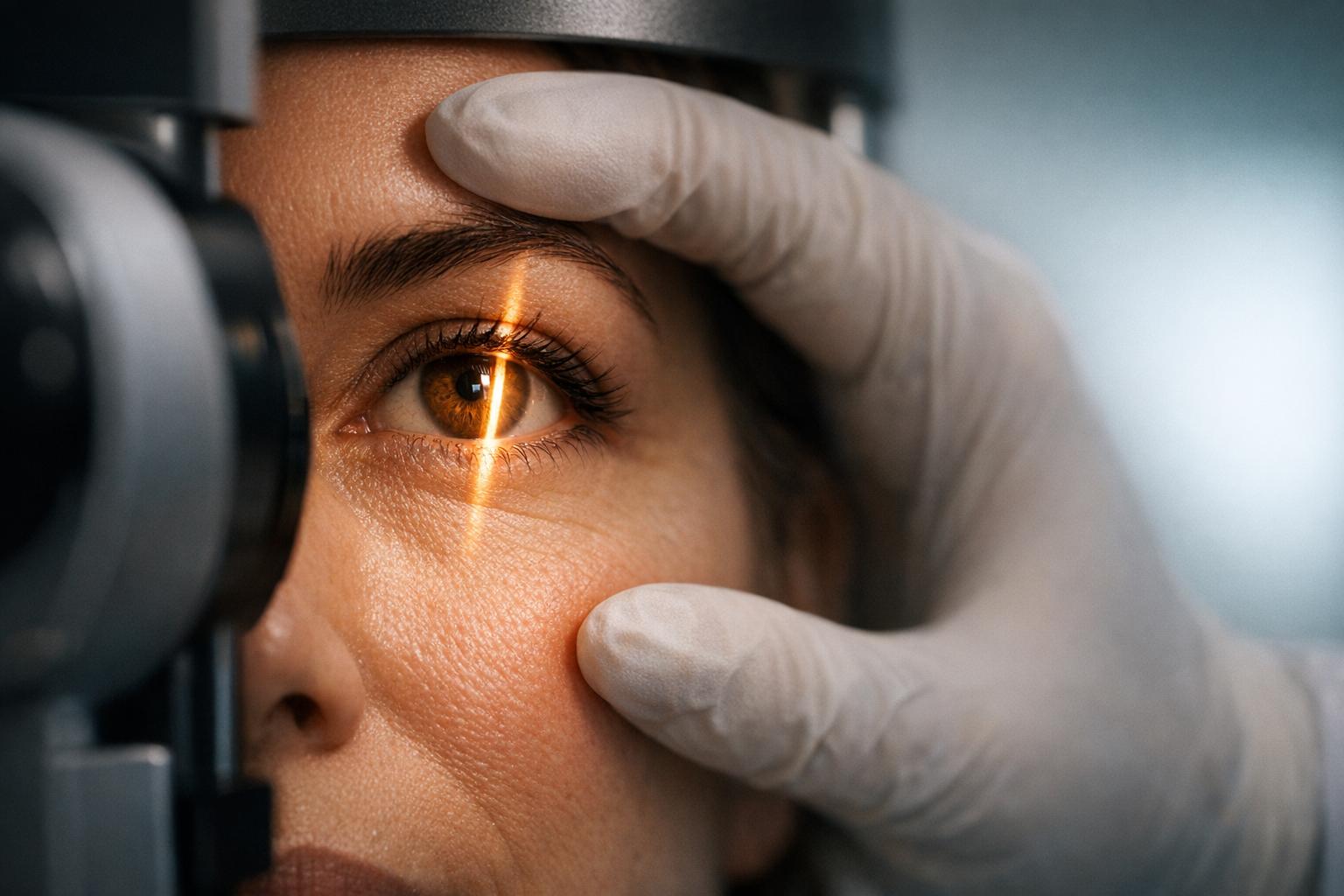
Refraction testing is used to determine if you need corrective lenses. This involves looking through a phoropter (that big device with multiple lenses) to find the exact lens power needed to correct issues like nearsightedness, farsightedness, or astigmatism. Tonometry, which measures the pressure inside your eyes, screens for glaucoma. A slit-lamp exam uses a specialized microscope to magnify the front structures of your eye, helping to detect signs of infection, cataracts, or other problems.
If these tests reveal any concerns or if you’re considered high-risk, your doctor may recommend further specialized screenings.
Specialized Tests for High-Risk Conditions
For individuals with diabetes, a family history of eye disease, or other risk factors, additional tests may be necessary. One common procedure is pupil dilation, which involves using medicated drops to widen your pupils so your doctor can get a closer look at your retina and optic nerve. The drops take about 20 minutes to work and can make your eyes sensitive to light for several hours, so bringing sunglasses is a good idea.
Advanced tools like Optical Coherence Tomography (OCT) provide detailed retinal images, which are especially useful for monitoring conditions like glaucoma or macular degeneration. Visual field testing maps your full range of vision to identify any gaps or blind spots caused by glaucoma, while digital retinal imaging captures wide-field photos of your retina to detect early signs of disease.
These tests are particularly important for people with diabetes, who typically require annual dilated exams to check for diabetic retinopathy. Early detection through these advanced screenings can prevent up to 98% of severe vision loss.
How Often You Need Eye Exams
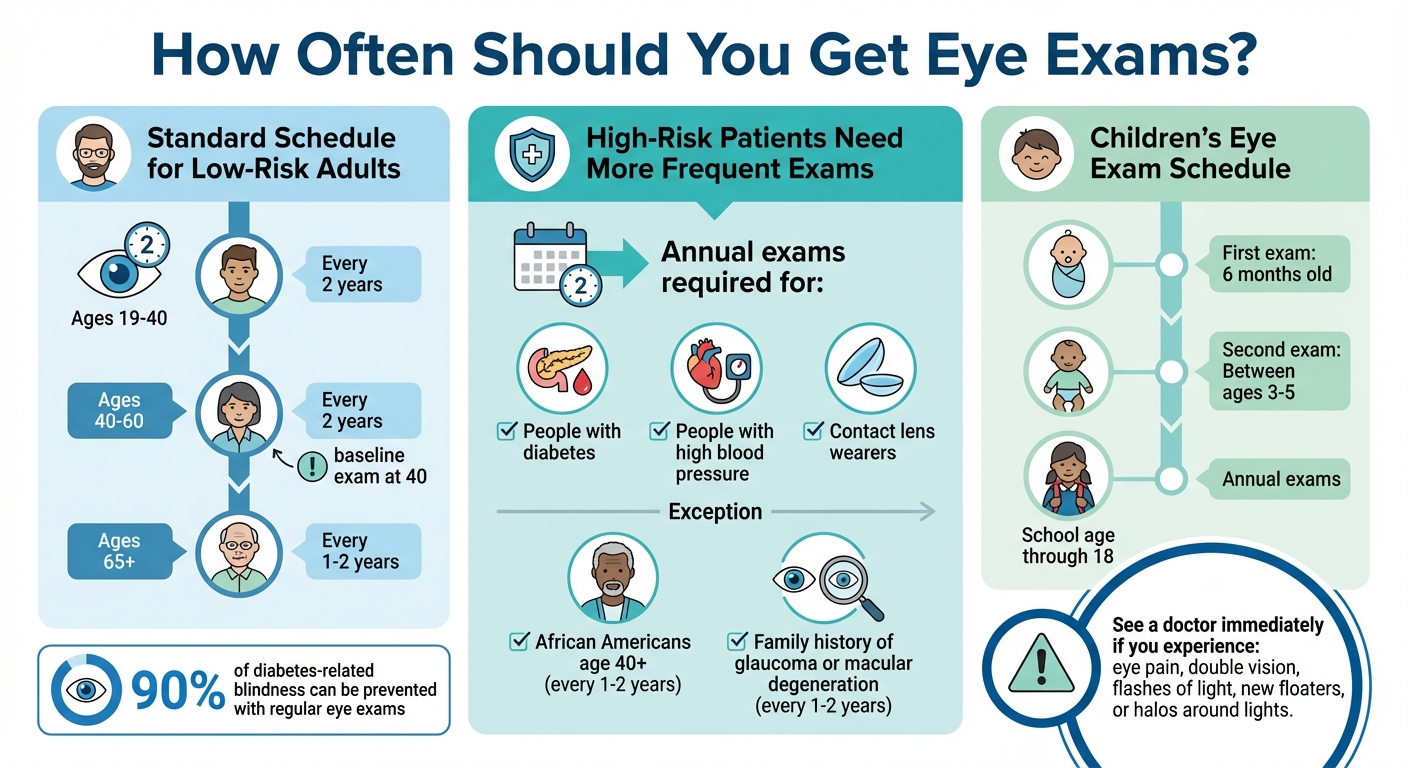
Eye Exam Frequency Guidelines by Age and Risk Level
How often you should get your eyes checked depends on your age, overall health, and specific risk factors. While general guidelines exist, your eye doctor might adjust the schedule to fit your individual needs.
Standard Schedule for Low-Risk Adults
For adults between 19 and 40 who don’t have vision problems or chronic health conditions, a comprehensive eye exam every two years is recommended. Some experts suggest one exam in your 20s and two in your 30s.
Turning 40 is a key moment – this is when you should have a baseline comprehensive screening. Dr. Aleksandra Rachitskaya, an ophthalmologist at Cleveland Clinic, emphasizes the importance of early detection:
"A lot of times, we can see things in the eye before they manifest into visual symptoms. It’s always best to catch that at an early stage."
Here’s a quick breakdown of recommended exam frequencies by age:
| Age Group | Recommended Frequency |
|---|---|
| 19–40 | Every 2 years |
| 40–60 | Every 2 years (baseline at 40) |
| 65+ | Every 1–2 years |
For those with higher risks, the schedule looks a bit different.
Increased Frequency for High-Risk Patients
If you have diabetes or high blood pressure, you’ll need a dilated eye exam every year to check for vascular damage, such as diabetic retinopathy. Early detection is crucial – 90% of blindness in people with diabetes can be prevented or delayed. Dr. Rachitskaya underscores this point:
"When you have diabetes, it’s essential to be regularly checked by an eye doctor, even if you have no symptoms."
Family history also plays a role. If glaucoma or macular degeneration runs in your family, schedule exams every one to two years. African Americans, who are at a higher risk for glaucoma, should start having dilated exams every one to two years beginning at age 40. Contact lens wearers should also have annual exams.
If you notice symptoms like eye pain, double vision, flashes of light, new floaters, or halos around lights, see a doctor immediately.
Now, let’s look at what’s recommended for children.
Eye Exam Guidelines for Children
Children should have their first comprehensive eye exam at 6 months to ensure proper eye health and development. Between the ages of 3 and 5, schedule at least one exam to catch issues like strabismus (crossed eyes) or amblyopia (lazy eye), which affects 2 to 3 out of every 100 kids.
Once they start school, children should have yearly eye exams through age 18. The demands of classroom learning make regular checks important, especially since school vision screenings miss up to 60% of children with vision problems. Watch for warning signs like squinting, head tilting, or holding books very close to their face – these could mean your child needs an earlier appointment.
Adjusting how often you get eye exams based on your personal risk factors is key to protecting your vision. For tailored advice and scheduling, reach out to the Eye Center of Northern Colorado.
Preparing for Your Risk Assessment Appointment
Getting ready for an eye health risk assessment involves a bit of planning, but it makes the process much smoother and more productive. By gathering the right information and asking the right questions, you can help your doctor get a full picture of your eye health and potential risks.
Collect Your Health Information
Start by gathering details about your family’s eye health history. This includes conditions like glaucoma, macular degeneration, cataracts, or any other inherited eye issues. Make sure to also document your own medical history, especially if you have chronic conditions like diabetes or high blood pressure. Don’t forget to note any past eye injuries, surgeries, or pre-existing conditions such as astigmatism or lazy eye.
Dr. Anjum F. Koreishi of Northwestern Medicine advises:
Write down your symptoms before your visit.
Take note of any recent changes in your vision over the past year – like eye pain, redness, swelling, double vision, floaters, flashes of light, or halos around lights. Also, create a list of all medications, vitamins, and supplements you’re currently taking.
Once you’ve gathered your medical information, you’ll want to prepare questions to ensure you make the most of your time with your doctor.
Questions to Ask Your Eye Doctor
Having a list of questions ready can help you address your main concerns. For example, ask, "Am I at risk for eye disease?" to understand how your family history, age, or ethnicity might play a role. If you have other health conditions like diabetes or high blood pressure, inquire, "Can my other health issues affect my eyes?" If you’ve experienced new symptoms – like floaters or dryness – ask, "Is this normal?"
You might also want to ask, "Why is this test being done?" to better understand the purpose of specific procedures. If you’re curious about products like blue light-blocking glasses or eye vitamins, this is a good time to get professional advice. Finally, confirm with your doctor, "How often should I come back?" to establish a follow-up schedule tailored to your needs.
Once your questions are ready, make sure you have everything you’ll need for the appointment.
What to Bring With You
Pack your current eyeglasses and contact lenses, as well as any previous written prescriptions. Don’t forget your insurance card and any relevant medical records, especially those detailing past eye treatments or surgeries. Since dilation drops might be used during the exam – causing light sensitivity and blurred vision – bring sunglasses and arrange for someone to drive you home.
The appointment may take longer than a standard physical exam because of the detailed testing involved. Consider bringing a book or device to pass the time. Also, think about your daily visual needs – whether you spend hours on a computer, drive at night, or play sports – so your doctor can provide recommendations that fit your lifestyle.
Conclusion
Protecting your vision starts with regular eye health risk assessments. Many eye conditions, like glaucoma and macular degeneration, develop silently, often without symptoms until significant damage has occurred. Routine screenings play a crucial role in identifying these issues early, with the potential to prevent up to 90% of blindness caused by conditions such as glaucoma and diabetic retinopathy.
These exams go beyond preserving eyesight – they provide insight into your overall health. Eye doctors can identify over 270 serious conditions, including high blood pressure, diabetes, high cholesterol, and even some cancers, often before symptoms become noticeable. For instance, a 2014 study revealed that optometrists uncovered more than 250,000 cases of diabetes-related complications in patients who were unaware they had the disease.
Whether it’s scheduling your first baseline exam at age 40, keeping track of a chronic condition like diabetes, or ensuring your child’s vision supports their learning, staying proactive with your eye health is essential. Early detection through routine assessments is key to maintaining long-term vision and overall well-being. For those living in Northern Colorado, where higher UV exposure and dry climate conditions pose additional risks, regular screenings are even more crucial.
The Eye Center of Northern Colorado offers expert care to help you stay ahead of these risks. With advanced diagnostic tools and fellowship-trained specialists, their Longmont and Lafayette offices are equipped to assess both eye and systemic health. Take the first step to safeguard your vision and health – schedule an appointment today at https://eyecenternoco.com.
FAQs
What’s the difference between an eye exam and a risk assessment?
An eye exam is designed to evaluate your current vision and identify any existing eye conditions. While routine exams primarily measure visual acuity, comprehensive exams take a deeper dive into your overall eye health, helping to spot potential issues like glaucoma or cataracts.
In contrast, an eye health risk assessment looks ahead. By considering factors such as your health history and lifestyle, it estimates your chances of developing future eye problems. This proactive approach supports early prevention and targeted care.
Which eye tests should I ask for if I’m high-risk?
If you’re at a higher risk for eye problems, it’s important to request specific tests during your eye exam. These may include a dilated eye exam, which helps examine your retina and optic nerve, an intraocular pressure test to screen for glaucoma, and visual field testing to detect blind spots or peripheral vision issues. A thorough exam should also look for signs of systemic conditions like diabetes or high blood pressure, as these can impact your eye health.
How do I know if I need an exam sooner than my age-based schedule?
If you notice yourself squinting, struggling to see clearly, developing a sudden sensitivity to light, or experiencing any other changes in your vision, it might be time to schedule an eye exam sooner than planned. These symptoms could signal underlying issues that need immediate attention. Regular eye exams are especially important if you have risk factors or a family history of eye conditions, as many problems can develop silently without obvious symptoms. Don’t wait – if your vision changes, make an appointment as soon as you can.